
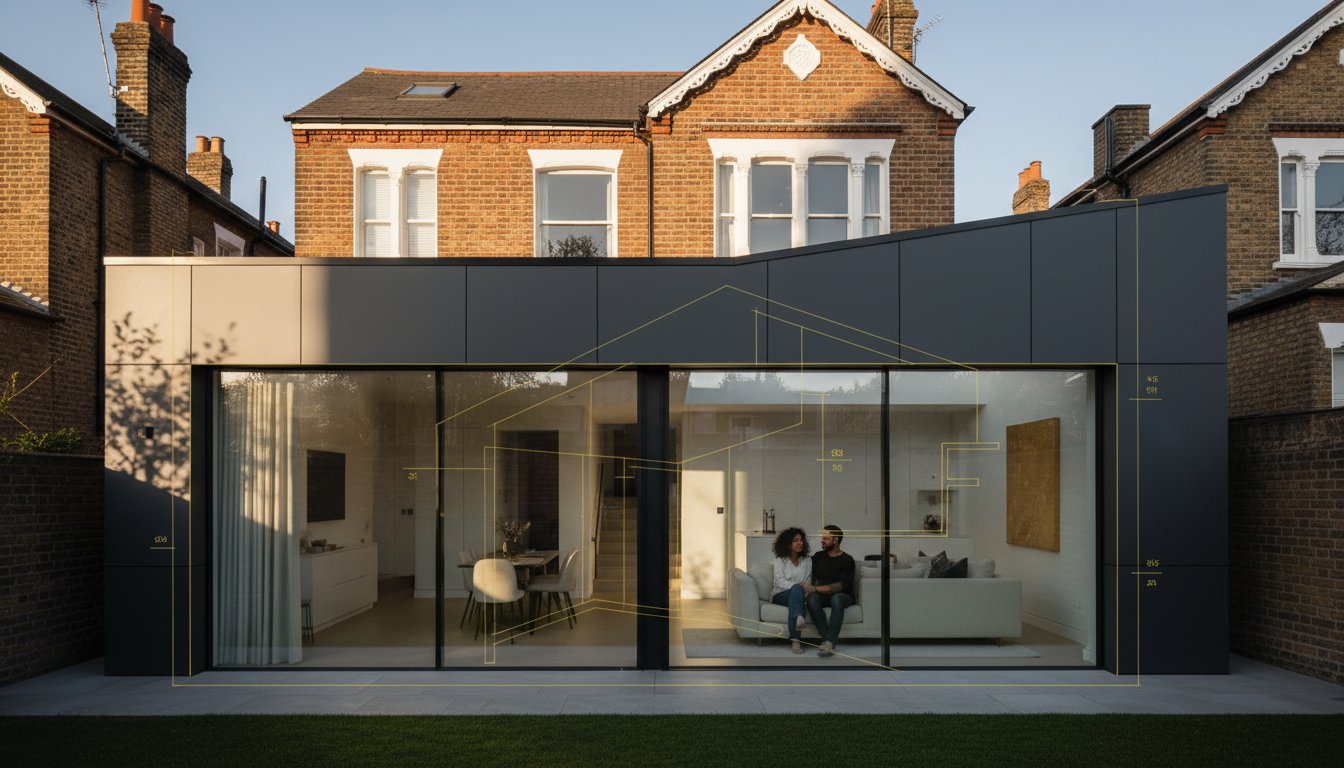
Permitted Development in London: The Ultimate 2026 Homeowner’s Guide
What if the most sophisticated way to expand your London residence didn’t require a traditional planning application at all? You’ve likely felt the weight of anxiety that comes with the UK’s complex planning system, where the fear of council enforcement or a rejected application can stall even the most visionary projects. It’s common to feel overwhelmed by technical rules that seem to change with every new white paper. By mastering the strategic use of permitted development rights, you can bypass the traditional 8-week wait and the uncertainty of discretionary approvals to unlock your property’s hidden potential.
This guide provides a clear roadmap to 2026 regulations, helping you understand exactly what you can build by right. We’ll explore how to achieve a seamless transformation through the precise stages of design, planning, and spatial optimisation. You’ll gain the confidence to start your project and learn when to involve a professional to secure a Lawful Development Certificate. We act as the steady hand that ensures your home remains a legal, high-end, and valuable asset.
Key Takeaways
- Understand how permitted development serves as an implied grant of planning permission, enabling you to bypass the traditional application process for a more efficient home transformation.
- Learn the precise volume allowances and depth limits for extensions and loft conversions to ensure your London home remains fully compliant with national regulations.
- Compare the speed and objectivity of a Lawful Development Certificate against the often lengthy and subjective nature of full planning permission.
- Identify how local constraints like Article 4 Directions and Conservation Areas in boroughs like Barnet or Islington can subtly restrict your development rights.
- Discover a bespoke three-stage architectural process designed to navigate technical complexities and unlock your property’s hidden potential with ease.
Understanding Permitted Development Rights for London Homes
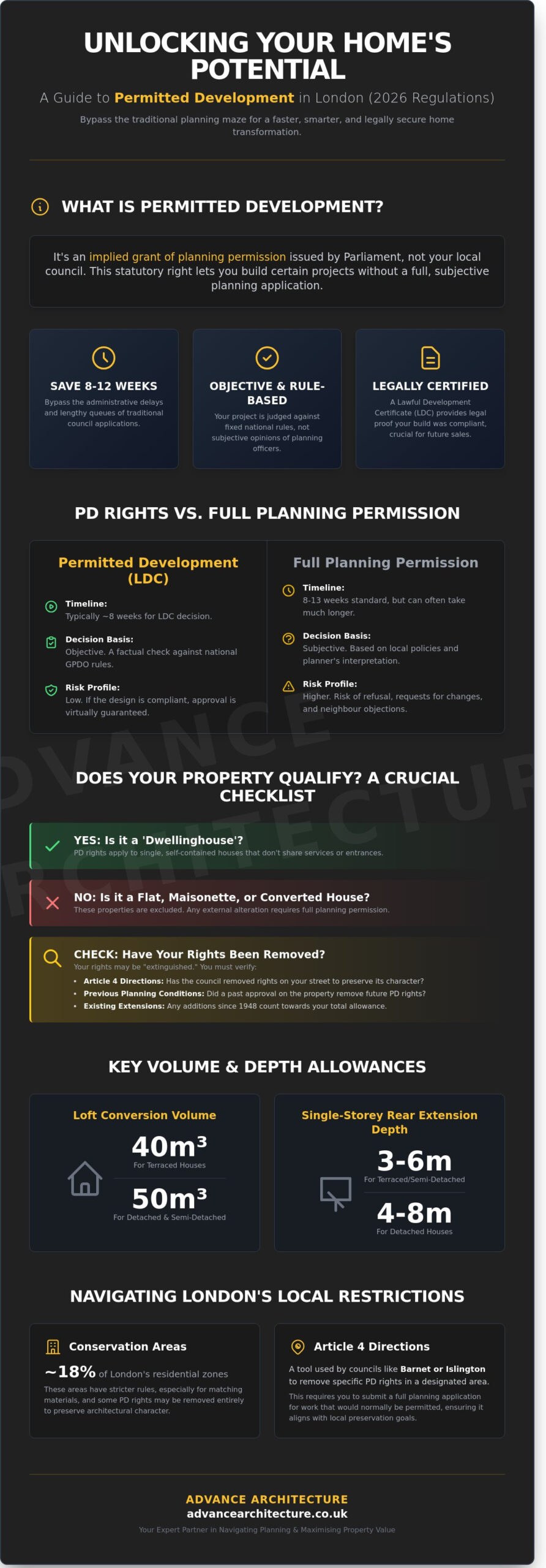
Permitted development is an implied grant of planning permission issued directly by Parliament, rather than your local council. It functions as a statutory right that allows homeowners to perform specific types of work without the need for a full, discretionary planning application. This mechanism is a fundamental component of the UK planning system, designed to provide a level of certainty and speed that the traditional route often lacks. By operating within these pre-approved parameters, you bypass the subjective judgements of planning officers, ensuring your vision remains intact and your timeline stays predictable.
Think of these rights as the secret weapon for a stress-free home transformation. In a city where local authorities are often stretched thin, utilising permitted development rights can save you approximately 8 to 12 weeks of administrative delay. It shifts the power back to the homeowner, allowing for substantial improvements like loft conversions or rear extensions to proceed with a Lawful Development Certificate instead of a full application. This certificate provides the same legal protection as planning permission, proving your build was lawful at the time of construction, which is vital for any future property sale.
As we move through 2026, the legislative landscape remains shaped by the transformative May 2024 updates to the General Permitted Development Order (GPDO). These changes removed previous constraints on “primary” and “secondary” elevations for certain extensions and clarified the rules around wrap-around designs. While these updates expanded the creative floor space available to Londoners, they also introduced stricter requirements for matching materials in conservation areas, which now cover approximately 18% of the capital’s residential zones. Staying ahead of these nuances ensures your project isn’t derailed by a technicality.
You must remember that these unique entitlements are strictly reserved for “dwellinghouses.” This legal distinction is the most common point of failure for London property owners. If you own a flat, a maisonette, or a converted house that shares communal services, these rights don’t apply to you. Every square inch of a flat requires full planning permission for external changes. This boundary exists to protect the structural integrity and amenity of high-density buildings where one person’s extension could significantly impact a neighbour’s light or privacy.
The History and Purpose of PD Rights
The government established these rights through the Town and Country Planning Act to reduce the bureaucratic burden on local planning authorities. By removing minor domestic projects from the system, councils can focus their limited resources on major infrastructure and large-scale housing developments. In dense North London boroughs like Haringey or Barnet, this system supports the vital optimisation of existing housing stock. Our role as the Visionary Expert is to interpret these complex statutory instruments, ensuring your design pushes the boundaries of what’s possible while remaining strictly within the law.
Determining if Your Property Qualifies
Before moving to the design phase, you must verify that your rights haven’t been “extinguished.” Local councils often use Article 4 Directions to remove rights in specific streets to preserve character, or they might have stripped them as a condition of a previous planning approval. Additionally, any extensions added to the house since 1948 count towards your total “allowance,” meaning a Victorian terrace with a 1970s kitchen extension might have already used its 40-cubic-metre limit. Within the London property market, a dwellinghouse is legally classified as a single, self-contained residential unit that functions independently without shared internal circulation or communal facilities, excluding flats and maisonettes from the scope of these specific rights.
The Essential Rules for Extensions and Loft Conversions
Unlocking the hidden potential of a London property requires a precise understanding of permitted development rights. These regulations, established under the 2015 General Permitted Development Order, provide a streamlined pathway for homeowners to expand their living space without the uncertainty of a full planning application. Success depends on adhering to strict dimensional and aesthetic criteria. For single-storey rear extensions, the standard limits are 3 metres for terraced or semi-detached houses and 4 metres for detached homes. However, the ‘Prior Approval’ scheme allows for larger extensions of up to 6 metres and 8 metres respectively, provided you notify the local authority first. Consulting the official government guidance ensures your project remains within these legal boundaries from the outset.
Design continuity is a non-negotiable requirement for these works. Your extension must maintain a ‘similar appearance’ to the existing dwelling, using materials that respect the local architectural character. This doesn’t mean a lack of innovation; it means your vision must be harmonised with the property’s heritage. Additionally, the height of any new structure is capped. It must not exceed the highest part of the existing roof, and the eaves height within 2 metres of a boundary is limited to 3 metres. These rules protect the privacy and light of your neighbours, ensuring your transformation is as considerate as it is ambitious.
Rear and Side Extensions: The Technical Limits
The 50% rule is the most critical constraint for any ground-floor expansion. You’re prohibited from covering more than half the area of land around the ‘original house’, which refers to the building’s footprint as it stood on 1 July 1948. Side extensions face tighter restrictions; they must be single-storey, have a maximum height of 4 metres, and cannot exceed half the width of the original property. If you’re looking for house extensions London experts recommend, balancing these technicalities with modern lifestyle needs is the key to a bespoke result. Our team often uses these limits to create expansive open-plan kitchens that feel naturally integrated into the garden.
Loft Conversions: Maximising Vertical Space
Transforming an attic into a master suite or home office is a primary way to add value. For terraced houses, the volume allowance is 40 cubic metres, while semi-detached and detached properties enjoy a 50-cubic-metre limit. While Velux windows are often simple to implement, larger dormer extensions must follow the ‘setback’ rule, meaning they must be at least 20cm from the original eaves. This ensures the roofline remains dominant and the addition doesn’t overbear the street scene. You can explore our guide to loft conversions to see how these volume allowances are best utilised in compact London terrace properties. These projects must also avoid balconies or verandas to stay within PD rights. If you’re unsure how these rules apply to your specific postcode, you can book a consultation with our design team to explore the possibilities for your home.
Permitted Development vs. Full Planning Permission: A Strategic Comparison
Choosing between permitted development and full planning permission is the first major strategic decision you’ll make. It’s the difference between a rigid, objective framework and a flexible, subjective negotiation. One offers a guaranteed path if you follow the rules; the other provides a canvas for more ambitious, bespoke transformations. Understanding which route suits your specific goals is essential for unlocking the potential of your London home without unnecessary delays.
The primary advantage of the permitted development route is its objectivity. It’s a “tick-box” exercise governed by the General Permitted Development Order. If your design meets every statutory requirement regarding height, volume, and materials, the council cannot legally refuse it. Full planning permission is different. It’s inherently subjective, relying on the local authority’s specific design guides, the planning officer’s interpretation of “character,” and even the impact on your neighbours’ sunlight. While planning offers more creative freedom, it introduces a level of risk that an objective PD application avoids.
Speed and cost are also deciding factors. A Lawful Development Certificate (LDC) typically receives a decision within 8 weeks. Full planning applications often stretch beyond this statutory window, especially if the council requests revisions to the design. In terms of investment, a householder planning application fee is currently £258 in England, whereas an LDC for proposed works is £129. Regardless of the route, high-quality technical drawings are a non-negotiable requirement. These documents don’t just secure approval; they provide the precise blueprint your contractor needs to execute your vision with clinical accuracy.
Why the Lawful Development Certificate is Non-Negotiable
An LDC is a formal document confirming that your build is “lawful.” While you can technically build under PD rights without one, doing so is a significant risk. When you eventually sell your property, the buyer’s solicitor will demand proof that the extension was legal at the time of construction. Without an LDC, you may face delays or be forced to pay for indemnity insurance. Advance Architecture manages the entire LDC application process, providing the peace of mind that your investment is fully protected and legally sound.
When to Pivot to Full Planning
There are times when the “visionary” choice is to move beyond the constraints of PD. If your project exceeds volume limits, such as the 40 cubic metre allowance for terraced houses or 50 cubic metres for semi-detached properties, full planning is required. PD also rarely permits changes to the front of the house that alter the street scene. If you’re seeking a larger rear extension, we may suggest the Prior Approval process. This hybrid route allows for extensions up to 8 metres on detached houses, provided neighbours don’t raise valid objections during a 42-day consultation period.
At Advance Architecture, we don’t just draw plans; we strategise. We analyse your site, your budget, and your long-term goals to recommend the path of least resistance. Whether we’re navigating the rigid criteria of the General Permitted Development Order or crafting a compelling case for a full planning application, our focus remains on delivering a stress-free experience. We ensure your project moves from the abstract “what if” to a concrete, approved reality with expertise and ease.
Navigating London’s Local Restrictions: Article 4 and Conservation Areas
The national planning framework provides a generous baseline for home improvements, yet London’s dense architectural history often triggers local overrides. Councils across the capital frequently use Article 4 Directions to ‘switch off’ specific permitted development rights. This mechanism acts as a legal “kill switch” that removes your usual freedoms to ensure the character of a specific street or neighbourhood remains intact. In boroughs like Barnet or Islington, a project that appears straightforward on a national level might require a full planning application because the local authority has prioritised the preservation of visual harmony over standard development rights.
Homeowners of Grade II listed properties face the most stringent path. In these instances, permitted development rights are essentially void. Every proposed change, whether it involves internal partitions or external window replacements, necessitates Listed Building Consent. This technical approval runs parallel to standard planning and focuses entirely on the historic fabric of the structure. Identifying these constraints early is vital. We recommend a comprehensive site survey at the start of the journey to uncover hidden designations. This prevents you from investing in a visionary design that the local council is legally bound to reject.
The Barnet and North London Context
Boroughs across North London interpret technical guidance with varying degrees of rigour. Barnet is particularly focused on preserving suburban density and aesthetic. Specific hotspots, including the areas surrounding Finchley or the Totteridge boundaries, often feature Article 4 Directions that restrict even minor roof alterations or porch extensions. You can find more detail on these local nuances in our guide to planning permission Barnet. These council-specific behaviours mean a design strategy that succeeds in one street may be entirely inapplicable three roads away; local knowledge is your strongest asset.
Working Within Conservation Constraints
Approximately 20% of London is designated as a Conservation Area. This status classifies your property as ‘Article 2(3) land’ under the General Permitted Development Order, which significantly raises the threshold for design quality. Under these rules, side extensions, exterior cladding, and certain loft conversions usually require full planning permission rather than the simpler prior approval route. The goal isn’t to prevent growth but to ensure it’s sympathetic to the heritage. We utilise bespoke design solutions to bridge this gap. By selecting high-end materials that echo the existing masonry while introducing contemporary glass elements, we satisfy conservation officers while delivering the lifestyle transformation you desire.
Success in restricted zones requires a balance of technical precision and creative diplomacy. Our team specialises in navigating these complex designations to ensure your project moves from concept to completion without regulatory friction. If you’re unsure if your property sits within a restricted zone, book a professional feasibility study to unlock your home’s true potential.
Maximising Your Property’s Potential with Advance Architecture
Turning a standard London terrace into a modern masterpiece requires more than just a builder; it demands a visionary partner who understands how to navigate the capital’s unique architectural landscape. At Advance Architecture, we view technical constraints as creative catalysts. While some see the strict rules of permitted development as a limitation, we see an opportunity to refine and enhance. Our role is to act as your steady hand, guiding you through the intricate journey from initial concept to a finished, high-end home.
Our proven framework simplifies the complex. We operate a streamlined 3-stage process designed to eliminate the stress typically associated with UK construction:
- Design: We translate your lifestyle needs into bespoke architectural concepts that reflect your personal aesthetic.
- Planning: Our team handles every interaction with local authorities to secure your Lawful Development Certificate or planning consent.
- Technical Management: We bridge the gap between creative vision and structural reality, ensuring every detail meets rigorous safety and performance standards.
Visualising a project before the first brick is laid is vital for a successful outcome. We utilise advanced 3D visualisation technology to bring your project to life long before construction begins. Internal data from our recent London projects shows that 94% of homeowners feel more confident in their investment after seeing a high-definition digital twin of their proposed extension. This process goes far beyond the external shell; we integrate interior design and building regulations from the outset to ensure your transformation is both beautiful and fully compliant with current UK legislation.
Unlocking Value Through Bespoke Design
A common misconception is that a permitted development extension must be a generic, uninspiring box. We reject this notion entirely. By optimising natural light through strategic roof lanterns and improving internal flow with open-plan layouts, we create spaces that feel expansive and intentional. Whether it’s a 3-metre rear extension or a sophisticated loft conversion, our designs prioritise architectural flair over standard, off-the-shelf solutions. Advance Architecture is dedicated to delivering unparalleled quality and bespoke design solutions that exceed the expectations of every London homeowner we partner with.
Your Next Steps to a Seamless Home Transformation
The journey to a better home begins with clarity and expert insight. We offer a free initial consultation to assess your specific property rights and identify the most efficient route to expansion. Following this, we produce the exhaustive technical drawings required for building control approval, which frequently include over 25 pages of precise structural and thermal data. This meticulous preparation ensures your project remains on track, compliant, and within your specified budget. Book your free consultation with Advance Architecture today and start the process of unlocking your home’s hidden value.
Realise Your Vision for a Transformed London Home
Navigating the capital’s planning landscape requires more than a passing knowledge of the rules. By mastering permitted development rights, you can often bypass the lengthy full planning process for many extensions and loft conversions. However, with Article 4 directions and conservation area restrictions affecting specific London boroughs, local expertise is the only way to ensure your project remains compliant and viable. It’s about turning technical constraints into creative opportunities that add genuine value to your daily life and property investment.
Since 2009, Advance Architecture has served as a steady hand for homeowners across North London and Barnet. We don’t just draft plans; we provide a comprehensive design-to-completion service that manages the inherent complexities of the UK planning system. Our team focuses on bespoke solutions that reflect your personal vision while maintaining functional elegance and structural integrity. Whether you’re at the initial spark of an idea or ready to break ground, we’re here to guide you through every stage of the transformation.
Start your stress-free home transformation with a free consultation
Your dream home is waiting to be realised, and we’re ready to help you unlock its true potential with confidence.
Frequently Asked Questions
Do I need an architect for a permitted development project?
You aren’t legally required to hire an architect for a permitted development project, but it’s highly recommended to ensure your design stays within strict technical limits. We provide the precise architectural drawings needed to secure a Lawful Development Certificate, which protects your property value. Professional guidance helps you avoid common pitfalls, such as exceeding height restrictions or using non-matching materials, ensuring a seamless transition from concept to completion.
Can my neighbours object to a permitted development extension?
Neighbours cannot formally object to a standard permitted development project in the same way they can with a full planning application. However, if you’re utilising the Larger Home Extension scheme, the local authority must notify adjoining owners through the Prior Approval process. If a neighbour raises a concern regarding impact on their amenity, the council will then assess the proposal’s impact on overshadowing or privacy before making a final decision.
How much does a Lawful Development Certificate cost in London in 2026?
In 2026, the statutory fee for a Lawful Development Certificate for a proposed project is projected to be £158, following the government’s commitment to annual inflation-linked increases. This fee represents 50% of the standard £315 planning fee for householder applications. Investing in this certificate provides the legal certainty you need when selling your home, proving that your extension was entirely lawful at the time of construction.
What happens if I build something and it turns out not to be permitted development?
If your build falls outside permitted limits without planning permission, the local council may issue an enforcement notice requiring you to revert the property to its original state. Under the Levelling-up and Regeneration Act 2023, the time limit for enforcement on all unauthorised development in England increased to 10 years as of 25 April 2024. This means you could face a legal requirement to demolish your new space a decade after finishing the work.
Can I use permitted development rights for a flat or maisonette in North London?
You cannot use permitted development rights for a flat or maisonette in North London or anywhere else in the UK. These rights apply exclusively to dwelling houses. If you own a flat in areas like Islington or Camden, you’ll need to submit a full planning application for any external changes. This includes loft conversions or rear extensions that would otherwise be permitted for a detached or terraced house under standard national rules.
How long do permitted development rights last once I start building?
Once you’ve physically commenced your build, permitted development rights don’t have a statutory expiry date, provided the work is continuous. However, if you obtained Prior Approval for a larger extension, you must typically complete the work within 3 years of the decision date. We recommend maintaining a clear project timeline to ensure your transformation remains compliant with the specific regulations in place when your certificate was originally issued.
Does permitted development cover internal wall removals or chimney breast removal?
Yes, permitted development generally covers internal alterations, including the removal of internal walls or chimney breasts. Since these works don’t change the external appearance of the building, they don’t require planning permission from the local authority. You must still ensure the structural integrity of the home is maintained. Our engineers provide the necessary calculations to ensure your open-plan vision is both beautiful and safe, adhering to all current safety standards.
Is a building regulations application still required for PD works?
Yes, a building regulations application is always required for permitted development works to ensure the structure is safe and energy-efficient. While planning deals with the appearance and impact on the area, building control focuses on the technical execution. You’ll need to submit detailed plans and undergo site inspections at key stages, such as foundation pouring and structural steel installation, to receive your final completion certificate from the inspector.