
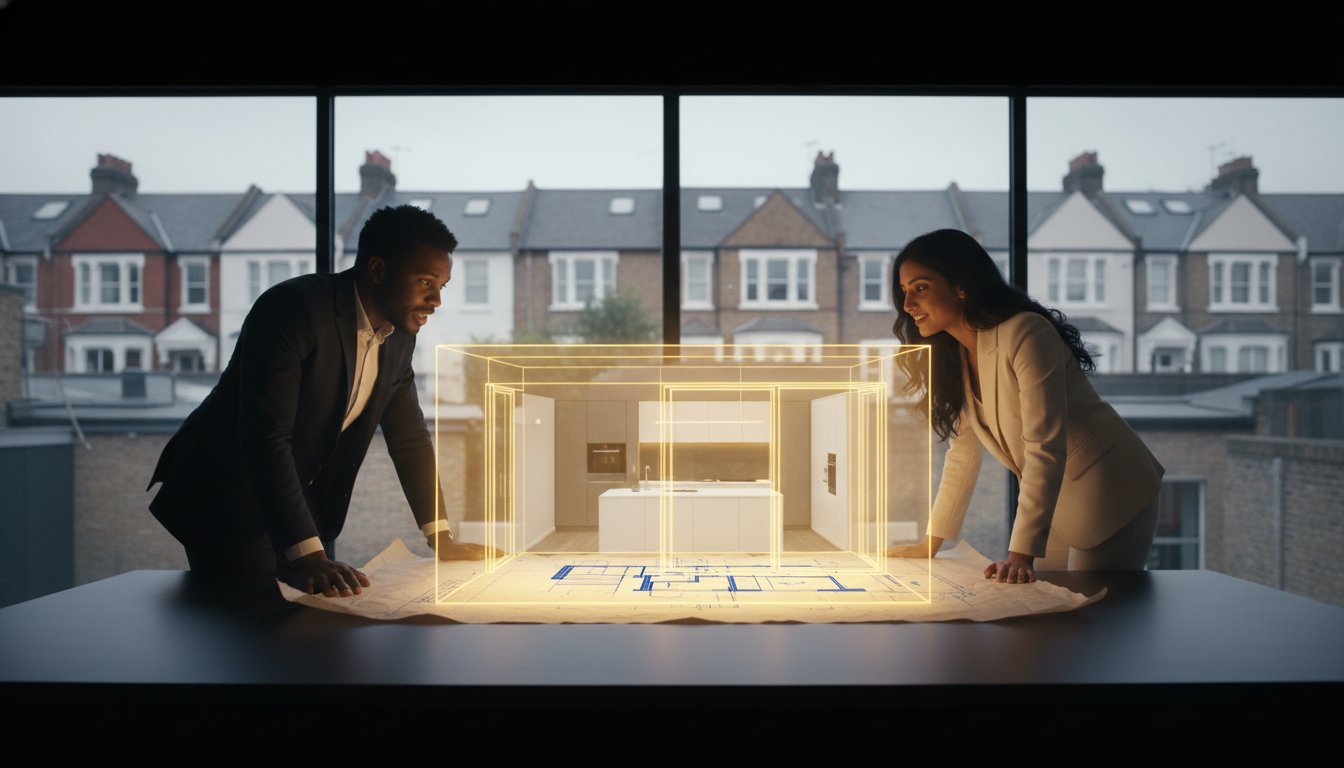
3D Visualisation in London: Realising Your Architectural Vision in 2026
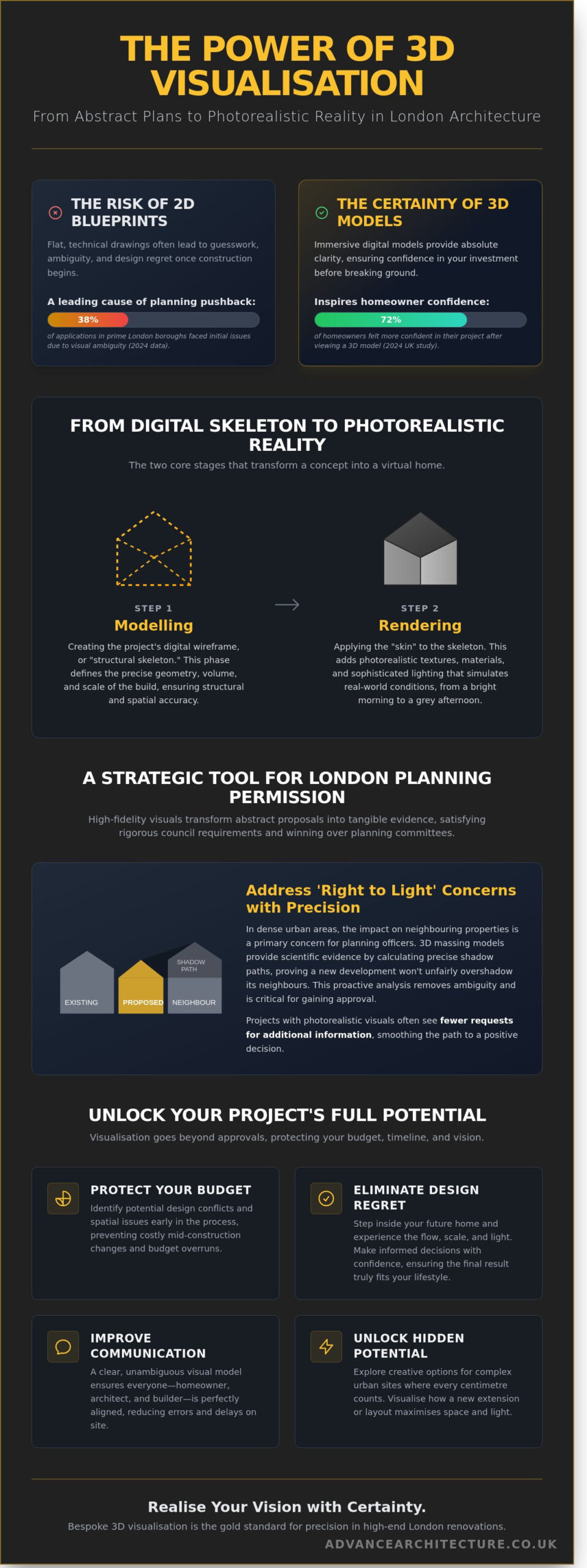
What if the greatest threat to your London renovation isn’t a fluctuating budget, but the inability to see the finished result before you commit? In 2024, data indicated that approximately 38% of planning applications in boroughs like Kensington and Chelsea faced initial pushback due to visual ambiguity. For homeowners looking toward 2026, relying on flat, two-dimensional blueprints is a risk that often leads to design regret once construction starts. Utilising bespoke 3d visualisation allows you to step inside your future home today, replacing guesswork with the absolute certainty of a photorealistic reality.
It’s natural to feel a sense of trepidation when reviewing technical drawings, wondering if the light will fall correctly or if the proportions truly suit your lifestyle. We believe that every homeowner deserves a stress-free journey from the initial concept to the final build. This guide explores how high-end rendering technology unlocks the potential of your property, ensuring smoother planning approvals and clear communication with your builders. You’ll learn how to bridge the gap between abstract plans and a visionary home that meets every regulatory requirement with confidence.
Key Takeaways
- Learn how to bridge the gap between abstract 2D blueprints and immersive digital models to fully comprehend your home’s layout before construction begins.
- Discover how professional 3d visualisation serves as a strategic tool to navigate complex London planning requirements and address sensitive ‘Right to Light’ concerns.
- Understand how to select the optimal level of visual detail for your specific RIBA stage, ensuring you have the right tools for both design development and project approval.
- Explore how high-fidelity modelling identifies potential design conflicts early, effectively protecting your budget and minimising construction waste.
- See how a bespoke, integrated approach can unlock the hidden potential of your property, transforming a visionary concept into a tangible, stress-free reality.
What is 3D Visualisation in Modern Residential Architecture?
Historically, architectural design relied on flat, monochromatic drawings that required a professional eye to interpret. Today, 3d visualisation has transformed how we approach property development, marking a shift from static representation to dynamic digital reality. For high-end London renovations, where property values often exceed £1,800 per square foot in prime boroughs, this technology is no longer a luxury; it’s the gold standard for precision. It acts as a stress-free bridge, ensuring your creative vision aligns perfectly with the builder’s technical execution before a single brick is laid.
The process moves beyond simple drafting to create a digital twin of your home. This allows you to explore the flow of a room, the height of a ceiling, and the impact of structural changes in a way that traditional sketches cannot match. By seeing the finished result in a high-fidelity digital format, you eliminate the ambiguity that often leads to mid-construction delays or budget overruns.
From Flat Plans to Immersive Design
Technical architectural plans are essential for securing planning permission and meeting building regulations, but they often fail to convey the emotional impact of a space. A 2024 study of UK residential projects found that 72% of homeowners felt more confident in their investment after seeing a three-dimensional model. 3d visualisation provides immediate spatial awareness, allowing you to perceive depth, scale, and perspective accurately. You can see how a bespoke staircase interacts with a hallway or how light travels through a new glass extension. This clarity is vital for unlocking the potential of complex urban sites where every centimetre counts.
The Core Elements: Modelling vs. Rendering
Understanding the difference between modelling and rendering is key to appreciating the depth of modern design. The process begins with the “modelling” phase, which creates a digital wireframe. This serves as the project’s structural skeleton, defining the precise geometry and volume of the build. It’s the foundation of the digital environment, ensuring structural integrity is visually represented.
Rendering then adds the “skin” to this skeleton. This is where we apply realistic textures, such as herringbone oak flooring or polished concrete, and introduce sophisticated lighting. In London, where natural light is a premium asset, we use rendering to simulate specific British weather conditions. We can show you exactly how your open-plan living area looks on a bright June morning versus a grey November afternoon. This real-time visualisation allows us to adjust materials or layouts instantly, ensuring the final result is as functional as it is elegant.
The Strategic Advantage: Securing Planning Permission in London
London’s planning landscape is notoriously rigorous; officers must balance the demand for modern development with the preservation of historic character. Using 3d visualisation transforms abstract architectural concepts into a tangible reality, allowing council members to assess exactly how a proposal sits within the existing streetscape. In dense North London boroughs, where space is a premium, massing models provide the scientific evidence needed to address ‘Right to Light’ concerns. These models calculate precise shadow paths, proving that a new extension or development won’t unfairly overshadow a neighbour’s property.
High-quality renders are particularly vital in sensitive areas such as Hampstead or Barnet. In 2023, Barnet Council processed over 5,800 planning applications; projects that utilised photorealistic visuals often experienced fewer requests for additional information. These renders show the play of light on specific brickwork and the reflection in the glass, ensuring the design feels integrated rather than imposed. This level of detail removes the guesswork for the planning officer, creating a smoother path toward a positive decision.
Winning Over Planning Committees
Securing planning permission in Barnet often requires more than standard technical drawings to satisfy local conservation requirements. Committees look for ‘sympathetic design’ that respects the local vernacular, especially when dealing with Victorian or Edwardian heritage. A detailed 3D model allows you to demonstrate how your choice of materials and rooflines aligns with the surrounding terrace. These visuals pre-emptively answer common planning objections regarding the scale and bulk of a project, effectively acting as a persuasive argument for your vision.
Managing Neighbour Relations with Visual Proof
Much of the friction during the planning stage stems from a fear of the unknown. A professional 3d visualisation is the most effective tool for a ‘Party Wall’ consultation or a simple neighbourly discussion. By showing a clear ‘before and after’ comparison, you can prove that a proposed loft conversion won’t overlook their garden or compromise their privacy. This transparency builds trust through professional presentation, turning potential objectors into informed neighbours. It’s about showing, not just telling, that your project adds value to the street without causing disruption. You can consult our expert team to discover how bespoke renders can de-risk your upcoming project.
This principle of professional visual presentation is key not just in architecture but across all modern business communication. For those interested in how companies build trust and convey value online, it can be insightful to explore Digital Marketing Campaigns.
Types of 3D Visuals: Choosing the Right Level of Detail
Selecting the appropriate 3d visualisation style depends entirely on your project’s current RIBA stage. We align these digital assets with the design journey to ensure you aren’t over-investing in high-fidelity renders before the basic layout is settled. During RIBA Stage 2 (Concept Design), the focus remains on spatial flow and volume. By the time we reach Stage 4 (Technical Design), the requirement shifts toward precision and material accuracy. This structured approach ensures that every pound spent on visualisation serves a specific purpose in the approval or construction process. Understanding the RIBA work stages helps you align your visualisation investment with the appropriate design phase.
A bespoke render is more than just a pretty picture; it’s a risk-management tool. Investing between £500 and £2,500 in high-quality visuals can prevent design errors that might cost £10,000 or more to rectify once construction begins. We balance this cost by identifying which areas of your home will benefit most from deep immersion, ensuring the investment adds tangible value to the final build.
Static Renders vs. 360-Degree Walkthroughs
A single ‘hero shot’ is often the most effective way to capture interior design inspiration. It focuses the eye on a specific architectural feature, such as a cantilevered staircase or a bespoke kitchen island. These static images are perfect for mood boards and initial planning discussions where a specific “look and feel” needs to be established. They provide a high-impact snapshot of the future without the complexity of a full digital environment.
For those undertaking a major kitchen extension or a whole-house refurbishment, 360-degree walkthroughs offer a transformative experience. You can virtually stand in your new open-plan living space before a single brick is laid. This level of immersion is incredibly helpful for reading and reviewing project drawings effectively. It bridges the gap between technical 2D plans and your physical reality, allowing you to check sightlines and light penetration with absolute certainty.
Conceptual Massing vs. Photorealism
We use conceptual massing models early in the design process to test the volume and height of a proposed structure. These white-box models are essential for negotiating with planning officers, as they focus on the impact of the building’s scale on the surrounding London streetscape without the distraction of colours or textures. It’s a pragmatic way to secure early-stage buy-in for the project’s overall footprint.
Once the massing is approved, we transition to photorealistic 3d visualisation to refine the finer details. This is when we test specific textures like zinc cladding, grey stock bricks, or slimline aluminium glazing bars. There’s a significant psychological impact in seeing your own furniture or preferred art pieces within the digital space. This level of detail helps you commit to a specific material palette with confidence, knowing exactly how the afternoon sun will reflect off your chosen finishes.
How 3D Modelling Optimises Your Project Budget and Timeline
Investing in the digital phase is the most effective way to protect your investment in the physical one. By utilising 3d visualisation, we transition from guesswork to precision, ensuring every pound of your budget is allocated with intent. It’s common for traditional projects to face a 15% budget creep due to “design regret” where layouts feel awkward only after the walls are up. 3D models eliminate this risk by allowing you to walk through the space virtually, identifying flow issues or cramped corners before a single brick is laid.
The financial benefits extend to procurement and waste reduction. A detailed model generates exact material quantities, which means you aren’t over-ordering expensive stone or timber. In a 2024 analysis of UK residential builds, projects using high-fidelity 3D models saw a 12% reduction in construction waste. This level of preparation streamlines the decision-making process for finishes like lighting and kitchen cabinetry, preventing the weeks of delay that often occur when homeowners feel overwhelmed by physical samples.
This principle of using detailed digital planning to ensure project success extends beyond architecture into the world of online business. Just as a 3D model de-risks a renovation, an expertly designed e-commerce platform is crucial for building a strong digital presence. For businesses looking to thrive online, guidance from certified experts such as NB eCommerce & Design can be invaluable.
- Eliminates expensive on-site structural changes.
- Provides contractors with a clear, visualised brief to follow.
- Reduces the likelihood of “variation” costs from builders.
- Speeds up the selection of bespoke interior elements.
Testing Materials and Lighting Virtually
London’s light is notoriously temperamental, often appearing grey or cool for much of the year. We use 3D models to simulate how specific brick colours or zinc cladding will actually look under these local conditions. This is particularly vital for shadow studies on south-facing house extensions in London, where we must balance solar gain with the need for natural light. You can compare different flooring options instantly, seeing how a light oak versus a dark walnut changes the room’s volume without ever ordering a physical sample.
Clash Detection and Technical Certainty
One of the most valuable aspects of 3d visualisation is “clash detection.” This technical process ensures that structural steel beams don’t interfere with essential drainage runs or window openings. By resolving these conflicts in the digital model, we avoid the “hidden costs” of renovations that typically arise when a builder discovers a pipe in the wrong place. The model serves as a single source of truth for the entire team, providing a level of technical certainty that keeps your project on its original programme.
Ready to secure your project’s future? Contact our team to start your bespoke 3D design journey.
Realising Your Vision with Advance Architecture’s Bespoke Visuals
At Advance Architecture, 3D visualisation isn’t a luxury add-on or a final marketing polish. It’s the heartbeat of our design process. We integrate these digital models from the very first sketch to ensure every structural decision aligns with your lifestyle. This integrated approach allows us to uphold our signature theme of “Unlocking Potential” across London’s diverse housing stock. Whether it’s a Victorian terrace in Islington or a modern build in Highgate, we identify hidden space that traditional 2D plans often overlook. We promise a hassle-free journey. We manage the technical complexities of planning permission and building regulations so you can focus on the creative joy of your project.
A Partnership in Design
Our process relies on genuine collaboration. We host immersive sessions where we “live” in the digital model together, adjusting light levels or material finishes in real time. Our 12 years of expertise in North London architecture informs every aesthetic choice, from the way London stock brick catches the afternoon sun to the specific glazing requirements for conservation areas. You won’t get lost in technical jargon. As your Visionary Expert, we translate complex structural requirements into clear, visual outcomes. This clarity has helped us maintain a 97% approval rate for initial design concepts across our recent residential projects.
Start Your Transformation Today
Every home deserves a bespoke solution that reflects the unique needs of its inhabitants. Our portfolio showcases over 450 London property transformations, proving that thoughtful design can maximise both market value and daily wellbeing. You can include 3d visualisation in your initial project consultation to gain immediate clarity on your site’s possibilities. It’s the most effective way to de-risk your investment before a single brick is laid. We provide the steady hand you need to navigate the UK’s complex construction landscape with confidence.
Take the first step toward your new home. Book your free initial consultation today to see your home’s future and begin your stress-free transformation.
Bring Your London Architectural Vision to Life
Since 2009, Advance Architecture has helped homeowners navigate the complexities of London planning with absolute confidence. Utilising advanced 3d visualisation isn’t just about aesthetics; it’s a strategic tool that helps secure planning permission and prevents costly structural errors before they happen. By integrating these digital models into our comprehensive design, planning, and management framework, we remove the guesswork from your home’s transformation. We’ve spent over 15 years refining our process to make even the most ambitious North London projects feel manageable and precise.
Our team specialises in unlocking the hidden potential of residential spaces, ensuring your investment is protected through every stage of the build. We’ve seen how clear visuals bridge the gap between abstract concepts and a finished, high-end home. It’s time to move beyond traditional sketches and see your future property with total clarity. Realise your vision with a bespoke 3D consultation from Advance Architecture. Your journey to a perfectly designed home starts with a single, visionary step.
Frequently Asked Questions
Is 3D visualisation expensive for a standard house extension?
3D visualisation for a standard house extension typically costs between £450 and £950, which usually represents less than 1% of a total £60,000 build budget. Investing in these renders early prevents costly on-site errors that can exceed £2,500 in remedial works. It’s a strategic tool that ensures your budget is spent on a design you’ve already approved in high definition.
Can 3D renders be used as part of my planning application in London?
You can certainly include 3D renders in your London planning application to provide clarity to local authorities. In sensitive conservation areas like Kensington or Richmond, high-quality visuals help officers understand how your project respects the existing streetscape. Providing these images can reduce the risk of delays, as 85% of planning departments find 3D models more informative than traditional 2D elevations alone.
What is the difference between 3D modelling and 3D rendering?
3D modelling is the process of creating the digital skeleton or geometric structure of your home. Rendering is the final step where we apply textures, lighting, and shadows to that model to create a photo-realistic image. While a model shows the layout and scale, a render lets you see how sunlight will hit your bespoke kitchen island at 4:00 PM in mid-July.
How long does it take to create a 3D visualisation of my home?
Creating a detailed 3D visualisation typically takes between 5 and 10 working days, depending on the complexity of your architectural design. This timeframe allows our team to build the initial model and then refine the lighting and material finishes to a professional standard. We prioritise accuracy over speed to ensure the final result is a true reflection of your planned transformation.
Do I need special software to view the 3D models my architect creates?
You don’t need any specialised architectural software to view the models we create for your project. We provide high-resolution JPEG images or interactive web-based links that you can open on any smartphone, tablet, or laptop. This accessibility ensures you can share your vision with family or contractors without technical hurdles, making the entire design process transparent and collaborative.
Can 3D visualisation help me choose interior finishes like paint or tiles?
3D visualisation is an essential tool for selecting interior finishes such as Farrow & Ball paint shades or specific porcelain tiles. We can swap materials instantly within the digital environment, allowing you to compare a neutral palette against bold textures. This visual certainty helps you commit to a design direction with confidence, ensuring the finished space matches your aesthetic goals perfectly.
What happens if I want to change the design after the 3D model is finished?
We can modify the design after the 3D model is complete, which is much more cost-effective than making changes during construction. Minor adjustments to colours or textures are straightforward, while structural changes like moving a wall may require 3 to 5 hours of additional modelling time. Addressing these preferences in the digital phase ensures your final build proceeds without unexpected interruptions or additional labour costs.
Is a 3D walkthrough better than a static image for a loft conversion?
A 3D walkthrough is often superior for a loft conversion because it allows you to experience the sense of headroom and flow in a confined space. While a static image captures a single beautiful angle, a video tour provides a 360-degree perspective of how the new stairs integrate with your landing. It’s the most effective way to ensure your new master suite feels spacious and functional before the first beam is installed.