
Victorian Terrace Extension Ideas: Transforming London Homes in 2026
What if the structural limitations of your London home were actually the catalyst for its most impressive design evolution? You likely appreciate the timeless character of your property, yet you’re probably tired of the dark, cramped “dog-leg” kitchen and the frustrating lack of connection to your garden. By exploring bespoke victorian terrace extension ideas, you can finally bridge the gap between 19th-century charm and the sophisticated, open-plan lifestyle you deserve.
We understand that navigating complex conservation rules and neighborly overlooking issues can feel daunting. This guide promises to show you how to unlock the hidden potential of your space with designs that are as technically sound as they are beautiful. Recent industry data indicates that a well-executed architectural transformation can increase a London property’s value by more than 20%. We’ll preview the essential strategies for design, planning, and management that will define the most successful London renovations in 2026.
Key Takeaways
- Discover how to transform the restrictive “dog-leg” layout into an expansive, light-filled living space through strategic side-return and wraparound archetypes.
- Explore inspired victorian terrace extension ideas that seamlessly blend heritage London Stock brickwork with contemporary Crittall-style glazing and frameless glass.
- Understand the vital distinctions between Permitted Development and Full Planning Permission to navigate London’s conservation area constraints with ease and authority.
- Learn how a bespoke, end-to-end architectural service unlocks your home’s hidden potential while ensuring a stress-free transition from technical drawings to project completion.
Unlocking the Potential of London’s Victorian Terraces
London’s architectural identity relies heavily on the 19th-century terrace. These homes offer a sense of history that modern builds often lack. Many of the definitive features of Victorian houses, such as bay windows, ornate cornices, and high ceilings, remain highly desirable. However, the internal layout rarely meets the demands of 2026 living. We see homeowners choosing to stay put and optimize their current assets rather than facing the high costs of relocation. By exploring creative victorian terrace extension ideas, you can bridge the gap between historic charm and contemporary ease.
The core philosophy of a successful transformation is balance. It’s about respecting the heritage of the building while introducing modern functionality. This year, property optimization has become the preferred strategy for Londoners. High interest rates and moving fees make a bespoke extension a smarter financial decision than a lateral move. It allows you to tailor your environment to your specific needs while securing your financial future.
The Anatomy of a London Terrace House
Most Victorian terraces follow a rigid, narrow floorplan. The rear often features a “dog-leg” extension that originally housed the kitchen and scullery. This creates a disconnected feel where the back of the house feels isolated from the main living areas. You’ll likely encounter solid brick walls and shallow footings that require expert structural intervention. A detailed site survey is the first non-negotiable step. It ensures we understand the ground conditions and structural integrity before any design work begins. This methodical approach prevents unexpected costs during the construction phase.
Why Extend? Value vs. Lifestyle Transformation
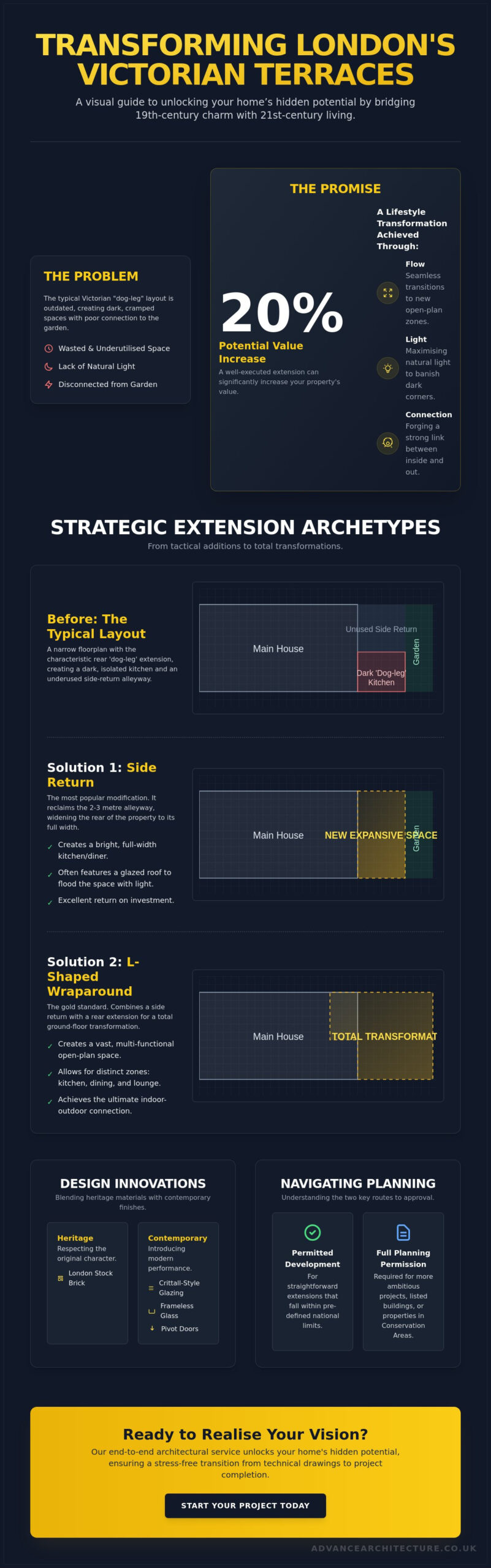
Investing in an extension is about more than just adding square footage. It’s about a fundamental lifestyle shift. In 2026, the focus has moved from simply adding “more rooms” to creating high-quality, multi-functional zones. A bespoke extension can increase property value by up to 20% in prime London boroughs, providing a significant return on investment. We focus on three pillars of transformation:
- Flow: Creating a stress-free transition from traditional front rooms to new open-plan zones.
- Light: Maximizing natural light through structural glazing, pivot doors, and roof lights to banish dark corners.
- Connection: Establishing a seamless link between the interior living space and the garden.
The goal is a seamless integration of old and new. We don’t just build walls; we unlock the hidden potential of your home. These victorian terrace extension ideas allow you to preserve heritage while enjoying a home that works for your family’s modern requirements. It’s a visionary approach to urban living that prioritizes both aesthetics and long-term value.
Strategic Extension Archetypes for Narrow London Plots
London’s Victorian architecture is iconic, yet the narrow “dog-leg” footprint often feels cramped for 21st-century families. Unlocking the potential of these historic homes requires a blend of structural ingenuity and aesthetic vision. When considering victorian terrace extension ideas, the choice of archetype dictates how you’ll interact with your home for decades. Our approach focuses on seamless integration, ensuring new additions feel like a natural evolution of the original masonry.
The Side Return: Reclaiming the Dog-Leg Path
The side return is the most popular modification for London terraces, transforming the underutilised alleyway into a high-functioning internal space. By extending into this 2 to 3-metre gap, you can broaden your kitchen to the full width of the plot. We often specify structural glazed roofs to flood the formerly dark centre of the house with natural light. This requires careful consideration of the boundary wall and party wall agreements, but the result is a bright, expansive culinary hub that breathes new life into the ground floor.
The L-Shaped Wraparound: Maximising Internal Flow
For those seeking a total ground-floor transformation, the L-shaped wraparound is the gold standard. This design combines a side return with a rear extension, creating a vast, open-plan “heart of the home.” It allows for distinct zones; a bespoke kitchen, a formal dining area, and a relaxed garden lounge; all within a single, fluid space. Achieving a pillar-free ceiling is a technical priority here. We use recessed steel beams to ensure the transition between the old house and the new extension is entirely flush, providing an uninterrupted view of the garden.
Double-Storey Extensions: Vertical Thinking
While ground-floor gains are vital, vertical thinking offers a strategic way to add a master suite or a quiet home office. A double-storey addition is often feasible under specific conditions outlined in the official government guidance, provided the design respects the privacy of neighbouring properties. We meticulously assess the original Victorian foundations to ensure they can support the added weight, often implementing underpinning to guarantee structural integrity. This archetype delivers the rare luxury of an extra bedroom without sacrificing precious garden space, making it a highly efficient victorian terrace extension ideas for growing families.
Every London terrace has its own unique constraints and opportunities. If you’re ready to explore how these archetypes can be tailored to your specific property, our team can provide a bespoke design consultation to help you visualise the possibilities.
Design Innovations: Blending Heritage with Contemporary London Living
London’s Victorian terraces often suffer from a “tunnel effect” where natural light fails to reach the core of the property. Successful victorian terrace extension ideas for 2026 focus on breaking this mold through strategic structural interventions. By incorporating vaulted ceilings, we replace the cramped feel of traditional rear rooms with a sense of architectural volume that feels both expansive and intentional. This vertical expansion allows for a more breathable living environment, especially in the narrow plots typical of areas like Fulham or Hackney.
Glazing Strategies: Bringing Daylight into Deep Floorplans
Maximising natural light is a technical challenge that requires a bespoke approach to glazing. For basement conversions or ground floor extensions with limited side access, walk-on glass light wells are a transformative solution. These structural glass panels allow sunlight to penetrate through the floor into lower levels without sacrificing usable external space. When exploring these victorian terrace extension ideas, many homeowners find that projects can be executed under official government guidance on permitted development, which streamlines the path toward construction while maintaining strict quality standards.
- Slim-frame sliding doors: These offer sightlines as narrow as 20mm, providing an uninterrupted view of the garden that bi-fold doors cannot match.
- Crittall-style frames: These provide a sophisticated, industrial aesthetic that complements the period character of Victorian masonry.
- Roof lanterns: A central roof lantern can act as a light-filled sanctuary, drawing the eye upward and illuminating kitchen islands or dining areas.
Materiality: Heritage vs. Innovation
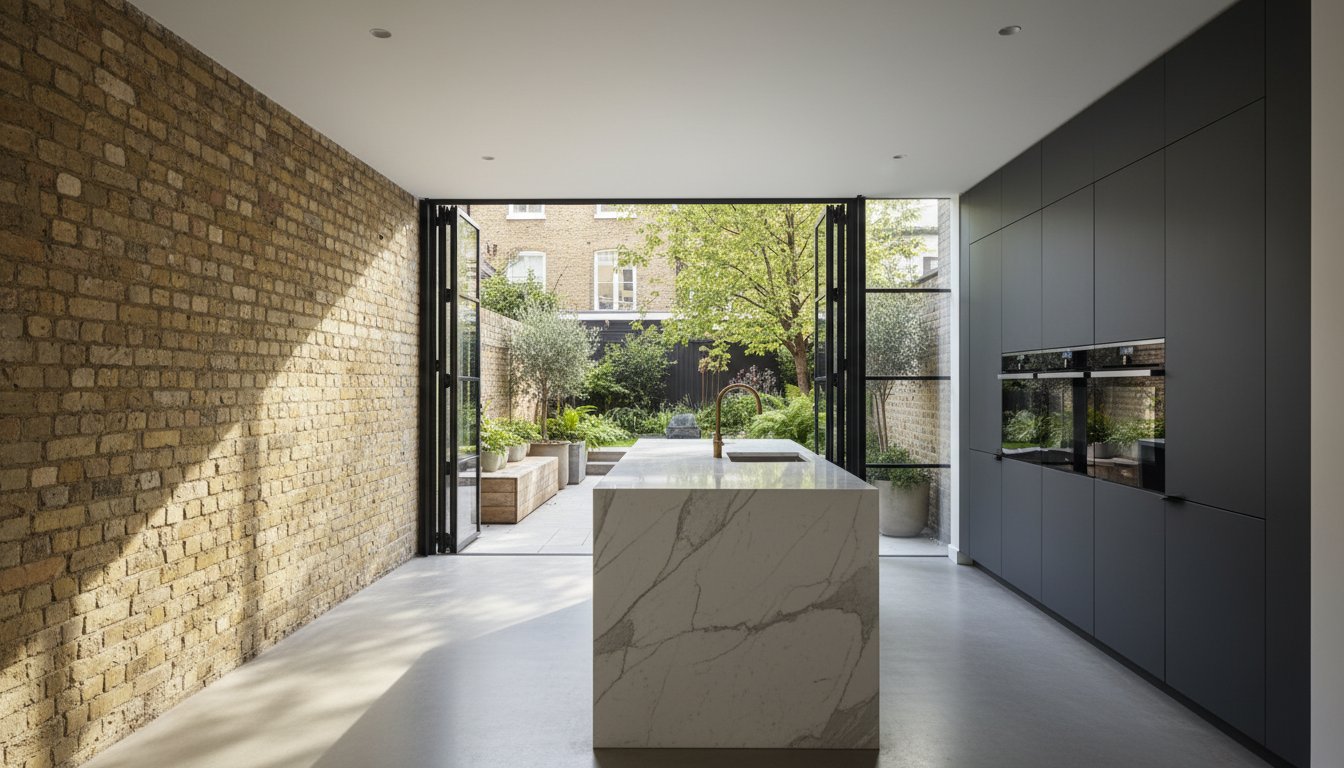
The choice of materials defines the relationship between the old and the new. Using reclaimed London Stock brick ensures a seamless transition that planning officers frequently prefer in conservation areas. However, we’re seeing a shift toward bold, visionary contrasts. Charred timber cladding, known as Shou Sugi Ban, offers a striking, blackened finish that is both durable and aesthetically modern. Alternatively, zinc cladding provides a sleek, contemporary edge with a lifespan exceeding 60 years. Internally, exposing the original brickwork adds a layer of raw, tactile character that grounds the new extension in its historic context.
Breaking the Corridor Feel
The goal of modern terrace design is to move away from the traditional “series of boxes” layout. We achieve this by using subtle floor level changes or “sunken” living areas to define zones without the need for physical walls. This maintains an open-plan feel while providing functional separation. Clear sightlines from the front door through to the rear garden are essential for creating a sense of immediate arrival and space. Internal flow is the seamless orchestration of movement and light that transforms a series of isolated rooms into a cohesive, functional living environment.
Navigating Planning Permission and Conservation in London Boroughs
Extending a Victorian terrace requires a strategic approach to local regulations. You’ll often choose between Permitted Development (PD) rights and a full planning application. For terraced properties, PD typically allows for a 3-metre rear extension. Under the “Larger Home Extension” scheme, you can often increase this to 6 metres through the Prior Approval process. This involves notifying the council, who then consult your immediate neighbours. It’s a faster route than a full application, but it carries specific constraints on height and materials. Our permitted development guide provides a detailed breakdown of these 2026 requirements.
Conservation Areas and Article 4 Directions
Conservation areas in boroughs like Barnet or Islington add layers of complexity. If your home falls under an Article 4 Direction, your PD rights are often restricted or removed entirely. You’ll need to demonstrate that your victorian terrace extension ideas respect the original character of the street. This means matching brick bonds, selecting timber sash windows over uPVC, and ensuring rooflines don’t disrupt the heritage skyline. In Camden, planners frequently demand high-quality cladding materials that complement the existing masonry. Working with an architect who understands these specific borough nuances ensures your design is both visionary and compliant.
The Party Wall Act and Neighbour Relations
The Party Wall Act 1996 is your legal framework for managing shared boundaries. You must serve notice to your neighbours at least two months before structural work begins. If they don’t consent in writing within 14 days, you’ll need to appoint a Party Wall surveyor to draft an “Award.” This document protects both parties by recording the property’s condition and outlining working hours. Early, transparent communication often prevents disputes. It turns a potential legal hurdle into a collaborative process. We focus on minimising the impact on shared walls to keep your build moving forward without delays.
High-density London living makes privacy a top priority for planners. You must address the “21-metre rule” for window-to-window distances. Creative solutions like clerestory windows, obscured glazing, or internal courtyards allow light to flood in without compromising your neighbour’s seclusion. These design choices ensure your victorian terrace extension ideas pass through the planning stage while maximizing your internal living space.
Ready to unlock the potential of your property with a bespoke design? Contact Advance Architecture today to discuss your planning strategy.
Realising Your Vision: The Advance Architecture Approach
Turning ambitious victorian terrace extension ideas into a tangible reality requires more than just a set of drawings; it demands a partnership that balances creative flair with technical precision. At Advance Architecture, we translate your lifestyle requirements into bespoke designs that respect the heritage of your home while introducing modern functionality. Whether you’re seeking a side-return to expand your kitchen or a multi-storey rear addition, our comprehensive service manages the entire lifecycle of your project. We handle everything from the initial site survey and planning application to detailed technical drawings and project management.
A pivotal part of our early design process is the use of 3D visualisation. This technology allows you to walk through your proposed space before a single brick is laid, ensuring the flow of light and the scale of rooms meet your expectations. By seeing the finished result in high definition, you can make informed decisions about materials and layouts, reducing the risk of costly changes during the construction phase. It’s about providing clarity and confidence from the very first meeting.
From Concept to Construction: Our Methodology
Our workflow follows the RIBA stages of work, providing a clear roadmap for your extension project. This structured approach ensures that every detail, from the conceptual sketch to the final handover, is executed with care. We place a heavy emphasis on technical compliance, ensuring your design meets the latest Building Regulations for thermal efficiency and structural safety. This is particularly crucial in 2026, as energy standards for London homes continue to evolve. We act as the central hub, managing the relationship between you, the local council, and the contractors to keep the project on track.
Why a London Specialist Architect Matters
London’s architectural landscape is unique, defined by its historic housing stock and tight, narrow sites. A specialist architect understands the specific planning precedents set by local boroughs like Wandsworth, Hammersmith, or Islington. We know how to navigate the logistics of restricted access and party wall agreements that often complicate victorian terrace extension ideas. Our goal is to deliver high-end, functional elegance that adds significant value to your property. We focus on unlocking the hidden potential within your home, creating spaces that feel both luxurious and lived-in. Our commitment is to provide a stress-free experience that results in a home perfectly tailored to your future.
Realise Your Vision for a Modern London Home
Transforming a period property requires a delicate balance between preserving 19th-century character and introducing 21st-century functionality. We’ve explored how strategic archetypes and bespoke design can overcome the unique constraints of narrow London plots. Since 2009, Advance Architecture has specialized in securing planning and Conservation Area consents across London’s 33 local authorities. Our comprehensive service manages Design, Planning, and technical documentation to take the stress out of complex builds.
Implementing the right victorian terrace extension ideas isn’t just about adding floor space; it’s about unlocking the hidden potential of your home through expert spatial optimization. Whether you’re navigating strict heritage regulations or seeking a seamless contemporary addition, our team provides the steady hand needed for a successful transformation. It’s time to turn your architectural aspirations into a tangible reality.
Book your free architectural consultation for your London extension and start your journey toward a perfectly tailored home today.
Frequently Asked Questions
Do I need planning permission for a Victorian terrace side return extension?
You can often build a side return extension under Permitted Development rights without seeking full planning permission. For a typical Victorian terrace, the extension must be single-storey, no wider than half the width of the original house, and have a maximum height of 4 metres. If your property is a flat or sits within one of London’s 27 Conservation Areas, these rights are usually restricted. Obtaining a Lawful Development Certificate provides the legal certainty needed for future property sales.
How much does a Victorian terrace extension cost in London in 2026?
Budgeting for a London extension in 2026 requires an estimated investment of £3,000 to £5,000 per square metre for high-quality architectural finishes. A standard 25-square-metre side return typically starts at £75,000, excluding VAT and professional fees. These figures reflect the rising costs of sustainable materials and skilled labour in the capital. We focus on unlocking potential through precise cost management, ensuring your victorian terrace extension ideas translate into tangible property value.
How long does it take to design and build a terrace house extension?
A typical project timeline spans 9 to 12 months from the initial consultation to completion. The design and planning phase usually requires 3 to 4 months, which includes the 8-week statutory period for local authority decisions. Construction for a terrace extension generally takes 20 to 24 weeks. We manage this schedule meticulously to ensure a stress-free experience, coordinating every technical detail to keep your home transformation on track.
Can I extend my terrace house if it is in a Conservation Area?
Yes, you can extend a terrace house in a Conservation Area, though it requires full planning permission rather than Permitted Development. Local authorities apply strict criteria to ensure new structures preserve or enhance the area’s character. Success depends on using sympathetic materials, such as reclaimed London stock bricks or traditional timber joinery. Our expertise in heritage planning helps navigate these complexities to secure approval for your bespoke design vision.
What is the maximum height for a single-storey rear extension on a terrace?
The maximum height for a single-storey rear extension is 4 metres for a pitched roof or 3 metres for a flat roof under Permitted Development rules. If the extension is within 2 metres of your property boundary, the eaves height is capped at 3 metres to protect your neighbour’s access to light. These technical constraints demand clever design solutions. We use bespoke glazing and vaulted ceilings to create a sense of volume without breaching height regulations.
Is a side return extension worth the investment for a London property?
A side return extension is a highly profitable investment that can increase a London property’s market value by 10% to 20% according to Nationwide Building Society data. By reclaiming the narrow alley space, you create a wide, open-plan kitchen and dining area that modern buyers prioritise. This structural optimization doesn’t just add square footage; it fundamentally improves the flow and light of the entire ground floor, making it a visionary choice for homeowners.
How do I deal with the Party Wall Act for my extension?
You must serve a formal Party Wall Notice to your neighbours at least 2 months before construction begins. This legal requirement applies if you’re excavating within 3 or 6 metres of their structure or building directly on the boundary line. If they don’t consent within 14 days, you’ll need to appoint a surveyor to draft a Party Wall Award. We guide you through this process to maintain positive relationships and ensure a seamless start to your project.
Can I have a double-storey extension on a mid-terrace house?
Double-storey extensions on mid-terrace houses are possible but face significant planning hurdles regarding overshadowing and privacy. To gain approval, the upper floor often needs to be set back from the boundary or designed with a smaller footprint than the ground floor. Incorporating innovative victorian terrace extension ideas like outrigger extensions can help achieve this extra space while respecting the sunlight rights of neighbouring residents.