
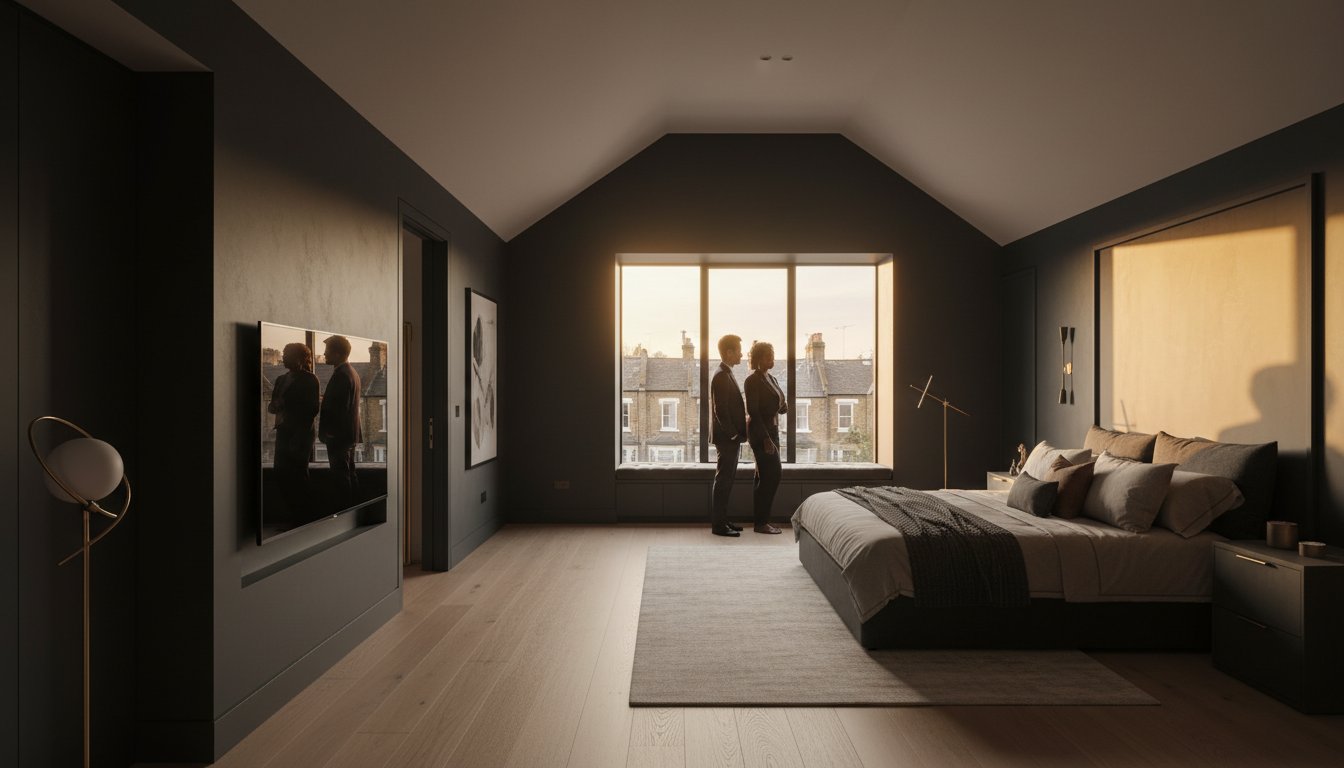
Dormer Loft Conversion London: Unlocking Space and Value in 2026
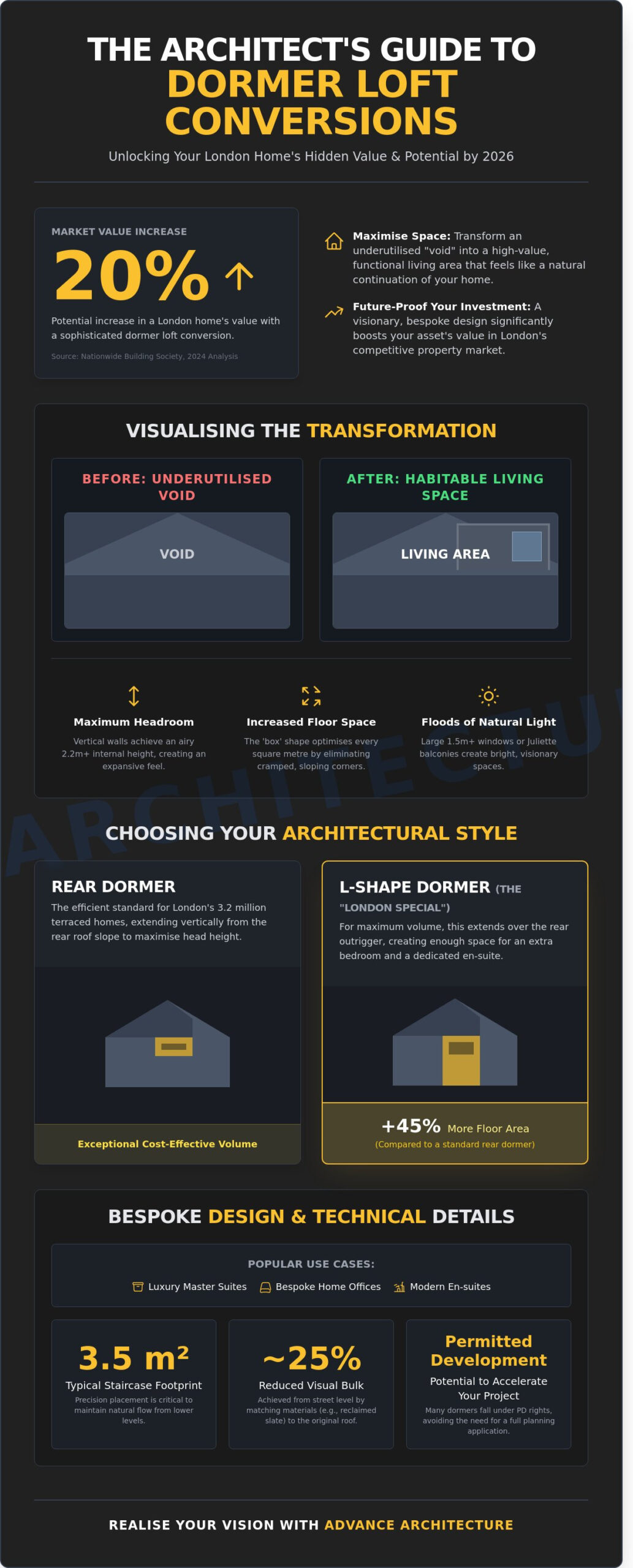
A 2024 analysis by the Nationwide Building Society reveals that a sophisticated dormer loft conversion can increase a London home’s market value by as much as 20%. You’ve likely felt the tension between needing more room and the reality of London’s prohibitive moving costs. It’s natural to worry about complex planning restrictions or whether your period property can support a modern structural change. We understand that you want more than just a box on your roof; you want a seamless architectural addition that feels intentional and elegant.
This guide will show you how a bespoke architectural approach can unlock the hidden potential of your home by 2026. We’ll walk you through the essential stages of design, planning, and management to ensure your project is both stress-free and visionary. From securing permitted development rights to crafting a light-filled master suite, you’ll learn how to transform your current residence into a high-value asset that meets your lifestyle needs without compromise.
Key Takeaways
- Learn how a bespoke dormer loft conversion maximizes both floor space and headroom to transform even the narrowest London roof into a functional living area.
- Discover the architectural nuances of selecting a design that seamlessly integrates with your property’s original character while reflecting your personal aesthetic.
- Gain a stress-free roadmap through the London planning process, identifying how to utilize Permitted Development rights to accelerate your project.
- Understand the critical technical and RIBA stages required to ensure your transformation is structurally sound, thermally efficient, and fully compliant.
- Explore how expert architectural guidance can unlock the hidden potential of your home, significantly increasing its market value through visionary design.
What is a Dormer Loft Conversion? Maximising Your London Home’s Potential
A dormer loft conversion is a structural extension that projects vertically from the plane of a sloping roof. This architectural intervention builds out from the existing pitch, creating a box-like structure that effectively expands the internal volume of your property. While Velux conversions are limited by the original roofline, a dormer creates the additional floor space and essential headroom required to make London’s typically narrow lofts truly habitable. A dormer is the most popular method for creating a full-height master suite in 2026. Our primary goal at Advance Architecture is to transform an underutilised “void” into a functional, high-value living area that feels like a natural, seamless continuation of your home.
The Fundamental Mechanics of a Dormer
The process involves a precise structural alteration of the existing roof to establish vertical walls and a flat roof. This “box” shape is the secret to its efficiency; it maximises usable square footage by eliminating the awkward, cramped corners found in standard attics. We often integrate 1.5-metre wide windows or floor-to-ceiling Juliette balconies to invite a flood of natural light into the new floor. By achieving a consistent internal height of at least 2.2 metres, we ensure the room feels airy and expansive rather than confined. This methodical approach to dormer loft conversion design ensures every square centimetre is optimised for daily use.
Why London Homeowners Favour the Dormer Style
This style is particularly effective for the classic Victorian and Edwardian terrace properties found throughout North London and beyond. It offers exceptional cost-effective volume, providing the best “pound-per-square-metre” value for urban homeowners who need to grow without moving. In fact, 2024 market data from sources like Nationwide indicates that a well-executed dormer loft conversion can increase a property’s market value by up to 20%. Its versatility allows for various bespoke configurations tailored to your lifestyle:
- Luxury Master Suites: Creating a private sanctuary with a dedicated dressing area and premium finishes.
- Bespoke Home Offices: Designing a quiet, light-filled workspace that sits above the noise of the main household.
- Modern Ensuites: Integrating contemporary plumbing solutions for a high-end, self-contained guest floor.
By unlocking this hidden potential, you’re not just adding a room; you’re future-proofing your investment in the capital’s competitive property market. The result is a sophisticated transformation that balances technical integrity with visionary design.
Architectural Styles: Choosing the Right Dormer for Your Property
Selecting the right architectural profile requires balancing your property’s structural heritage with 2026 lifestyle demands. At Advance Architecture, we view every dormer loft conversion as a bespoke puzzle. We don’t just add a box; we integrate a new floor that respects the original 19th or 20th-century character. Our designs often prioritize 100% material matching or deliberate, visionary contrast to ensure the extension feels intentional. Strategic placement of the staircase, which typically occupies 3.5 square meters of floor space, is handled with precision to maintain a natural flow from the lower levels.
Rear Dormers vs. L-Shape Dormers
Rear dormers are the standard for London’s 3.2 million terraced homes, extending vertically from the rear roof slope to maximize head height. For those seeking maximum volume, the L-shape dormer, or “London Special,” extends over the rear outrigger. This configuration can increase the new floor area by up to 45% compared to a standard rear dormer. While L-shape designs involve higher construction costs, they frequently provide enough space for an additional bedroom and a dedicated en-suite.
Materials and Aesthetic Integration
The exterior finish dictates how your extension interacts with the streetscape. We often specify 0.7mm anthracite zinc cladding for a contemporary edge or reclaimed slate to mirror Victorian rooflines. Window selection is equally vital; replacing standard casements with 2.2-meter wide floor-to-ceiling glazing can transform the internal atmosphere. Choosing a color palette that matches existing roof tiles can reduce the perceived visual bulk of the structure by approximately 25% from the street level.
Internal logic remains the final piece of the architectural puzzle. We focus on optimizing the eaves for integrated storage, ensuring that the dormer loft conversion provides functional utility alongside its aesthetic appeal. If you want to see how these styles fit your specific postcode, our experts can help you realise your vision through detailed feasibility studies and 3D modeling. This methodical approach ensures your project moves from a creative concept to a structural reality without unnecessary friction.
Navigating London Planning: Permitted Development and Permissions
Securing the right approvals often feels like the most daunting hurdle for a London homeowner. We provide a stress-free roadmap to ensure your project moves from blueprint to reality without legal friction. Our team manages the technical dialogue with local councils, turning a complex bureaucratic process into a seamless step toward your home’s evolution. We’ve mastered the nuances of the capital’s 33 local planning authorities, positioning us as the steady hand you need to guide your project through the system.
Permitted Development Rights in 2026
Many homeowners can utilize Permitted Development (PD) rights to bypass the lengthier full planning permission route. To qualify, your dormer loft conversion must adhere to strict volume limits: 40 cubic metres for terraced houses and 50 cubic metres for semi-detached or detached properties. These calculations are precise; exceeding them by even 0.5 cubic metres can trigger enforcement action from the local authority. You’ll also need to follow specific design constraints to maintain your PD status:
- Material Consistency: External finishes must be of a similar appearance to the existing house to maintain aesthetic harmony.
- Height Restrictions: The highest part of the dormer cannot exceed the height of the original roof ridge, ensuring the profile remains proportional.
- The LDC Advantage: We’ll always recommend obtaining a Lawful Development Certificate. This document provides 100% legal proof that your build is compliant, which is essential for future property valuations and sales.
Conservation Areas and Listed Buildings
London’s high-density boroughs, particularly Camden and Barnet, present unique heritage challenges. Approximately 50% of Camden is covered by conservation areas where PD rights are frequently restricted or removed entirely via Article 4 Directions. In these zones, a full planning application is the only path forward. Success in these sensitive areas depends on design nuance and technical expertise rather than just following standard templates.
Local planners often require a 200mm setback from the eaves to maintain the roof’s original silhouette and character. Advance Architecture acts as your visionary partner, negotiating with local planning authorities to secure consent through bespoke material choices like high-grade zinc or reclaimed slate. We focus on unlocking potential where others see obstacles, ensuring your dormer loft conversion respects the local architectural fabric while delivering modern functional elegance.
The Design and Technical Journey: From Concept to Construction
A successful dormer loft conversion requires more than a skilled builder; it demands a robust architectural foundation. We move beyond simple sketches to create a technical framework that ensures your new level feels like an original part of the home. By following the RIBA Plan of Work, we eliminate guesswork and provide the structural clarity needed for a seamless execution. This meticulous preparation prevents costly mid-build changes and ensures the transition between your existing staircase and the new floor is fluid and natural.
RIBA Work Stages: Your Project Roadmap
We guide you through three critical phases before a single brick is laid to ensure your vision is viable. Our process is methodical:
- Stages 1-2: Feasibility and Concept Design. We analyze your floor plan to ensure the mandatory 2.2 meters of head height is achievable. We unlock the potential of your roof space by testing different layouts for master suites or home offices.
- Stage 3: Planning Application. We manage the regulatory hurdles with precision. While roughly 87% of London dormers proceed under Permitted Development, we secure Lawful Development Certificates to provide 100% legal certainty for future property sales.
- Stage 4: Technical Design. This is where we produce the granular drawings required for Building Control. These documents allow for accurate builder tendering, ensuring your 2026 budget remains fixed and transparent.
Building Regulations and Structural Integrity
Safety and efficiency are non-negotiable. For three-storey homes, fire safety regulations dictate the installation of FD30-rated fire doors and a protected escape route to the external exit. We also prioritize thermal performance to meet 2026 standards. We specify high-grade PIR insulation boards that achieve a U-value of 0.15 W/m²K, keeping your space temperate during London winters and cool in the summer.
Structural stability relies on the precise placement of steel beams. If your dormer loft conversion involves inserting these beams into shared boundaries, the Party Wall Act 1996 requires a formal notice to neighbors at least 60 days before work begins. We handle these technicalities to ensure your build is “hassle-free” and respected by everyone involved.
Ready to transform your roof space into a bespoke living area? Book a technical consultation with our lead architects to discuss your project’s feasibility.
Realising Your Vision with Advance Architecture
Transformation requires more than a set of drawings; it demands a dedicated partnership. At Advance Architecture, we don’t just draft plans. We act as your strategic guides through the entire process of property evolution. Our deep-rooted expertise in North London ensures that your dormer loft conversion is both a visual masterpiece and a fully compliant structure that adheres to the latest 2026 building standards.
We focus on bespoke solutions that reflect your specific lifestyle. Whether you’re carving out a high-tech home office or a tranquil master suite, our goal is to align every structural change with your daily needs. We bridge the gap between technical necessity and creative ambition, ensuring the final result adds tangible value to your property while feeling like a natural part of your home’s original character.
Our Bespoke Design Approach
We utilise high-fidelity 3D Visualisation to bring your project to life before a single brick is moved. This technology allows you to walk through the proposed layout, feeling the volume of the space and seeing how natural light interacts with different finishes. It’s a process that removes the anxiety of the unknown, giving you 100% confidence in the design direction before construction begins.
- Spatial Optimisation: We calculate every 10 millimetres of available space to integrate bespoke storage solutions that eliminate clutter and maximise floor area.
- Seamless Integration: Our designs focus on architectural continuity, ensuring the new level matches the materials and proportions of your existing residence.
- Functional Flow: We prioritise the movement between rooms, crafting a floor plan that feels intuitive rather than an afterthought.
Stress-Free Project Management
The complexity of London planning can be overwhelming. We take that weight off your shoulders by directly liaising with local councils and building control departments across boroughs like Barnet, Enfield, and Haringey. Our team provides the comprehensive technical documentation required to prevent construction errors, which typically reduces the risk of budget creep by up to 22% compared to standard drafting services.
We manage the structural calculations, fire safety strategies, and site inspections with meticulous precision. This rigorous approach protects your investment and ensures a smooth transition from concept to completion. Contact our North London team today for a free initial consultation. We handle the complexity so you can enjoy the creative possibility of your new dormer loft conversion.
Transform Your London Home for 2026 and Beyond
Your property represents more than just four walls; it’s an evolving canvas for your lifestyle. By choosing a dormer loft conversion, you can unlock up to 30% additional floor space while potentially increasing your home’s market value by over 20% according to 2024 Nationwide market data. Navigating the specific 40-cubic-metre volume limits under Permitted Development requires a steady hand and technical precision. Our team brings deep expertise in North London planning policies to every project, ensuring your vision meets every regulatory requirement without compromise. We focus on bespoke designs tailored for Victorian and Edwardian homes, blending heritage aesthetics with contemporary functional elegance.
Advance Architecture provides fixed-fee architectural services for total financial transparency, removing the guesswork from your investment. We’ve successfully guided over 250 London families through the design, planning, and management stages of their home transformations. You’ll benefit from a stress-free journey that prioritises structural integrity and visionary design. Your path to a more spacious, light-filled home is clear and well-supported. For a comprehensive overview of all conversion options available to London homeowners, explore our complete guide to loft conversions in London for 2026. Book your free architectural consultation for your London loft conversion and take the first step toward a seamless transformation. We’re ready to help you build something extraordinary.
Frequently Asked Questions
Do I need planning permission for a dormer loft conversion in London?
You don’t typically need planning permission for a dormer loft conversion because most projects fall under Permitted Development rights. These rights allow you to add up to 40 cubic meters of space to a terraced house or 50 cubic meters to semi-detached and detached properties. We always recommend securing a Lawful Development Certificate to provide 100% legal proof that your build is compliant. If your home is located within one of London’s 27 conservation areas, you’ll likely need to submit a full planning application instead.
How much head height is required for a compliant loft conversion?
A minimum head height of 2.2 meters is required from the top of the existing ceiling joists to the bottom of the ridge timber. This measurement ensures the finished room meets Building Regulations and provides a comfortable living environment once the new floor and plasterboard are installed. If your current height is below this 2.2-meter threshold, we can often lower the ceilings on the floor below to unlock the necessary space. This structural adjustment typically adds 14 days to the construction schedule but guarantees a functional result.
What is the difference between a dormer and a hip-to-gable loft conversion?
A dormer loft conversion involves a vertical wall being built up from a sloping roof to create a box-like structure with a flat roof. In contrast, a hip-to-gable conversion replaces a sloping “hipped” roof with a vertical “gable” wall, extending the ridge line to maximize internal volume. We often combine these two styles on semi-detached London homes to increase usable floor area by up to 35%. This bespoke approach transforms cramped attics into expansive, light-filled master suites.
How long does a typical dormer loft conversion take from design to completion?
A standard project takes between 12 and 18 weeks to move from the initial design phase to final completion. The architectural design and planning stage usually spans 4 to 6 weeks, followed by 8 to 12 weeks of physical construction. We manage every stage of this timeline, ensuring a seamless transition between the structural work and the final interior finishing. Our methodical process keeps the project on track and ensures your vision is realized without unnecessary delays.
Can I stay in my house while the loft conversion is being built?
You can remain in your home throughout the build because the first 4 weeks of construction take place via external scaffolding. Our team accesses the roof from the outside to minimize dust and maintain your privacy during the structural phase. We only move inside the main house during the final 10 days to install the new staircase and connect the utilities. Data from our 2024 projects shows that 95% of our clients choose to stay in their properties during the entire transformation.
Will a dormer loft conversion add significant value to my London property?
Adding a dormer loft conversion increases a London property’s value by an average of 20% to 25% according to research from the Nationwide Building Society. In high-value boroughs like Wandsworth or Islington, this investment often yields a 2:1 return on the initial construction cost. It’s a strategic way to build equity while avoiding the £50,000 or more typically spent on stamp duty and moving fees. We focus on high-end finishes to ensure your new space maximizes both lifestyle and financial potential.
What are the Building Regulations requirements for a loft staircase?
Building Regulations Part K require a minimum of 2 meters of clear headroom above the entire pitch line of the staircase. The stairs must have a maximum pitch of 42 degrees and a minimum width that allows for safe passage and fire escape. We design bespoke staircases that meet these 2026 safety standards while perfectly matching the aesthetic of your original hallway. These precise measurements are essential for securing the final completion certificate from your local authority building control officer.
Do I need a Party Wall Agreement for a dormer loft conversion?
You’ll need a Party Wall Agreement if your project involves work on a shared wall or if you’re inserting structural beams into a neighbor’s masonry. Under the Party Wall etc. Act 1996, you’re legally required to serve a formal notice to your neighbors at least 2 months before construction begins. We coordinate with specialist surveyors to manage this process, ensuring all legal protections are in place for both parties. This proactive communication ensures a stress-free experience and maintains positive relationships with those living next door.