
Loft Conversions in London: The Visionary Homeowner’s Guide for 2026
By 2026, the most valuable square footage in London won’t be found in sprawling new developments, but within the untapped voids of our existing historic terraces. You likely recognize that your roof represents a significant opportunity for growth, yet the prospect of securing planning permission or choosing between a Mansard and a Hip-to-Gable design feels overwhelming. The technical weight of building regulations and structural integrity often overshadows the creative spark that started your journey.
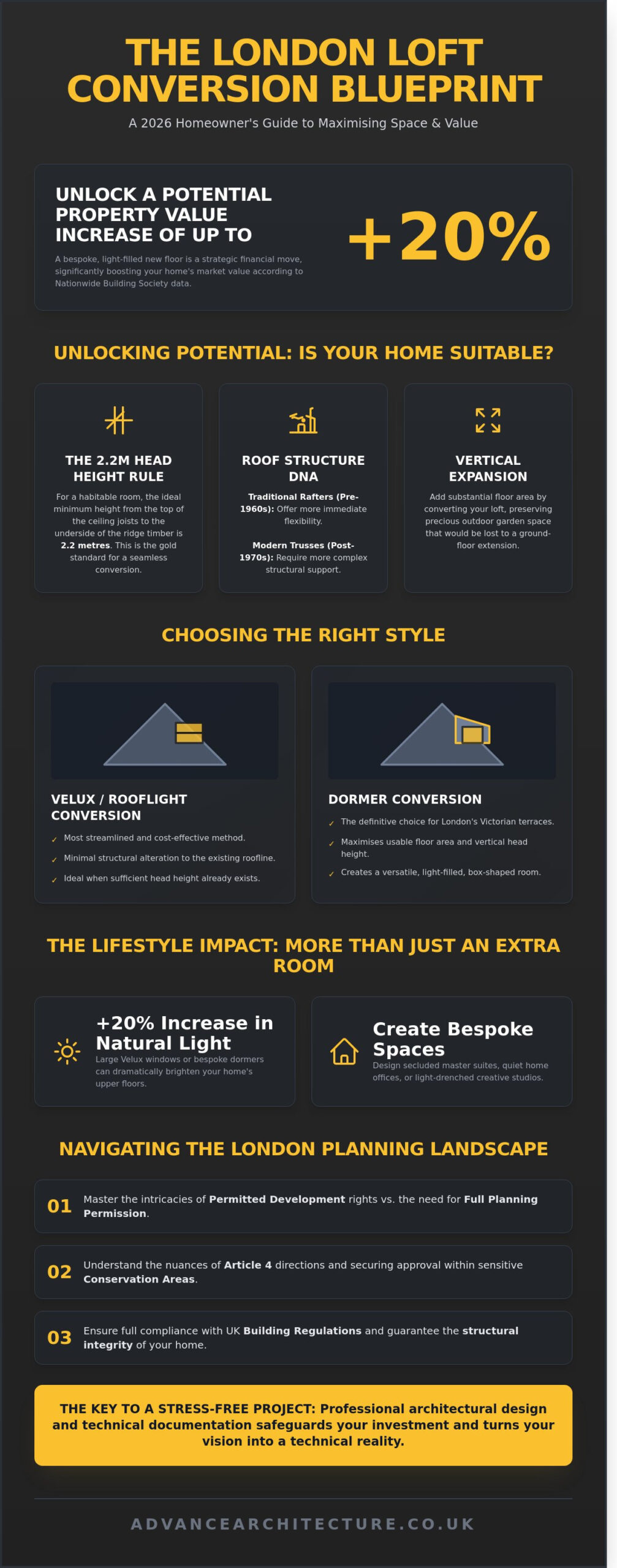
We believe that loft conversions should be a seamless transition from vision to reality rather than a source of architectural frustration. This guide provides a definitive roadmap to expertly handle the design and approval process, ensuring you maximize your property’s potential without the typical stress. You’ll discover how a bespoke, light-filled new floor can increase your home’s value by up to 20% according to industry data from the Nationwide Building Society, while providing the sophisticated lifestyle upgrade you’ve envisioned.
Key Takeaways
- Identify the architectural potential of your attic space to create a bespoke transformation that adds substantial floor area while preserving your outdoor garden.
- Compare popular styles of loft conversions to determine which structural configuration perfectly complements your home’s heritage and your lifestyle needs.
- Master the intricacies of London’s regulatory environment, from Article 4 directions to the nuances of securing approval within sensitive Conservation Areas.
- Explore how professional design and technical documentation can safeguard your investment, ultimately adding up to 20% to your property’s market value.
Unlocking Potential: Is Your London Home Suitable for a Loft Conversion?
For many Londoners, the attic represents the final frontier of domestic space. A loft conversion is far more than a simple renovation; it is a bespoke architectural transformation that repurposes underutilised voids into high-value living areas. In a city where property prices rose by an average of 1.5% in early 2024, maximizing every square inch of your existing footprint is a strategic financial move. This Overview of loft conversions highlights how these projects allow homeowners to expand vertically, preserving precious garden space that would otherwise be lost to a traditional ground-floor extension.
Success starts with a tape measure. To meet UK Building Regulations for habitable rooms, the internal ridge height should ideally be at least 2.2 metres. This measurement is taken from the top of the ceiling joists to the underside of the ridge timber. While lower heights can sometimes be managed through innovative floor lowering techniques, the 2.2-metre threshold remains the gold standard for a seamless, cost-effective transition. Beyond height, we must assess the roof pitch and structural integrity to determine the most visionary route for your home’s evolution.
The Lifestyle Impact: More Than Just an Extra Bedroom
Assessing Structural Feasibility and Head Height
Understanding your roof’s DNA is vital. Traditional rafter roofs, common in pre-1960s homes, offer more immediate flexibility for loft conversions. Modern trussed roofs, typically found in post-1970s builds, require more complex structural support to replace the W-shaped frames. Because every millimetre counts, a professional site survey is the essential first step. Securing detailed architectural plans ensures that structural integrity is maintained while unlocking the hidden potential of your roofline. This technical foundation prevents future delays and ensures the project remains a stress-free experience from the initial sketch to the final build.
Choosing the Right Style: Popular Types of Loft Conversions in London
Selecting the ideal structural approach requires a balance between your property’s existing geometry and your desired lifestyle outcomes. Your architect acts as a vital bridge here, translating your vision into a design that respects the local streetscape while adhering to official planning permission guidance. This decision influences more than just the exterior silhouette; it dictates the internal circulation, particularly where the new staircase integrates with your current floor plan. A successful design optimizes volume, enhances natural light, and secures structural integrity through a methodical planning process.
London’s diverse architecture means a one-size-fits-all approach fails to capture a home’s true value. We analyze the roof’s pitch, the ridge height, and the surrounding context to recommend a style that maximizes space without compromising the building’s character. Whether you’re aiming for a minimalist retreat or a sprawling master suite, the choice of conversion type is the foundation of your project’s success. The result is a seamless transition between the old and the new, ensuring loft conversions feel like an organic part of the original structure.
Dormer and Velux Conversions: Versatility for Terraced Homes
Velux or roof light conversions represent the most streamlined method for unlocking potential. They involve installing high-performance windows into the existing roof slope, making them a cost-effective transformation with minimal structural alteration. However, for those requiring significant head height, the dormer loft conversion remains the definitive choice for London’s Victorian and Edwardian terraces. By extending vertically from the roof plane, a dormer creates a flat-roofed space that provides the necessary volume for full-height ceilings. This style is the gold standard for creating functional bedrooms and bathrooms where space was previously restricted.
Mansard and Hip-to-Gable: Maximising Space in Period Properties
Properties with hipped roofs, common in semi-detached homes across boroughs like Barnet or Bromley, often benefit from a hip-to-gable conversion. This process involves straightening the sloping side of the roof to create a vertical wall, significantly expanding the internal footprint. For homeowners in prestigious postcodes or Conservation Areas, the Mansard conversion offers an aesthetically sophisticated solution. It alters the entire slope of the roof to a nearly 72-degree angle, effectively adding a new storey to the property. While more complex to execute, a Mansard design provides a bespoke look that satisfies strict local authority criteria. If you’re unsure which path fits your property, you can speak with our design team to explore your options.
- Velux: Best for conservation of original rooflines and budget-conscious projects.
- Dormer: Ideal for maximizing usable floor area in narrow terraced houses.
- Mansard: The premium choice for high-end aesthetic integration and maximum volume gain.
Navigating the London Planning Landscape: Permission and Regulations
Unlocking the hidden volume of a London roof requires more than just a creative eye; it demands a strategic mastery of the capital’s rigid planning framework. Every borough, from the historic streets of Kensington to the evolving skylines of Hackney, operates under a unique set of constraints. Securing the future value of your home means moving beyond guesswork and adopting an architect-led strategy that bridges the gap between visionary design and local authority approval.
Permitted Development Rights vs. Full Planning Permission
For many homeowners, the most efficient route to expansion is through permitted development. This allows for loft conversions without the need for a full planning application, provided the addition doesn’t exceed 40 cubic metres for terraced houses or 50 cubic metres for semi-detached and detached properties. The design must respect the original aesthetic, typically requiring materials that match the existing exterior to maintain local character.
Full planning permission becomes a necessity when the project falls outside these specific parameters. This is common for flats, listed buildings, or properties within Conservation Areas where Article 4 directions may have stripped away standard development rights. If your vision includes a Mansard design or a terrace that alters the front roof slope, a formal application is required. We recommend securing a Lawful Development Certificate (LDC) even for PD projects. This document provides 100% legal certainty, proving to future buyers and solicitors that your conversion was built legally at the time of construction.
Building Regulations and the Party Wall Act
Design excellence must be anchored by technical compliance. While planning permission focuses on appearance and impact, building control ensures the structural integrity and safety of the new space. Your project must adhere to the Building Regulations Approved Documents, which dictate essential standards for fire escape routes, thermal insulation, and floor reinforcement. These technical requirements aren’t mere hurdles; they’re the benchmarks that ensure your new master suite is warm, quiet, and safe.
The Party Wall Act 1996 adds another layer of responsibility for Londoners. If your loft conversions involve inserting steel beams into a shared wall or altering a chimney breast, you’re legally required to notify your neighbours. We manage this process through precise technical drawings and formal notices, preventing disputes and keeping the construction timeline on track. Our comprehensive approach integrates Design, Planning, and Management to transform a complex regulatory puzzle into a seamless journey toward your new home.
The Architectural Design Process: Turning Vision into Technical Reality
Moving from a conceptual sketch to a buildable reality requires more than just artistic flair; it demands a rigorous translation of ideas into technical documentation. While some homeowners view professional fees as an additional expense, these costs represent a vital safeguard against future complications. Industry studies suggest that architectural oversight can prevent technical errors that typically cost homeowners between £5,000 and £15,000 during the construction phase. Investing in a comprehensive design phase ensures that your loft conversions are built on a foundation of precision rather than guesswork. This transition marks the point where your vision becomes a structured, executable plan that contractors can follow with absolute certainty.
Concept Design and 3D Visualisation
We begin by unlocking the potential of your roof space through bespoke layouts that optimize every square inch. Our team uses high-fidelity 3D models to explore light flow, furniture placement, and the complex geometry of staircase integration. You can see exactly how a dormer window impacts the room’s volume or how natural light interacts with different finishes at specific times of day. We refine these aesthetic details to ensure a seamless blend with your existing home architecture. This immersive approach allows you to make informed decisions about the layout before a single contractor arrives on site, saving time and reducing the stress of mid-build changes.
Technical Drawings and Structural Integration
Once planning approval is secured, we produce the detailed “Building Regs” package. This is the technical heart of the project and serves as the essential instruction manual for your chosen builder. We coordinate directly with structural engineers to determine precise steel beam placements and necessary floor reinforcements. These drawings eliminate ambiguity, ensuring the project adheres to the UK Building Regulations updated in 2023 and the rigorous 2026 safety standards. By providing a granular level of detail, we protect you from the “hidden extras” that often plague poorly planned loft conversions. A robust technical package ensures your builder knows exactly what is required, resulting in a safer, faster, and more cost-effective construction process.
Ready to see your home’s hidden potential in high definition? Contact our design team today to start your 3D visualisation journey.
Maximising Property Value and Aesthetic Appeal in 2026
Investing in loft conversions remains one of the most effective strategies for capital appreciation in the capital. Data from Nationwide Building Society indicates that adding a habitable room and ensuite can increase a London property’s value by up to 20%. In the competitive 2026 market, this uplift often significantly exceeds the initial construction investment, provided the execution meets premium standards. Success requires more than just adding floor space; it demands a fusion of structural integrity and high-end aesthetics.
- Bespoke Storage: Custom cabinetry tucked into the eaves eliminates clutter and creates a sleek, architectural finish.
- Premium Materials: Using natural stone, hardwood flooring, and designer fixtures signals quality to future buyers.
- Architectural Oversight: A professional-led approach ensures every millimetre is optimized for light and flow.
Bespoke Design Solutions for Modern London Living
Modern homes in 2026 must be as intelligent as they are beautiful. We integrate smart home technology and sustainable insulation into every project to ensure your new floor is energy efficient and future-proof. Our designs prioritize flexibility, creating spaces that evolve with your family. A quiet executive office can easily become a nursery or a guest retreat as your needs change. Our stress-free promise removes the traditional anxieties of renovation by managing the risks of property transformation through meticulous planning and clear communication.
Why Advance Architecture is Your Visionary Partner
Our team brings deep expertise in North London planning policies and the delicate restoration of period properties. We combine technical authority with a passion for aspirational design, ensuring your home stands out for its quality and functional elegance. We don’t just draw plans; we unlock the hidden potential of your property. Realise your vision with a free initial consultation and take the first step toward a seamless home transformation. Our goal is to provide a result that is as sturdy and well-planned as the loft conversions we deliver across the city.
Realise Your Vision for a 2026 London Home
Navigating the path to a transformed home requires a blend of creative ambition and technical precision. Since 2009, Advance Architecture has mastered the intricate North London planning permission landscape, ensuring that every project meets the rigorous standards required for success. We focus on turning structural constraints into design opportunities, whether you’re preserving the character of a Victorian terrace or enhancing a modern property. Our fixed-fee architectural design and technical drawing packages offer a transparent, stress-free route through the complexities of building regulations and structural integrity.
Choosing the right style for loft conversions in 2026 means looking beyond simple floor space to consider light, flow, and long-term property value. We provide bespoke solutions tailored to the unique architectural fabric of London, ensuring your new space feels like a seamless extension of your life. Every drawing we produce is a step toward a more functional, elegant future for your household.
Unlock your home’s potential with a bespoke loft conversion design from Advance Architecture
Your journey toward a more spacious, light-filled future starts with a single, visionary step.
Frequently Asked Questions
Do I need planning permission for a loft conversion in London?
Most loft conversions in London fall under Permitted Development rights, meaning you won’t need full planning permission for your project. This rule applies if your design stays within the 40 cubic meter limit for terraced houses or 50 cubic meters for semi-detached properties. You’ll still require permission if you live in one of London’s 27 conservation areas or a listed building. We manage the design, planning, and documentation to ensure your project remains compliant and stress-free.
How much does a loft conversion cost in London in 2026?
Construction costs in London are influenced by the BCIS index, which tracks labor and material inflation across the UK. For 2026, you should account for the 3.4% annual increase in construction output prices reported by the Office for National Statistics in late 2024. Every bespoke project varies based on structural complexity and finish quality. We provide detailed feasibility studies that align your visionary goals with realistic budgetary frameworks, ensuring total transparency from the start.
Is my loft too low for a conversion?
Your loft requires a minimum head height of 2.2 meters from the top of the ceiling joists to the bottom of the ridge timber. This measurement ensures the finished room meets Building Regulations for safe habitation. If your space measures 2.0 meters or less, we can often lower the ceilings on the floor below. This technical adjustment unlocks potential in homes that previously seemed unsuitable for a transformation, providing a seamless result.
How long does a typical London loft conversion take from design to completion?
A typical London loft conversion requires 16 to 24 weeks to move from initial concept to final completion. The design and planning phase usually takes 8 to 12 weeks, followed by another 8 to 12 weeks of active construction. We streamline this timeline through integrated design, planning, and management services. This methodical approach ensures your project stays on track while maintaining the highest standards of structural integrity and craftsmanship.
Will a loft conversion add significant value to my London property?
Adding a loft conversion can increase your London property’s market value by up to 20% according to data from the Nationwide Building Society. In high-demand boroughs like Richmond or Islington, this transformation often yields a higher return than other home improvements. By creating a bespoke master suite or a functional home office, you optimize your living space while securing a solid long-term financial asset for your family through expert design.
Do I need an architect for a loft conversion?
While you aren’t legally required to hire an architect, their expertise is vital for navigating complex London planning constraints and maximizing space. An architect provides the visionary design and technical precision needed to ensure structural integrity and aesthetic harmony. We act as your steady hand, transforming abstract ideas into concrete plans. This partnership ensures your extension feels like a seamless part of your original home rather than a simple addition.
What is a Lawful Development Certificate and do I need one?
A Lawful Development Certificate is a formal document issued by your local council that proves your project doesn’t require planning permission. While it’s optional, 95% of London homeowners obtain one to provide legal certainty during future property sales. It confirms your conversion was built under Permitted Development rights. This certificate acts as a vital safeguard, protecting your investment and ensuring a hassle-free experience when you eventually decide to sell your home.
How do I manage the Party Wall agreement with my neighbours?
You must serve a Party Wall Notice to your neighbors at least two months before construction begins if you share a boundary wall. This legal requirement under the Party Wall etc. Act 1996 ensures that all structural work is agreed upon by both parties. We help you manage this process professionally to maintain positive relationships with your neighbors. Our team coordinates the surveyors and documentation to keep your project moving forward with confidence and clarity.