
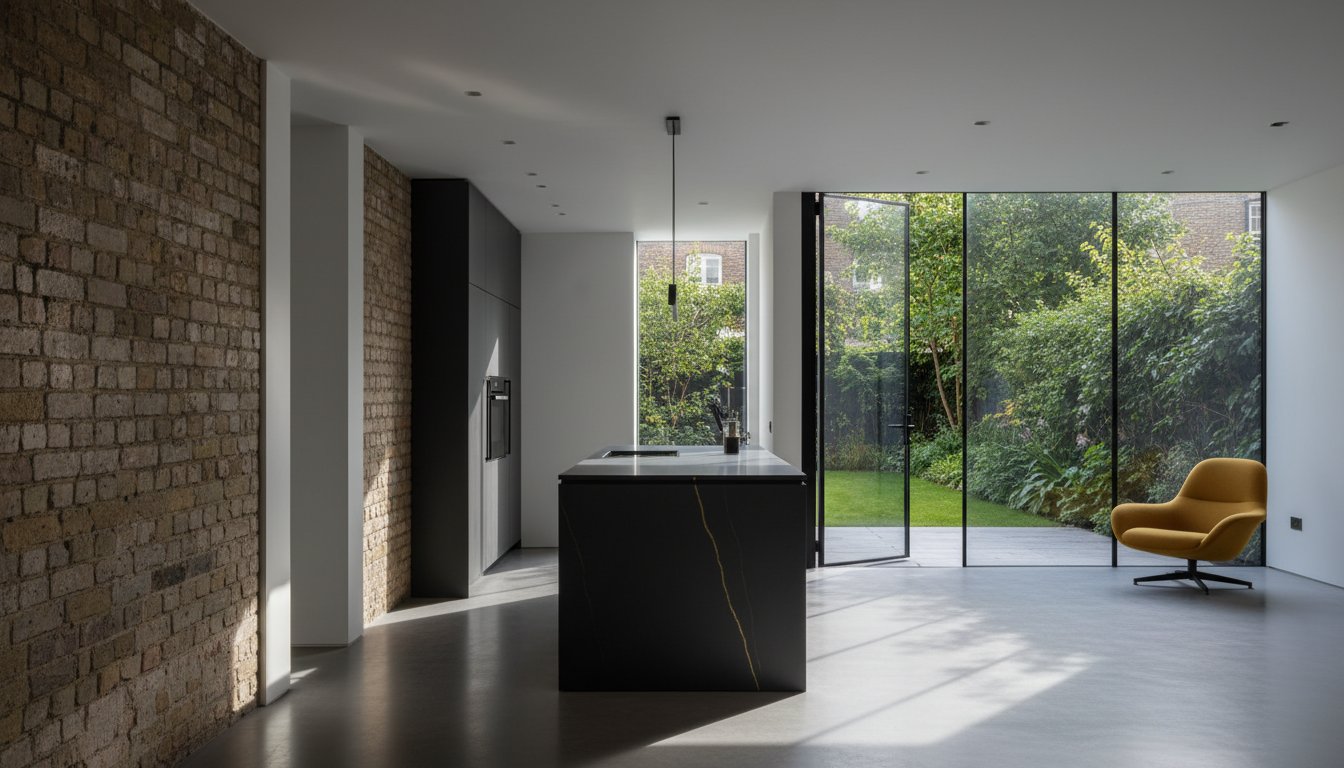
Conservation Area Architects London: Navigating Heritage with Visionary Design
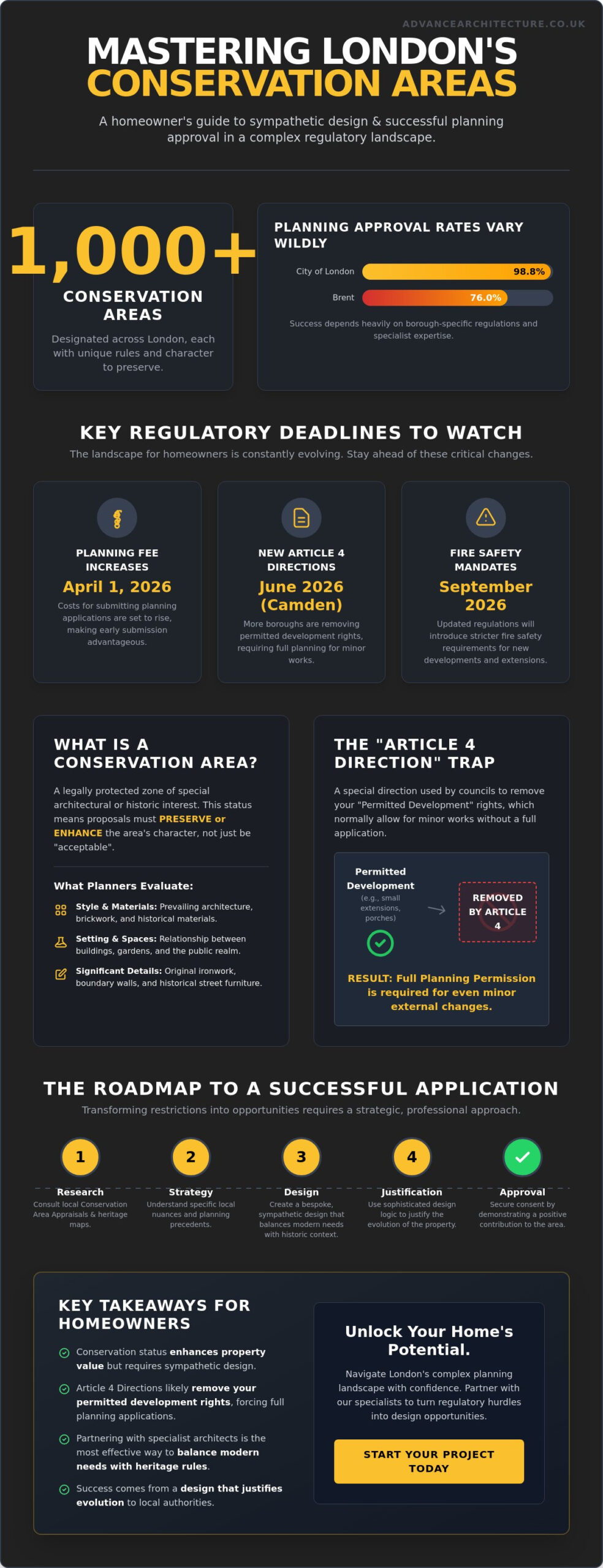
Did you know that London is home to over 1,000 conservation areas, where planning approval rates can vary from 98.8% in the City to just 76.0% in Brent? For many homeowners, the desire for a modern, bespoke living space feels at odds with the reality of the April 1, 2026 planning fee increases and the strict new Article 4 Directions coming to Camden in June 2026. You likely understand that preserving heritage is vital, but the fear of a planning rejection shouldn’t stop you from optimizing your home. Partnering with specialist conservation area architects London is the most effective way to turn these regulatory hurdles into design opportunities, ensuring your project is both sympathetic to its history and perfectly suited for the future.
It’s true that managing the layers of heritage consent and the updated fire safety mandates arriving in September 2026 is a daunting task. This guide will empower you with the knowledge to master London’s complex planning landscape through visionary design and technical authority. We’ll explore how to secure successful approvals, avoid common pitfalls, and ultimately unlock the hidden potential of your property with a stress-free, professional approach. From understanding the new Building Safety Levy to leveraging high-quality contemporary extensions, you’ll discover how to realize your vision with confidence.
Key Takeaways
- Understand how conservation status enhances property value and why sympathetic design is essential for protecting your home’s unique architectural heritage.
- Identify how Article 4 Directions may have removed your permitted development rights, necessitating full planning applications for even minor external alterations.
- Learn why partnering with specialized conservation area architects London is the most effective way to balance modern lifestyle needs with strict heritage regulations.
- Master the roadmap to a successful planning application by utilizing sophisticated design logic that justifies property evolution to local borough authorities.
- Discover the secret to unlocking the hidden potential of your historic home through bespoke solutions that emphasize contemporary innovation and functional elegance.
What is a Conservation Area and Why Does it Matter for Your London Home?
A home in one of London’s 1,000 plus designated zones isn’t just a residence; it’s a piece of the city’s living history. To answer the fundamental question, What is a Conservation Area?, we must look at it as a region of special architectural or historic interest where the character is protected by law. For a homeowner, this status is a double-edged sword. It safeguards the prestige and aesthetic of your neighborhood, yet it places a higher “burden of proof” on any proposed changes. Unlike standard developments, the council assumes your project could harm the area unless you prove otherwise. This is where conservation area architects London provide essential value, shifting the narrative from “restriction” to “optimization.”
These areas represent some of the most sought-after real estate in the capital. Maintaining architectural integrity isn’t just a regulatory hurdle; it’s a long-term financial strategy. By 2026, the premium on well-preserved heritage homes has only grown, as buyers increasingly value unique character over generic modernization. A visionary design ensures that your home evolves without losing the qualities that make it valuable. It’s about justifying evolution through sophisticated logic rather than simple imitation. When we approach a project, we view these restrictions not as barriers, but as a framework for excellence that protects your investment.
The Legal Framework: The Planning (Listed Buildings and Conservation Areas) Act
The Planning (Listed Buildings and Conservation Areas) Act 1990 mandates that local authorities pay special attention to the desirability of preserving or enhancing the character of these zones. This legal duty means that “acceptable” isn’t good enough. Your design must actively contribute to the streetscape. The ‘character and appearance’ test requires every proposal to demonstrate that it either maintains the existing aesthetic or provides a high-quality improvement that respects the historical context. This rigorous standard is why “standard” planning applications often fail in historic London boroughs.
Identifying Your Conservation Area in North London
Boroughs like Barnet, Camden, and Islington utilize specific Conservation Area Appraisals to define what makes a neighborhood unique. These documents are granular, often detailing everything from the specific type of brickwork to the rhythm of the window placements. Experienced conservation area architects London understand that a successful application depends on these local nuances. Before you sketch a single line, you must consult the local council’s heritage maps and management plans. These plans dictate what is permissible on your specific street, and ignoring them is a shortcut to a planning rejection. Planners typically evaluate:
- The prevailing architectural style and historical materials used in the vicinity.
- The relationship between buildings, green spaces, and the public realm.
- Significant details like boundary walls, original ironwork, and historical street furniture.
By identifying these elements early, you can create a design that feels like a natural extension of the property’s history while still providing the modern functionality your lifestyle demands.
Navigating Article 4 Directions: Why Your Permitted Development Rights May Be Limited
Many homeowners assume they can rely on national permitted development rights for minor works. In London’s heritage zones, this is often a misconception known as the “Article 4 trap.” Local councils use these directions to specifically withdraw rights that would otherwise allow you to extend or alter your home without full planning permission. It’s a precise layer of control that ensures the collective character of the street isn’t eroded by piecemeal changes. For those looking to maximize their space, this means the path to approval is rarely linear.
Navigating these hurdles requires the specialized eye of conservation area architects London. While a standard extension might be straightforward in a modern suburb, house extensions in London within these protected zones demand a higher level of architectural justification. According to official guidance on conservation areas, even small alterations can have a cumulative impact on the historic environment. We don’t see these rules as a limitation. Instead, we treat them as a catalyst for high-quality, bespoke design that adds genuine value and prestige to your property.
Common Restrictions in London Heritage Zones
Article 4 directions often target elements visible from the public realm to prevent “harmful” modernization. In June 2026, the London Borough of Camden will enforce new directions in the Redington/Frognal and Fitzjohns/Netherhall areas, specifically removing rights for front boundary walls and garden paving. You’ll often find that window replacements must utilize timber frames with specific glazing patterns, while roof alterations like dormer loft conversions face far stricter scrutiny than in non-designated areas. Original railings and garden settings are also protected, meaning any change requires a full planning application and a robust heritage statement.
How to Check Your Property’s Status
Checking your status starts with the local authority’s Article 4 register, which is usually found within the planning section of their website. However, these documents are often dense and technical. A professional site survey remains the only reliable way to confirm your true development potential. An architect doesn’t just read the map; they interpret how “non-original” additions from previous decades might influence your current application. This expertise is vital for unlocking potential that a layperson might miss. If you’re unsure how these rules apply to your home, a quick consultation with our design team can provide the clarity you need to move forward with confidence.
The Art of Sympathetic Design: Balancing Contemporary Living with Historic Character
Successful conservation architecture isn’t about freezing a building in time; it’s about justifying its evolution through sophisticated heritage logic. Many homeowners fear that living in a protected zone means sacrificing modern aesthetics for a historical replica. However, our “Visionary Expert” philosophy suggests that honest contrast is often more sympathetic than poor imitation. When conservation area architects London design with clarity, they create a dialogue between the old and the new. By utilizing high-quality, contemporary materials like structural glass or slimline steel frames, we distinguish the new from the old, ensuring the original building remains the undisputed protagonist of the site.
Realizing this vision requires professional architectural plans that meticulously detail material choices. We often pair traditional London stock brick with modern glass to create a seamless transition. In North London, particularly in boroughs like Camden and Barnet, planning officers are increasingly receptive to bespoke, high-quality contemporary extensions that respect the scale and rhythm of the existing streetscape. This approach relies on the Historic England guidance on conservation areas, which emphasizes that change is a natural part of a building’s life, provided it enhances the overall character.
Integrating Modern Extensions into Heritage Shells
We often employ a “light touch” approach to preserve the building’s hierarchy. Using glass links to separate a new extension from the historic shell creates a physical and visual break, allowing the original masonry to breathe. Internally, the goal is transformation without destruction. We focus on creating expansive, open-plan kitchen and dining spaces while carefully preserving original features like chimney breasts, cornicing, and floorboards. This balance ensures your home feels modern yet remains deeply rooted in its Victorian or Edwardian origins.
Sustainability in Conservation Areas
With the new regulations for the Future Homes and Buildings Standards laid out in March 2026, thermal efficiency is no longer optional. Retrofitting historic homes requires a delicate touch; you can’t simply wrap a heritage asset in modern cladding. Instead, we focus on internal insulation, high-performance slimline double glazing, and the discreet integration of renewable energy. For instance, solar panels can often be hidden on flat roof extensions or rear-facing pitches where they don’t impact the streetscape. It’s vital to remember that breathable materials like lime plaster and natural insulation are essential for historic building health, as they prevent moisture from becoming trapped within the ancient fabric. This sustainable retrofitting ensures your property remains a functional, high-value asset well into the 2030s.
Securing Consent: The Essential Roadmap to a Successful Planning Application
Securing planning approval in London’s heritage heartlands requires more than just technical drawings. A standard application often lacks the narrative depth required to satisfy rigorous conservation standards; it fails to address the specific nuances that local authorities demand. As conservation area architects London, we understand that success is built on a foundation of evidence and advocacy. We provide professional 3D visualisations that transform abstract concepts into tangible realities. These tools allow planning officers to see exactly how your proposal respects the existing streetscape, bridging the gap between your vision and their regulations. This visual clarity often neutralizes objections from neighbors or local amenity societies before they can stall your project.
Our team manages every liaison with the local authority, delivering a stress-free experience that navigates the friction of the planning process with ease. While the national planning approval rate for 2026 sits at 81.3%, the stakes are much higher in protected zones where scrutiny is intensified. We act as your steady hand, positioning your project not as a challenge to the area, but as a visionary improvement. By handling the complex dialogue with council officers, we ensure your application remains on track and optimized for success.
Step 1: The Heritage Statement
The Heritage Statement is the most critical document in your application bundle. It doesn’t just describe the work; it evaluates the “significance” of your home within the wider conservation area. By explaining the historical value of existing features, we use architectural logic to justify modern interventions. We prove that your project doesn’t just preserve the status quo but actively enhances the neighborhood’s character. This document is where we frame the “burden of proof” in your favor, turning potential objections into points of agreement with the planning officer.
Step 2: Pre-Application Advice
For complex London projects, paying for Pre-Application advice is a strategic investment. It allows us to build a collaborative relationship with the conservation officer before the formal eight-week clock begins. We use this direct feedback to refine our residential architects London strategy, ensuring the final submission is tailored to the specific sensitivities of your borough. This proactive approach identifies potential hurdles early, saving you time and reducing the risk of a costly rejection. It’s about building trust through transparency and professional expertise.
Ready to realize your vision without the planning stress? Book a consultation with our heritage experts today to begin your property transformation.
Why Choose Advance Architecture for Your London Conservation Project?
Since 2009, we’ve dedicated our practice to mastering the intricate heritage landscapes of Barnet, Camden, and across North London. We don’t believe in generic, off-the-shelf designs because every historic home deserves a unique narrative. As specialized conservation area architects London, we act as your steady hand through the daunting journey of property transformation. We combine technical authority with aspirational storytelling to ensure your project isn’t just a building, but a visionary home that respects its origins. Our goal is always the same: unlocking the hidden potential of your space while maintaining its architectural soul.
Our ‘Stress-Free’ promise is at the heart of every partnership. We understand that the fear of planning rejection or the complexity of 2026 heritage regulations can feel overwhelming. That’s why we provide a comprehensive, three-pillar service: Design, Planning, and Management. This structured framework mirrors the architectural process itself, providing you with a linguistic and technical path that feels as sturdy as the buildings we design. We don’t just provide drawings; we provide a seamless experience that guides you from the initial abstract concept to a concrete, successful result.
Our Local Expertise in North London
Success in a conservation area depends on a granular understanding of local borough policies and specific character appraisals. We’ve spent nearly two decades building established relationships with local planning and building control departments. This local authority allows us to navigate the nuances of North London’s unique streetscapes with confidence. We interpret the specific ‘management plans’ of your street to ensure our bespoke solutions align with council expectations, turning potential hurdles into successful approvals. Our deep knowledge of Barnet and Camden’s specific requirements means we can anticipate officer feedback and refine your strategy before the formal application begins.
Unlocking Your Property’s Potential in 2026
The architectural landscape is shifting, with new Building Safety Levies and fire safety mandates arriving later in 2026. In this environment, choosing the best architects in London is the most important decision you’ll make for your heritage home. We specialize in balancing these modern technical requirements with the functional elegance of historic design. Whether you’re looking to integrate a contemporary glass extension or retrofit for carbon-zero efficiency, we have the expertise to realize your vision. Ready to transform your home and maximize its long-term value? Book your free initial consultation today and let’s start the journey of realizing your vision together.
Realise Your Vision in London’s Heritage Heartlands
Transforming a historic property is a journey of precision and creative possibility. You’ve learned that navigating Article 4 directions and the 2026 planning landscape requires more than just standard drawings. It demands a strategic approach that pairs technical authority with a deep respect for London’s architectural history. By focusing on the ‘character and appearance’ test and utilizing professional 3D visualisations, you can turn regulatory complexity into a bespoke living space that significantly increases your property’s long-term value. Success isn’t about avoiding change; it’s about justifying evolution through sophisticated heritage logic.
Since 2009, we’ve acted as a steady hand for homeowners across North London, specializing in Listed Building Consent and the drafting of authoritative Heritage Statements. Our comprehensive ‘Design, Planning, and Management’ service ensures your project remains stress-free from the initial concept to the final construction. As experienced conservation area architects London, we’re ready to help you navigate the planning process with confidence and visionary design. We believe every historic home holds hidden potential waiting to be unlocked through a partnership of expertise and inspiration.
Ready to take the first step? Unlock the potential of your heritage home with a free consultation today. Your property’s next chapter starts with a single, expert conversation.
Frequently Asked Questions
Do I need planning permission for a small extension in a conservation area?
Yes, you almost certainly need planning permission because most London boroughs use Article 4 directions to remove standard permitted development rights. Even a small rear extension requires a full application to ensure the design preserves or enhances the local character. Working with conservation area architects London ensures your design meets these specific borough requirements while maximizing your modern living space.
Can I replace my windows if I live in a London conservation area?
You can replace your windows, but they must typically be a “like-for-like” match in material, profile, and opening mechanism. This usually requires installing high-quality timber frames rather than uPVC alternatives to maintain the building’s historic integrity. If you want to change the style or glazing pattern, you must obtain full planning permission before any work begins on the frontage.
How long does a conservation area planning application take in London?
A standard planning application takes 8 weeks for a decision once it’s validated by the local authority. However, the entire process often spans 4 to 6 months when you include the essential pre-application advice phase and the detailed design period. Starting early is vital, especially considering the 3.8% increase in planning fees that took effect on April 1, 2026.
What is a Heritage Statement and do I really need one?
A Heritage Statement is a mandatory document that explains the historical significance of your property and how your proposed changes will impact the wider area. You absolutely need one for any application within a conservation zone. It serves as your primary tool for justifying modern interventions to planning officers, using architectural logic to prove that your project respects the local heritage.
Are solar panels allowed on houses in conservation areas?
Yes, solar panels are allowed, but their placement is strictly controlled to minimize visual impact on the streetscape. They are typically permitted on rear roof slopes or hidden flat roofs where they aren’t visible from the public highway. In some cases, you’ll need a full planning application if the installation doesn’t meet the specific “permitted development” criteria for designated heritage areas.
Can I use Permitted Development rights for a loft conversion in a conservation area?
No, the standard permitted development rights that allow for “volume additions” to a roof don’t apply in conservation areas. Any loft conversion that involves an external change, such as a dormer window or a rear roof extension, requires a full planning application. Planning officers will scrutinize the scale and materials to ensure the roofline’s rhythm isn’t disrupted by the new addition.
What happens if I carry out work without consent in a conservation area?
Carrying out unauthorized work is a criminal offense that can lead to an enforcement notice requiring you to restore the building to its original state. There’s no time limit for enforcement action on heritage assets, meaning the council can act decades after the work is finished. This can also make selling your property impossible, as solicitors will require proof of all necessary consents.
How much extra does it cost to build in a conservation area?
Building in these zones typically costs more due to the requirement for premium materials like traditional London stock bricks and bespoke timber joinery. Professional fees for conservation area architects London also reflect the complexity of heritage statements and detailed negotiations. Typical architectural fees for 2026 range from 8% to 15% of the construction cost for a full service from conception to completion.