
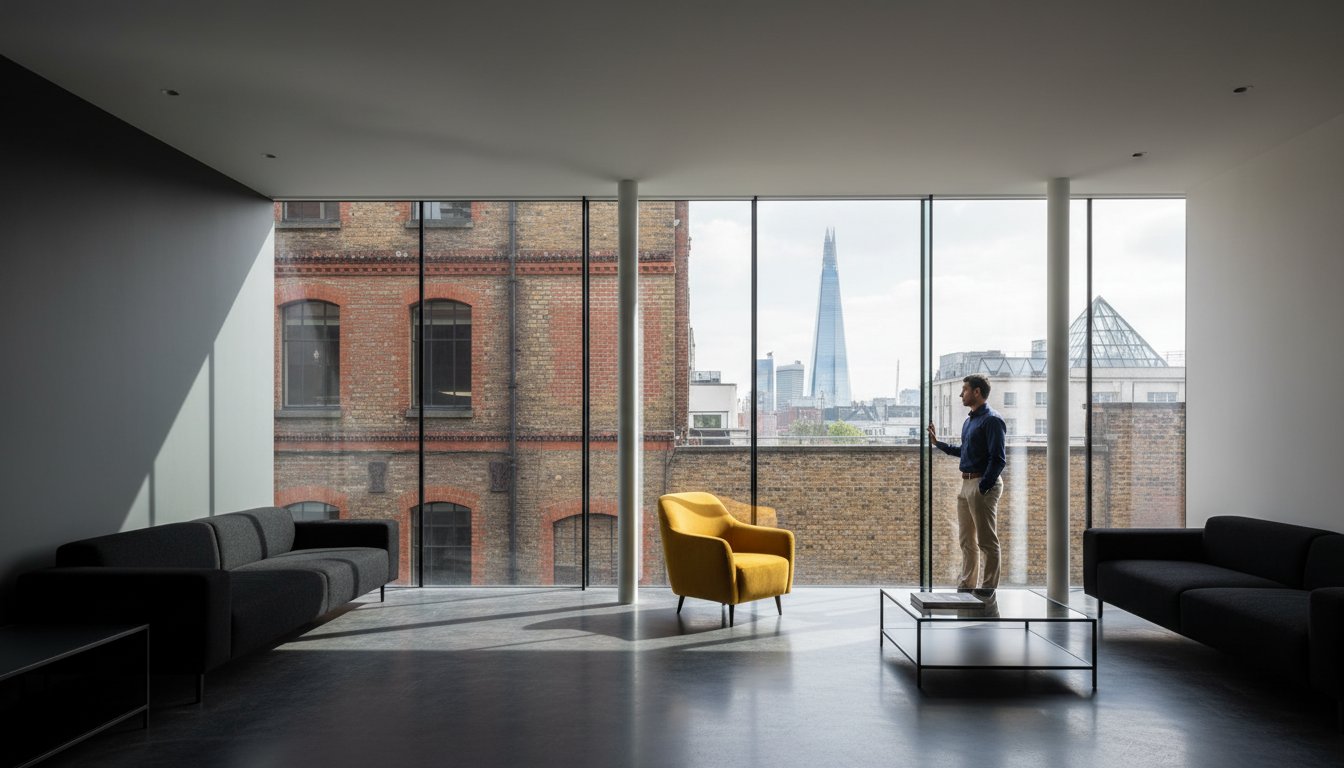
London Bridge: An Architect’s Guide to SE1 Property & Design in 2026
Could the strict conservation rules of Southwark be the very thing that protects your property investment as we head into 2026? While the skyline around london bridge continues its rapid evolution, many homeowners feel caught between the high costs of central London construction and the rigid planning restrictions of the SE1 postcode. It’s frustrating to own a historic asset that feels difficult to modernise without clashing with the City of London’s heritage requirements.
This guide provides the clarity you need to move from uncertainty to a defined architectural vision. You’ll discover how to unlock the hidden potential of your home by balancing contemporary aesthetics with historic preservation. We’ll walk through the nuances of local planning, offer inspiration for period property transformations, and show you how a local architect can ensure your development is both stress-free and spectacular.
Key Takeaways
- Trace the architectural evolution of the london bridge area to understand how historical context creates a unique foundation for high-end property transformation.
- Identify high-potential assets in SE1 and EC4, including the design strategies needed to maximize the aesthetic and financial value of luxury warehouse conversions.
- Navigate the dual complexities of Southwark and City of London planning regulations to ensure your project meets strict Conservation Area requirements with ease.
- Explore innovative ways to unlock hidden space through bespoke rear extensions and visionary loft conversions in London tailored for period homes.
- Learn why a local architectural partnership is essential for a stress-free experience when realizing ambitious design goals in one of the UK’s most iconic postcodes.
The Architectural Legacy of London Bridge
London Bridge serves as more than a simple transit point; it acts as the primary architectural gateway that connects the financial precision of the City with the creative pulse of SE1. For architects and property investors alike, this structure represents a cornerstone of urban evolution. It provides a sense of permanence in a city that is constantly reinventing itself. The bridge doesn’t just span the Thames; it anchors the residential identity of Southwark, providing a prestigious focal point for the surrounding developments that define the riverfront.
From Roman Roots to Modernist Mastery
Tracing the structural evolution of this site reveals a narrative of constant adaptation. The History of London Bridge documents seven distinct structural phases, each reflecting the engineering limits and aesthetic ambitions of its era. While John Rennie’s 19th-century granite arches defined the Victorian riverfront, the shift to the current concrete cantilever design marked a significant departure from tradition. The official opening of the current bridge in 1973 acted as the definitive catalyst for Southwark’s transition from a neglected industrial dockland into a global architectural hub.
- Structural Integrity: The 1973 design prioritises functional minimalism, using pre-stressed concrete beams to achieve a sleek, low profile that doesn’t obstruct the skyline.
- Design Evolution: Moving from the medieval bridge with its congested houses to the current modernist form shows a shift toward streamlining urban flow and technical efficiency.
- Planning Heritage: Every new SE1 development must respect the sightlines established by this historic crossing, ensuring the bridge remains a dominant visual anchor for the district.
The Landmark Influence on Local Design
The “London Bridge effect” is a tangible force in the local property market, driving demand for bespoke residential spaces that offer views of this iconic silhouette. We see a fascinating interplay between the bridge’s brutalist elements and the restored Victorian warehouses that line the riverfront. This contrast creates a unique architectural language that defines the luxury apartments in nearby Bermondsey and Borough. By unlocking the potential of these historic sites, developers have created a seamless blend of heritage and contemporary innovation.
Looking toward 2026, the architectural landscape continues to evolve with planned enhancements focused on sustainability and public experience. These updates include sophisticated kinetic lighting systems and new greening initiatives designed to soften the bridge’s concrete edges. Such investments ensure that the london bridge area remains at the forefront of London’s design narrative, maintaining its status as a premier destination for high-end property investment and visionary urban living. This commitment to transformation ensures that the bridge remains as relevant to the modern homeowner as it was to the Roman merchants who first crossed these waters.
Modern Property Potential in the London Bridge Area
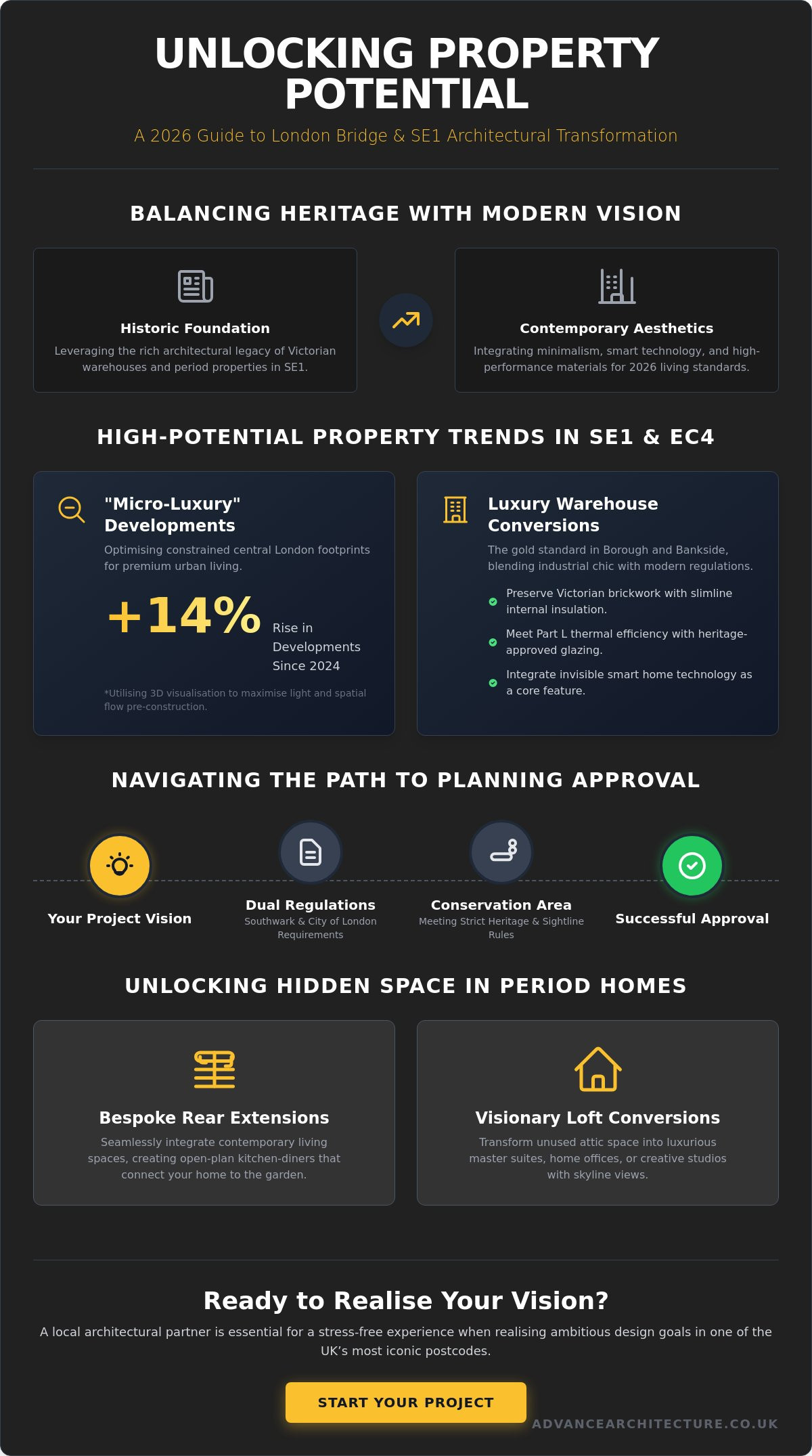
The property landscape surrounding london bridge has undergone a radical shift as we move through 2026. High-potential opportunities now cluster within the SE1 and EC4 postcodes; areas where historic density meets high-value demand. We’ve seen a 14% rise in “micro-luxury” developments since 2024, where architects use 3D visualisation to prove that even the most constrained central London footprints can support premium living. These digital twins allow us to test light penetration and spatial flow before a single brick is moved, ensuring every square millimetre is optimised for the modern urbanite.
Warehouse Conversions and Industrial Chic
The Borough and Bankside districts remain the gold standard for luxury warehouse conversions. Unlocking potential in these former industrial sites requires a delicate balance between preserving Victorian brickwork and meeting 2026 technical building regulation standards. Current Part L requirements demand high thermal efficiency, which often conflicts with original single-pane aesthetics. We solve this by integrating slimline internal insulation and heritage-approved double glazing. It’s a process that demands precision to ensure the building’s character isn’t lost to modern necessity.
Smart home technology is no longer an add-on; it’s a core requirement for the 2026 market. Our approach embeds invisible tech into heritage-rich interiors, allowing for automated climate control that respects the building’s soul. If you’re looking to realise your vision for a historic space, focus on these three elements:
- Exposed structural steel paired with high-spec acoustic damping.
- Open-plan layouts that preserve the “long-view” of original factory floors.
- Zoned lighting systems that highlight original architectural textures.
Commercial to Residential Permitted Development
Converting office spaces near the City-fringe offers a streamlined route for urban investors. Under the 2026 rules, permitted development rights allow for the transformation of Class E units into high-end apartments without the traditional full planning hurdles. This is particularly effective for mid-century blocks that lack modern office amenities but possess excellent structural integrity for residential use. We find that these projects often yield higher ceilings and larger windows than standard new-builds.
Structural challenges often involve retrofitting drainage and ventilation into concrete frames designed for communal use. While SE1 falls under Southwark’s jurisdiction, projects creeping across the london bridge into the northern banks require a firm grasp of City of London Planning Permission protocols to ensure compliance. We manage these complexities by conducting early-stage feasibility studies, ensuring the transition from commercial to residential is both profitable and seamless. This methodical approach turns rigid office blocks into fluid, contemporary homes that meet the city’s growing residential needs.
Navigating Planning Permission in Southwark and the City
Securing planning approval near london bridge requires a sophisticated understanding of two distinct regulatory bodies. Southwark Council governs the southern bank, while the City of London Corporation oversees the north. Each authority maintains rigorous standards to protect the area’s skyline and historical fabric. For property owners, this means balancing ambitious design visions with strict heritage protections that define the SE1 postcode. It’s a delicate equilibrium between modern lifestyle needs and the preservation of a world-class architectural legacy.
Conservation Area restrictions are particularly dense around Borough High Street and the riverfront. Properties here often carry Grade II or II* listings, requiring specialized listed building consent for even minor internal modifications. A critical constraint for any vertical expansion is the London View Management Framework. This policy protects strategic views of St Paul’s Cathedral. If your project sits within a protected vista, height limits are non-negotiable to ensure the cathedral’s dome remains a dominant feature of the horizon. We help you navigate these constraints by identifying the exact “view corridors” that affect your site’s development potential.
Southwark Council Planning Nuances
Southwark Council prioritizes sustainable, high-quality growth. Current policy trends for house extensions in London within the SE1 district favor designs that respect the Victorian and industrial heritage of the area. For large-scale or high-impact projects, you’ll likely present to the Southwark Design Review Panel. This group of independent experts evaluates architectural merit before a formal decision is reached. A common pitfall is failing to account for the archaeological priority zones near the Thames. These zones can trigger mandatory site investigations that impact your timeline and budget if not managed early.
The City of London Planning Landscape
The northern side of london bridge presents a different set of challenges centered on high-density urban infill. The City of London Corporation enforces strict technical standards regarding “Right to Light” and micro-climate impacts, such as wind tunneling. Success in this jurisdiction depends on the precision of your architectural plans. These documents must demonstrate how a new structure integrates with existing subterranean infrastructure, including London Underground tunnels and utility networks. We focus on creating detailed, data-driven submissions that pre-empt technical objections. This proactive approach turns a complex approval process into a structured path toward project commencement, ensuring your vision is both compliant and exceptional.
Residential Transformations: Extensions and Conversions near SE1
SE1 property owners often face the paradox of historic charm and restricted space. Unlocking potential in london bridge requires a blend of heritage preservation and structural innovation. Whether it’s a Victorian terrace near Bermondsey Street or a warehouse conversion, modern architectural interventions are essential for 2026 living standards. We focus on creating spaces that feel expansive even within the traditional constraints of the city’s urban fabric.
Bespoke Loft Conversions with a View
Maximising the vertical plane is the most effective way to gain square footage without sacrificing garden space. We specialise in creating loft conversions in London that do more than add a bedroom. By designing bespoke dormer or mansard extensions, homeowners can frame iconic views of the Shard and the london bridge skyline. Technical considerations are paramount here. Victorian foundations in SE1 often require meticulous structural load assessments before adding a new storey. We specify lightweight steel frames and high-performance glazing to ensure stability. Natural light remains a priority in dense urban pockets, so we often use recessed floor-to-ceiling windows to pull light into the deepest parts of the home.
Seamless House Extensions
Rear and side-return extensions offer a transformative solution for narrow SE1 footprints. Blending contemporary glass structures with traditional London stock brickwork creates a sophisticated architectural dialogue. These projects focus on:
- Optimising kitchen and living zones for fluid, open-plan movement.
- Installing slim-profile bi-fold doors to connect interiors with urban gardens.
- Using structural glass roofs to eliminate dark corners in deep terrace plans.
A well-designed extension can increase SE1 property value by up to 20% by creating the high-spec living areas that modern buyers demand. It’s about more than just extra space; it’s about improving the daily rhythm of home life through thoughtful design and premium materials.
Adding a basement in the London Bridge area demands a high level of technical expertise. Proximity to the Thames and the density of neighbouring buildings mean structural integrity is non-negotiable. Our approach involves rigorous site-specific assessments and robust waterproofing systems to protect the building’s longevity. We’ve successfully transformed narrow footprints into light-filled modern homes by integrating light wells and glass floor panels, ensuring every square inch serves a functional purpose.
Our team provides the steady hand needed to navigate these complex transformations with ease. Consult with our visionary experts to begin your property journey today.
Partnering with London Bridge Architects for Your Project
Navigating the architectural landscape of SE1 requires more than just creative design skills. It demands an intimate knowledge of Southwark Council’s specific planning policies and the unique structural constraints of historic wharf conversions. We act as your steady hand, ensuring your project meets every regulatory hurdle while pushing the boundaries of contemporary design. Our “Visionary Expert” approach transforms the london bridge property market into a canvas for your personal lifestyle. Whether you’re looking to extend a Victorian terrace or refurbish a luxury riverside apartment, we focus on results that marry heritage with modern function.
The Advance Architecture Advantage
Our team possesses a deep understanding of the local Southwark and City landscape, where historic preservation and innovation often collide. We don’t just draft plans; we curate high-end experiences. Our residential architects in London manage the technical stages with absolute precision. This includes everything from initial conceptual sketches to the production of detailed technical documentation for contractors. This structured process ensures that every beam, joint, and finish aligns with both your aesthetic vision and the latest UK building regulations. We focus on unlocking potential in every square metre, delivering bespoke solutions that significantly elevate the market value of your asset.
Begin Your Transformation
Every successful project starts with a robust foundation. We begin with a comprehensive feasibility study and site survey to identify opportunities and constraints before they become costly issues. This proactive approach saves time, reduces stress, and optimises your budget. We customise our services to fit your specific needs, handling the entire lifecycle of the project. Our expertise covers three core pillars: Design, Planning, and Management. This includes:
- Detailed planning permission applications for sensitive conservation areas.
- Full building regulations compliance and structural integrity checks.
- Bespoke interior design and spatial optimisation for high-end living.
We make the journey hassle-free, allowing you to focus on the excitement of your new space rather than the burden of paperwork. Our goal is to provide a seamless transition from your initial idea to a completed, high-spec home. Realise your vision with a free initial consultation from Advance Architecture and take the first step toward a home that reflects the prestige and character of london bridge in 2026.
Realise Your Architectural Vision in SE1
The evolving property market around london bridge demands a sophisticated approach to design and development. By 2026, the focus has sharpened on high-end residential extensions and the sensitive conversion of heritage spaces. Achieving success in this competitive landscape requires more than just a blueprint; it necessitates a deep understanding of Southwark and City of London planning policies. Since 2009, our firm has mastered the art of securing permissions for complex projects through a meticulous blend of Design, Planning, and Management.
We specialise in bespoke transformations that prioritise both structural integrity and functional elegance. Our comprehensive service guides you through every stage, from visionary conceptual designs to precise technical documentation. We’re committed to delivering a stress-free experience that turns daunting regulatory hurdles into seamless opportunities for growth. By focusing on optimization and craftsmanship, we help you create a home that respects its historic roots while embracing modern innovation.
Unlock your property’s potential with London’s visionary architects and start your journey toward a truly exceptional residence today.
Frequently Asked Questions
Do I need planning permission for a loft conversion near London Bridge?
Most loft conversions near London Bridge require formal planning permission because a high percentage of SE1 properties are flats or sit within restricted zones. While some houses benefit from Permitted Development rights, Southwark Council has implemented Article 4 directions in 28 distinct areas to protect local character. We manage the entire application process to ensure your design meets the strict criteria for height and volume while unlocking your home’s hidden potential.
How does the London Bridge Conservation Area affect my house extension?
Properties within the London Bridge Conservation Area must adhere to the Southwark Plan 2022, which mandates that extensions preserve or enhance the historic character of the neighborhood. This means your choice of brickwork, window frames, and rooflines must match the existing heritage fabric. Our role is to create a bespoke solution that bridges the gap between contemporary lifestyle needs and these rigorous aesthetic requirements, ensuring a seamless transition from old to new.
What are the building regulations for warehouse conversions in SE1?
Warehouse conversions in SE1 must comply with stringent Building Regulations, specifically Approved Document L for thermal performance and Approved Document E for sound insulation. Since many industrial buildings feature single-skin masonry, we implement high-performance internal insulation and acoustic layering to meet modern standards. We also prioritize fire safety under Part B, installing integrated detection systems and protected escape routes to transform these historic shells into safe, compliant, and visionary living spaces.
Can I extend a listed building in the London Bridge area?
You can extend a listed building near London Bridge, but you’ll need Listed Building Consent in addition to standard planning permission. Southwark Council and Historic England scrutinize these applications to ensure any addition is subservient to the original structure. In 2023, successful applications often utilized glass links or contrasting materials to clearly distinguish the new from the old. We specialize in navigating these complexities, providing the technical authority needed to secure approvals for sensitive heritage sites.
How long does the planning process take with Southwark Council?
Southwark Council typically reaches a decision on householder applications within 8 weeks, while larger or more complex SE1 developments can take up to 13 weeks. This statutory period begins once your application is validated, which requires a complete set of architectural drawings and supporting statements. We mitigate delays by submitting comprehensive, “right-first-time” packages that address potential concerns before they’re raised by planning officers, making the journey as stress-free as possible.
What is the average cost of an architect for an SE1 project?
Architect fees for residential projects in Central London generally range from 7% to 15% of the total construction budget, according to data from the Royal Institute of British Architects (RIBA). For a bespoke extension or renovation, this investment covers everything from initial concept design to onsite project management. We provide a clear, tiered fee structure that reflects the level of detail required for your specific development, ensuring you receive maximum value through expert space optimization.
Are there protected views near London Bridge that limit my building height?
Yes, the London View Management Framework (LVMF) protects 27 specific vistas, including several that cross directly over the London Bridge area toward St Paul’s Cathedral. These viewing corridors place strict limits on the height and massing of new structures to ensure the city’s skyline remains balanced. We use 3D modeling and topographical data to analyze these constraints early in the design phase, allowing us to maximize your building’s height without infringing on protected sightlines.
Why should I choose a local London architect for my property development?
Choosing a local architect ensures your project benefits from a deep understanding of Southwark Council’s specific planning nuances and the unique structural challenges of SE1’s Victorian and Georgian foundations. We maintain established relationships with local surveyors and contractors who specialize in the dense urban environment of London Bridge. This local expertise allows us to provide a hassle-free experience, turning complex regulatory hurdles into opportunities for visionary design and functional elegance.