
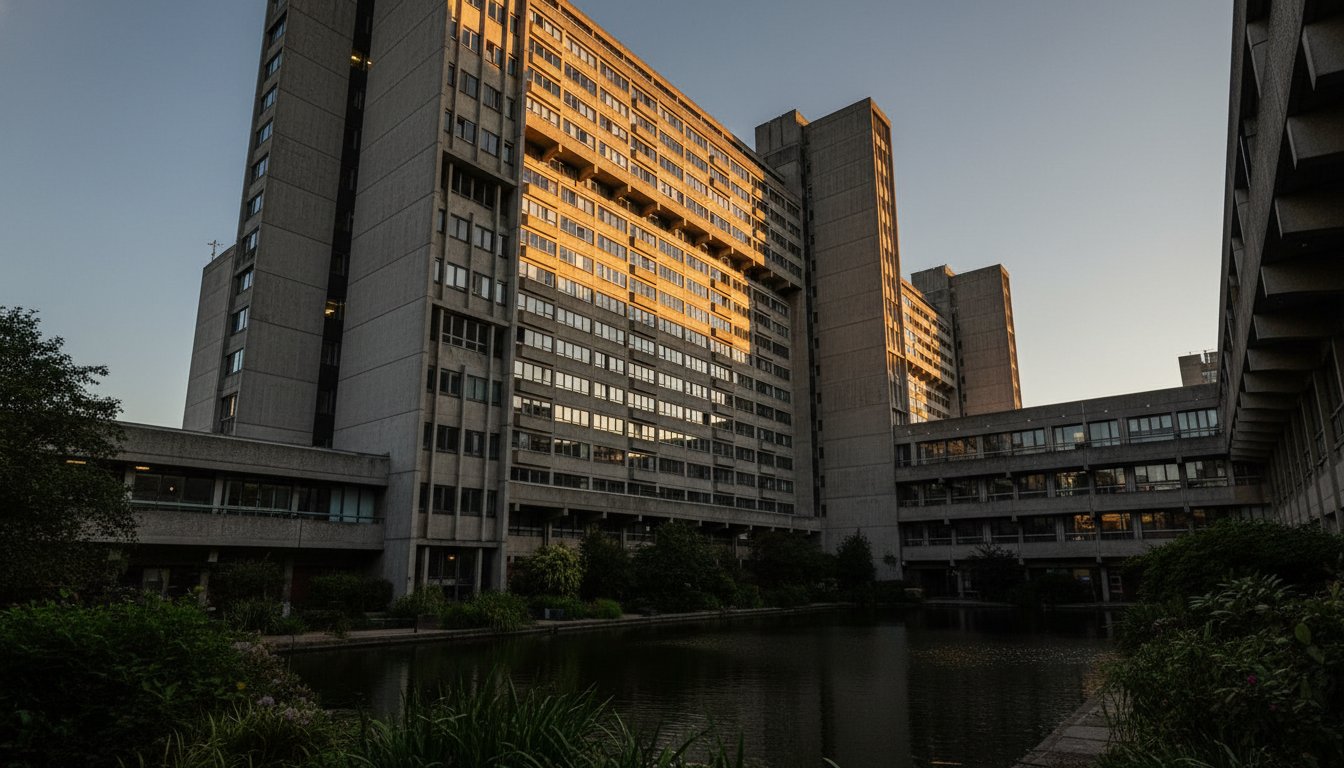
The Barbican: A Visionary Guide to London’s Brutalist Architectural Icon
In a 2003 poll, the barbican was voted London’s ugliest building, yet today it stands as a Grade II listed icon where apartments frequently command prices well above £1,000,000. This 40 acre estate is no longer viewed as a concrete experiment but as a visionary masterpiece of brutalist design. It offers a sophisticated lifestyle that balances inner-city density with a lush, private sanctuary.
You likely recognize that owning a piece of this architectural history is a rare privilege, though the technicalities of renovation often lead to frustration. The strict conservation rules set by the City of London can make even simple upgrades feel daunting. This guide simplifies the process. We’ll show you how to modernise your flat legally and beautifully, ensuring your bespoke vision aligns with the estate’s heritage. You’ll learn the secrets to unlocking potential in these complex spaces while maintaining their structural integrity and aesthetic value.
We’ll explore the original 1950s design intent, the specifics of listed building consent, and the practical steps for a stress-free renovation.
Key Takeaways
- Explore the visionary “City within a City” philosophy and discover how the barbican estate’s unique architectural layout separates pedestrian life from the bustle of London traffic.
- Demystify the realities of renovating a Grade II listed interior, learning how to seamlessly integrate modern lifestyle requirements with original mid-century design features.
- Gain essential insights into navigating the City of London Corporation’s planning department and securing the critical Listed Building Consent needed for sensitive structural transformations.
- Uncover the expert strategies required to unlock the full potential of historic residential spaces while ensuring every design choice respects the building’s heritage and structural integrity.
The Barbican: Exploring London’s Brutalist Architectural Icon
The Barbican stands as a definitive monument to Brutalist ambition. Located in the heart of the City of London, the Barbican Estate provides a masterclass in architectural innovation and urban planning. It’s a Grade II listed site that, in 2026, continues to define the sophisticated identity of the capital. The original design wasn’t merely a response to a housing crisis; it was an exercise in Utopian living. Architects sought to create a self-contained sanctuary that balanced dense residential requirements with expansive public spaces. Today, the estate remains a coveted address for London’s creative elite. These residents value the complex for its uncompromising aesthetic, functional elegance, and the quiet confidence it exudes amidst the city’s bustle.
The Birth of a Concrete Masterpiece
Post-war London faced an urgent need for high-density housing following the 1940 Blitz. The City of London Corporation identified the 35-acre Cripplegate site for a radical redevelopment project in 1951. They appointed the architectural firm Chamberlin, Powell and Bon to realize this vision. The architects designed a complex that eventually housed over 2,000 flats, utilizing a vertical layout to maximize ground-level space. This project was about unlocking potential in a landscape of ruins. It integrated residential towers, terrace houses, and cultural facilities into a single, cohesive environment. The scale of the development remains staggering, representing a total transformation of the local urban fabric through meticulous design and management.
Why the Barbican is Grade II Listed
The estate earned its Grade II listing in 2001. This status provides a robust framework for preservation, ensuring that any future modifications respect the visionary intent of the original architects. Historic England plays a vital role in this process, monitoring the estate’s integrity to prevent unsympathetic changes. Specific protected features include the hand-tooled bush-hammered concrete and the precise geometry of the window profiles. Maintaining these elements requires technical authority and a commitment to architectural heritage. The listing protects the estate’s unique character while allowing for the optimization of its internal spaces. It’s a balance of heritage and innovation that secures the Barbican’s legacy for future generations. This regulatory oversight ensures the estate’s structural integrity remains uncompromised, providing residents with a home that is both a historical treasure and a modern masterpiece.
Design Philosophy: How Chamberlin, Powell and Bon Shaped the Barbican
The Barbican isn’t just a residential estate; it’s a 35-acre exercise in urban utopianism. Chamberlin, Powell and Bon won the commission in 1955 with a mandate to transform a site decimated by the Blitz into a self-contained “City within a City.” This philosophy integrated 2,113 flats with schools, a library, and a world-class arts centre. Central to this vision was the pedway system. By elevating pedestrian walkways above the street level, the architects successfully insulated residents from the noise and pollution of London traffic. This vertical separation creates a sanctuary where the transition from the frantic City to the quiet courtyard feels seamless.
The estate’s geometry relies on a deliberate tension between the vertical and the horizontal. Three 42-storey towers, which were the tallest residential structures in Europe when completed in 1969, punctuate the skyline. These are balanced by long, horizontal terrace blocks that frame the central gardens and the 2.5-acre lake. These water features aren’t merely decorative. They serve a vital functional role by softening the hard edges of the concrete and reflecting light into the lower-level apartments. It’s a masterclass in balancing density with breathability.
The Brutalist Aesthetic: More Than Just Concrete
While often labelled as Brutalist, the Barbican’s finish is remarkably refined. The concrete surfaces were pick-hammered by hand to expose the granite aggregate, creating a textured, stone-like quality that ages with grace. This commitment to “Total Design” meant every element, from the door handles to the light fittings, was bespoke. The Historic England listing for the Barbican highlights this architectural integrity, noting its status as a Grade II listed masterpiece since 2001. This level of detail fosters a profound sense of community and security, effectively unlocking the potential of high-density urban living.
Living in a Masterplan: The Residential Experience
Inside, the 140 different flat layouts demonstrate a masterclass in space optimization. From compact studios to expansive triplex penthouses, the designs prioritise natural light through floor-to-ceiling glazing and dual-aspect views. The architects introduced forward-thinking technology, such as the “Garchey” waste disposal system and background underfloor heating, to ensure a premium lifestyle. These features prove that visionary design can overcome the perceived coldness of industrial materials, creating homes that remain highly sought after in the 21st-century market.
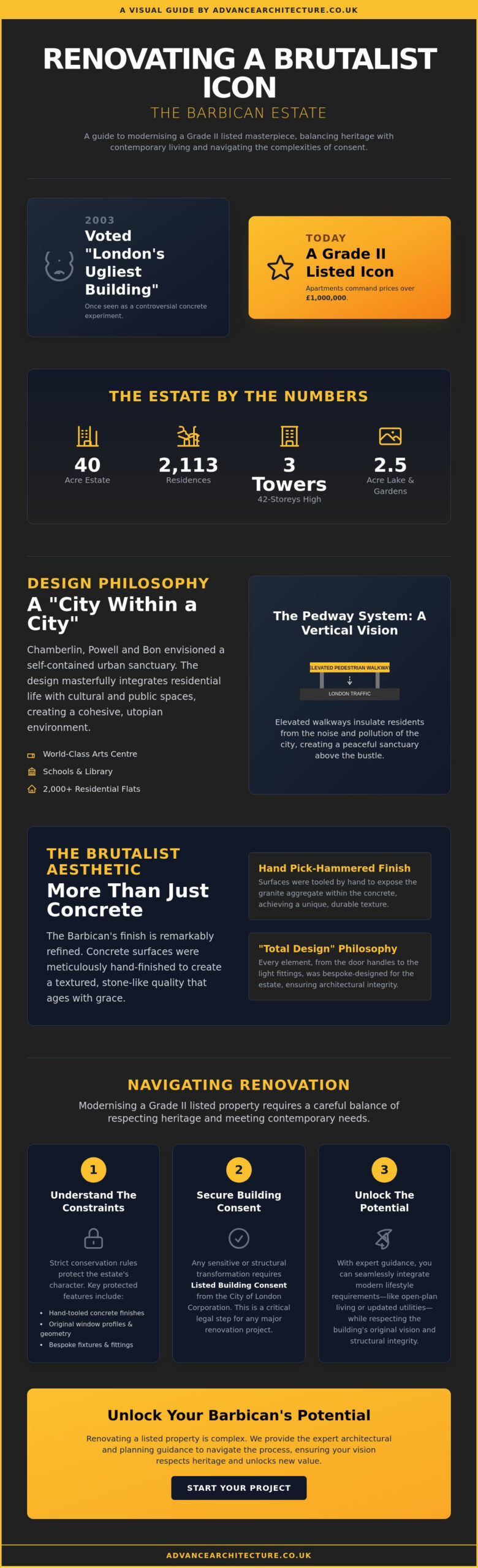
Renovating a Listed Masterpiece: The Realities of Barbican Interiors
Many homeowners assume a Grade II listing acts as a permanent freeze on interior design. This is a common misconception that often prevents residents from realizing the full potential of their space. While the official history of the Barbican Estate highlights its architectural significance, the City of London planning department and Historic England allow for thoughtful evolution. The goal isn’t to create a museum, but to facilitate a sophisticated transition that respects the 1960s heritage while meeting 2026 lifestyle requirements.
The “sacred” elements of a barbican flat typically include the mahogany window frames, the iconic “U-shaped” Brook Marine kitchen footprints, and the original door furniture. We treat these features as the anchors of our design process. By identifying what must stay, we create a framework for bespoke solutions that feel both contemporary and historically resonant. Our approach focuses on three pillars: preservation, modernization, and optimization.
The Challenges of Modernising Brutalist Spaces
Navigating the structural realities of a 60-year-old concrete icon requires technical precision. The fixed structural concrete walls are the primary constraint, as they prevent the open-plan knock-throughs common in Victorian terrace renovations. We solve this by maximizing the existing flow and using light-reflective finishes to enhance the sense of volume. Thermal performance is another critical hurdle. Since we cannot alter the exterior facade, we implement high-performance internal insulation and specialized glazing solutions that sit discreetly within original frames. Integrating smart home technology also demands a surgical touch. We utilize the estate’s original service voids to hide modern cabling, ensuring a seamless finish that doesn’t compromise the clean, Brutalist lines.
Interior Design Trends for Barbican Homes in 2026
The prevailing aesthetic for 2026 is “Warm Brutalism.” This design movement balances the raw, bush-hammered concrete of the barbican with tactile, organic materials. We frequently specify American walnut joinery, heavy wool textiles, and soft ambient lighting to soften the industrial backdrop. Kitchen and bathroom updates now lean toward modularity, echoing the original 1960s aesthetic but with high-end appliances and improved ergonomics. We find that clients are moving away from cold minimalism in favor of spaces that feel curated and lived-in. Sympathetic renovation is the key to unlocking a property’s value, ensuring that modern interventions feel like a natural continuation of the architects’ original vision. This methodical approach provides a stress-free path to a home that is both a historical treasure and a functional modern sanctuary.
Navigating Planning and Consent for London’s Historic Estates
Owning a residence within the barbican estate means you’re a custodian of a Grade II listed masterpiece. This prestigious status brings significant responsibility. The most critical hurdle for any renovation project is securing Listed Building Consent (LBC). Unlike standard properties, the City of London Corporation’s planning department maintains rigorous oversight to ensure the estate’s Brutalist integrity remains untouched. Every modification, no matter how subtle, must respect the original design intent established by Chamberlin, Powell and Bon in the 1960s.
A successful application hinges on a robust heritage statement. This document serves as your project’s technical justification. It explains the historical significance of the specific area you wish to alter and demonstrates how your design preserves that character. Without professional architectural plans, navigating this scrutiny is nearly impossible. High-quality technical drawings provide the clarity planning officers need to visualize the impact of your proposal, moving your project from a concept to a permitted reality.
The Listed Building Consent Process
Securing approval is a methodical journey that requires patience and precision. The process typically follows these stages:
- Initial Feasibility: We assess your goals against the Barbican Management Strategy to identify potential regulatory conflicts.
- Design and Documentation: Creating detailed elevations and a heritage statement that aligns with the 2022 Planning Advice Notes.
- Formal Submission: Applying for LBC alongside any necessary full planning permissions.
- Consultation and Approval: Engaging with conservation officers to refine details before the final decision.
It’s vital to recognize that Permitted Development rights are almost entirely restricted within listed estates. While a standard terrace might allow for certain internal changes without permission, the barbican requires consent for internal alterations like removing original partitions or changing joinery. The distinction between internal updates and external impact is thin; the council views the building as a holistic piece of art.
Working with Local Authorities in North London
Navigating the nuances of London’s various councils requires local expertise. While the City of London Corporation focuses on the specific Brutalist heritage of the estate, neighboring boroughs like Camden or Islington may have different conservation priorities. Early engagement with planning officers is a strategic necessity. It builds a collaborative relationship and identifies hurdles before they become costly delays. Expert residential architects in London act as the essential bridge between your lifestyle aspirations and these strict regulatory frameworks. We translate your vision into a language that local authorities respect and approve.
Ready to unlock the hidden potential of your historic home? Contact Advance Architecture today to begin your stress-free planning journey.
Unlocking the Potential of Your London Property with Advance Architecture
Living in a landmark like the Barbican or a similar historic London estate presents a unique set of challenges and opportunities. These structures require more than just a standard renovation; they demand a deep respect for architectural integrity combined with a forward-thinking approach to modern living. At Advance Architecture, we position ourselves as your Visionary Expert, specialised in navigating the intricate layers of London’s planning landscape. We understand that transforming a historic residential space is a journey of precision and creativity.
Our approach focuses on the “problem-solution-result” flow. We identify the constraints of your site, design a bespoke solution that respects the heritage, and deliver a result that enhances your lifestyle. We act as a steady hand, guiding you through the daunting journey of property transformation with ease and expertise. Whether you’re looking to modernise a brutalist flat or extend a period home, our goal is to ensure the process remains entirely stress-free.
Our Expertise in Heritage and Modernisation
Renovating a property within a Grade II listed complex or a conservation area involves rigorous technical documentation. Our team excels in securing listed building consent, ensuring every design choice aligns with statutory requirements while fulfilling your personal aesthetic. We bridge the gap between heritage preservation and contemporary functionality by focusing on three core pillars:
- 3D Visualisation: We utilise advanced modelling to let you walk through your redesigned space before construction begins, eliminating uncertainty.
- Light Optimisation: We maximise natural light through strategic internal reconfigurations that respect the original building envelope.
- Space Management: Our designs create a sense of volume and flow in even the most constrained urban environments.
Our technical authority ensures that structural integrity and building regulations are met without compromising the soul of the property. We treat every project as a bespoke puzzle, finding ways to integrate modern luxuries like smart home systems into the iconic concrete shells of the barbican or Victorian terrace foundations alike. Every claim we make is backed by a track record of successful approvals in London’s most restrictive boroughs.
Start Your Transformation Journey
The architectural process can feel daunting, but our commitment is to provide a hassle-free experience from initial concept to final completion. We manage the complexities of contractors, planning officers, and technical specifications so you don’t have to. If you’re early in your search for a design partner, we recommend reading our advice on choosing the best architects in London to understand the standards of service you should expect in 2026.
Your property holds untapped value and hidden beauty. Let’s work together to realise your vision through a bespoke architectural solution that stands the test of time. We invite you to book a free initial consultation to discuss your project’s unique potential and how our expertise can turn your ideas into a physical reality. Don’t leave your property’s future to chance; choose a partner who understands the weight of London’s architectural history.
Realise Your Vision for Historic London Living
Owning a home in the barbican means stewarding a Grade II listed masterpiece that has defined the city skyline since its completion in 1976. You’ve explored how the visionary design of Chamberlin, Powell and Bon requires a nuanced approach to modern renovation. Navigating the strict requirements for Listed Building Consent and the specific estate management guidelines demands both technical precision and creative empathy. It’s about more than simple maintenance; it’s about ensuring your property remains a functional, elegant sanctuary for decades to come.
Advance Architecture provides the steady hand you need to navigate these complexities. With over 15 years of London architectural experience, our team delivers a comprehensive service of Design, Planning, and Management. We specialise in bespoke solutions that respect heritage while maximising contemporary liveability. We take the stress out of the planning process, handling every detail to ensure your project meets building regulations without compromising on your aesthetic goals. Unlock the potential of your historic London home with Advance Architecture and transform your space into a visionary retreat that stands the test of time.
Frequently Asked Questions
Is the Barbican Estate a good place to live in 2026?
The Barbican remains a premier residential choice in 2026, offering a unique combination of Brutalist heritage and modern urban convenience. With over 2,000 apartments and penthouses, the estate continues to attract professionals seeking a tranquil oasis in the City of London. Its Grade II listed status ensures the architectural integrity is preserved while resident amenities, like the private gardens and high-level walkways, provide a lifestyle that’s hard to replicate elsewhere in the capital.
Do I need planning permission to renovate a flat in the Barbican?
You’ll almost certainly require Listed Building Consent from the City of London Corporation for any internal or external alterations. Because the Barbican is Grade II listed, even minor changes to the original layout or fixtures are strictly regulated. Working with a specialist architect ensures your application respects the original 1960s vision while unlocking potential for contemporary living. This process manages the complexities of heritage protection to ensure a stress-free transformation of your home.
Can I change the windows or balcony of my Barbican apartment?
You’re generally prohibited from altering the external appearance of windows or balconies to maintain the estate’s visual uniformity. The City of London’s Management Strategy clarifies that original window frames and balcony finishes are protected features. If repairs are necessary, they must use bespoke solutions that match the original materials exactly. This meticulous approach preserves the iconic silhouette of the towers and ensures the estate’s long-term value for all residents.
What are the main restrictions for Grade II listed buildings in London?
Grade II listing protects the entire structure, meaning you can’t alter walls, fireplaces, or original joinery without formal consent. In London, approximately 92% of listed buildings fall into this category, requiring owners to justify any modernization. You’ll need to demonstrate that your proposed changes preserve the building’s historical significance. Our role involves navigating these statutory requirements to deliver a seamless design that balances heritage conservation with 21st-century functionality.
How much does it cost to hire an architect for a listed building renovation?
Professional fees for listed building renovations typically range from 10% to 15% of the construction budget, according to industry benchmarks from the Royal Institute of British Architects (RIBA). This investment covers the specialized expertise required for heritage impact assessments and detailed negotiations with planning officers. By choosing a firm experienced in bespoke London projects, you secure a steady hand to manage technical risks and ensure your renovation meets every regulatory standard.
Is the Barbican Arts Centre open to the public for free?
Access to the Barbican Arts Centre’s main foyers, public seating areas, and the library is entirely free for everyone. While specific exhibitions or performances require a ticket, the famous Conservatory is often open for free on selected days, though you’ll need to book a time slot online. It’s a visionary space that allows visitors to experience the scale of Brutalist architecture without spending a penny, making it a vital cultural hub in central London.
Can I extend a property in a listed London estate?
You’ll find it nearly impossible to extend a flat within a listed estate like the Barbican due to the rigid architectural composition. The City of London’s planning policy prioritizes the architectural whole, meaning any addition would likely be seen as detrimental to the original design. Instead of extending outwards, homeowners focus on maximizing the potential of their existing floor plan. We specialize in optimizing these internal spaces to create a more open, functional environment within the existing footprint.
What is the best way to modernise a Brutalist interior?
The most effective way to modernise a Brutalist interior is to contrast raw concrete with warm, high-quality materials like oak or brass. Think of bespoke timber cabinetry or soft lighting schemes that soften the industrial aesthetic. The goal is a transformation that honors the building’s history while improving daily comfort. By focusing on high-end finishes and smart storage solutions, you create a home that feels both historically significant and perfectly suited for modern London life.