
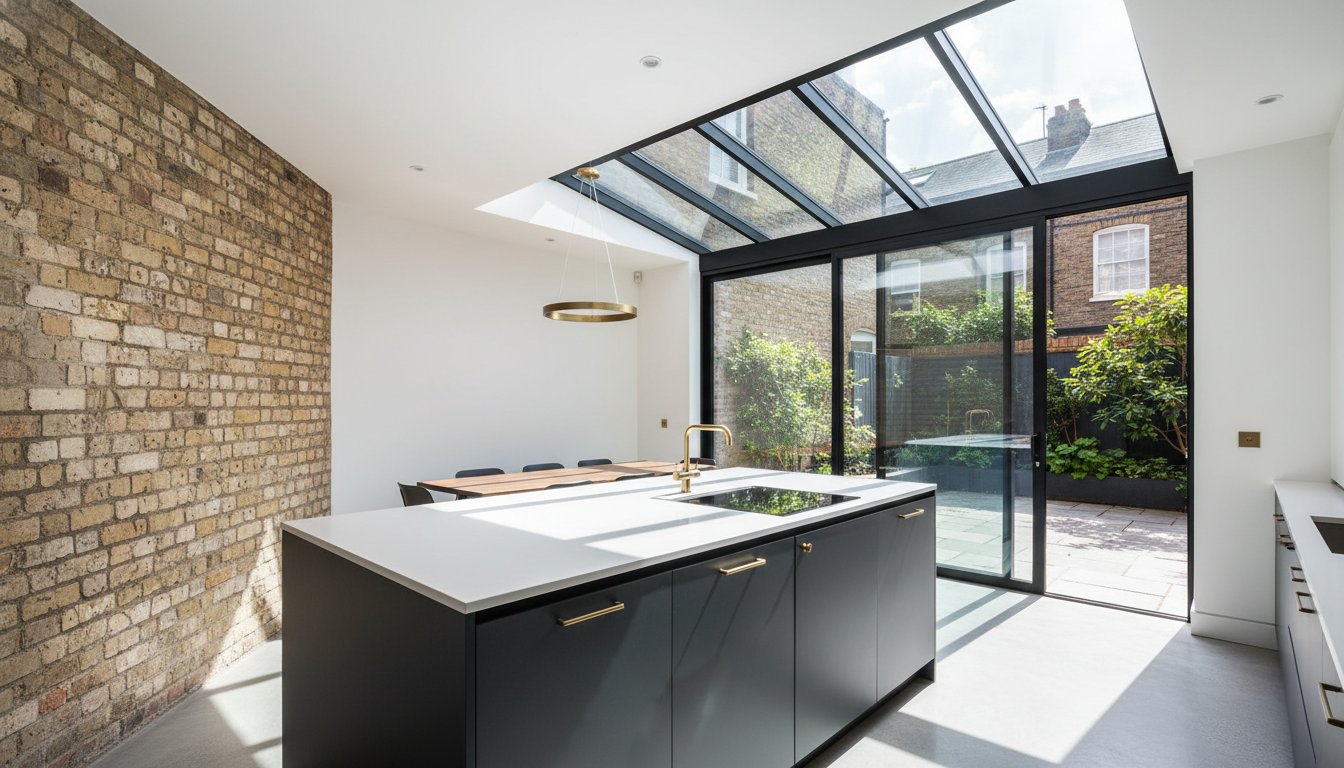
Side Return Extension London: The 2026 Architect’s Guide to Unlocking Your Home’s Potential
What if the narrow, neglected alleyway running alongside your home was actually the key to a 20% increase in your property’s market value? For most Londoners, the classic Victorian terrace offers timeless charm but often feels cramped and disconnected from natural light. You’ve likely felt that your kitchen is too small for modern living, yet the prospect of complex planning permissions and delicate party wall agreements feels like a daunting barrier. A side return extension London project is about more than just adding square footage; it’s about unlocking the hidden potential of your existing footprint through visionary design.
We understand that you want a seamless transition between old and new without the fear of budget creep or creating a dark, tunnel-like space. This 2026 guide provides the architectural expertise you need to transform that underutilised area into a light-filled, bespoke kitchen that perfectly balances heritage and modern elegance. We’ll explore how to manage specific planning hurdles, utilise innovative glazing solutions, and ensure your project remains a stress-free journey from initial concept to final completion.
Key Takeaways
- Learn how to transform your Victorian or Edwardian terrace by seamlessly infilling the side alley to create a spacious, open-plan living environment.
- Navigate the latest 2026 planning regulations and discover how to leverage Permitted Development rights for your bespoke side return extension London.
- Explore innovative architectural solutions, such as structural glass and high-performance roofing, designed to flood your home with natural light and volume.
- Understand the critical logistics of your project, from managing the Party Wall Act 1996 to professional fee structures and realistic GBP budgeting.
- Discover the “Architect Advantage” and how a tailored approach unlocks the hidden potential of your property through expert planning and technical design.
Understanding the London Side Return Extension: Unlocking Hidden Space
London’s architectural heritage provides a unique opportunity for modern optimization. For many homeowners, the traditional galley kitchen feels restrictive, dark, and disconnected from the rest of the home. A side return extension London offers a sophisticated solution to this structural bottleneck by reclaiming the narrow strip of land that sits idle alongside the rear wing of the property. This transformation isn’t just about adding square footage; it’s about shifting the entire lifestyle of the home from a series of cramped corridors to a social, light-filled hub that serves as the heart of the household.
The financial incentive for this architectural intervention is equally compelling. In prime London postcodes, where space is the ultimate luxury, a well-executed side return can increase property value by as much as 20%. By maximizing the internal width of the house, you create the sought-after open-plan layout that modern buyers demand, ensuring your investment delivers one of the highest returns on investment available in the current UK property market.
The Anatomy of a London Terrace
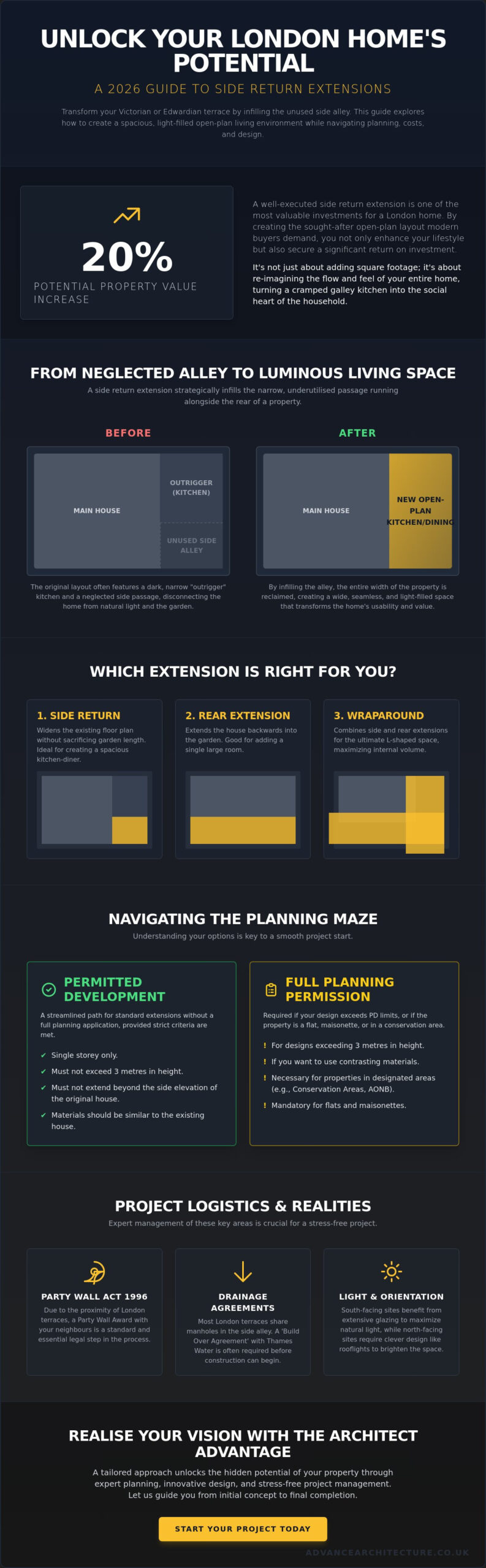
Most Victorian properties and Edwardian homes in London feature an “outrigger,” which is the original rear projection containing the kitchen and scullery. This design leaves a disused side passage that often becomes a neglected storage area for bins or bicycles. In North London boroughs like Barnet, Camden, and Islington, these passages are frequently narrow, which limits natural light to the middle rooms of the house. A side return extension serves as a strategic architectural infill that reclaims the narrow, underutilised passage running alongside the rear projection of a property. This process involves Design, Planning, and Management to ensure the new structure integrates seamlessly with the existing fabric while overcoming common constraints like shared drainage and restrictive boundary walls.
Side Return vs. Rear Extension: Which is Right?
Choosing the right footprint depends on your specific goals for garden preservation and internal volume. While a rear extension pushes the house back into the garden, a side return focuses on widening the existing floor plan. This approach is ideal for homeowners who want to retain their outdoor space while achieving a more generous kitchen and dining area. For those seeking the ultimate volume, a “wraparound” extension combines both side and rear elements to create a vast, L-shaped living space.
- Site Orientation: South-facing side returns benefit from extensive glazing or roof lights to flood the interior with natural light.
- Drainage: Most London terraces share manholes in the side alley, requiring a Build Over Agreement with Thames Water.
- Party Walls: Proximity to neighbours in high-density areas like Islington means Party Wall Awards are a standard part of the technical process.
Our role is to guide you through these complexities, ensuring a stress-free journey from the initial vision to the final structural sign-off. By unlocking the potential of your side return extension London, we create a bespoke environment that balances heritage charm with contemporary functional elegance.
Navigating London Planning Permission: PD Rights vs. Full Application
Understanding the regulatory landscape is the essential first step in unlocking your property’s value. For a side return extension London homeowners often find that Permitted Development (PD) rights offer a streamlined path to success. This framework allows for specific improvements without the need for a traditional planning application, provided the design adheres to the strict 2026 criteria. The Permitted Development Rights technical guidance remains the definitive benchmark for these transformations, ensuring that your project meets national standards for size and scale.
For most terraced houses, the 3-metre rule is a critical boundary. An extension must not exceed three metres in height or extend beyond the side elevation of the original house. If your vision involves exceeding these dimensions or if your property is a flat or maisonette, Full Planning Permission becomes a necessity. This process requires a detailed submission to your local council, where the impact on neighbors and the streetscape undergoes a formal review. We provide the technical expertise to manage these complexities, ensuring your design remains both visionary and compliant.
Permitted Development in 2026
In 2026, PD rights for side extensions are governed by precise width limits. Your extension must not exceed half the width of the original house. This ensures the addition remains proportionate to the existing structure. Materiality is equally important; the exterior finish must match the character of the original building. We often specify reclaimed London stock brickwork to create a seamless transition between the old and the new. For a deeper regulatory context, you can explore our guide on Permitted Development in London.
Working within London Conservation Areas
Properties in boroughs like Barnet or North London heritage sites require a more nuanced approach. Standard PD rights are often restricted or removed entirely via Article 4 Directions in these zones. Design sensitivity is paramount here. We specialize in balancing contemporary glazing with traditional masonry to satisfy conservation officers while fulfilling your lifestyle needs. If you are extending a heritage asset, securing listed building consent is a mandatory step to protect the historical integrity of the structure.
Securing a Lawful Development Certificate (LDC) is a strategic move for every side return extension London project. While not legally required for PD builds, an LDC provides formal written proof from the council that your project is lawful. This document is vital for future-proofing your home, as it streamlines the process during property valuations or future sales. It offers the legal certainty that your investment is protected and fully compliant with 2026 building standards. To begin your journey with confidence, you may wish to book a bespoke architectural consultation to assess your site’s specific potential.
Bespoke Design Innovations: Maximising Light and Volume
Designing a successful side return extension London requires a strategic approach to overcome the “tunnel effect.” This common architectural challenge occurs when a long, narrow addition lacks sufficient natural light, leaving the core of a Victorian terrace feeling dark and isolated. We solve this by manipulating the roofline and floor levels to create a sense of verticality. Structural glass is our primary tool here. By replacing a solid roof with a lean-to glazed system or a high-performance flat roof featuring oversized lanterns, we flood the kitchen with daylight. This transformation changes the property’s atmosphere from a series of cramped rooms into a cohesive, airy living space.
Modern layouts have evolved beyond the basic open-plan concept. We now champion “broken-plan” designs. This approach uses subtle architectural cues like internal Crittall screens, double-sided fireplaces, or varied floor finishes to define zones for cooking, dining, and relaxing. It maintains the visual flow of a large room while providing the acoustic privacy and structural definition that busy families require. To complete the transition, we implement flush thresholds. By aligning the internal floor height exactly with the external patio, the garden becomes a natural extension of the kitchen. We specify slim-profile drainage channels to ensure this seamless look meets all UK building regulations for weatherproofing.
Glazing Strategies for Narrow Spaces
Frameless glass box extensions represent the peak of modern aesthetic for period homes. These structures use structural silicone bonding to remove the need for bulky frames, offering unobstructed views of the sky. For homeowners seeking privacy from neighbours, clerestory windows placed high on the flank wall provide a solution. These narrow strips of glass bring light deep into the floor plan without compromising security. When choosing doors, we compare 20mm slimline sliding systems, which offer maximum glass area, against Crittall-style steel frames. While sliding systems provide a minimalist look, Crittall frames offer a timeless, industrial character that complements London’s heritage brickwork.
Unlocking Potential with Interior Architecture
Sunken floors are an ingenious way to bypass planning height restrictions while increasing volume. Dropping the kitchen floor by 300mm creates immediate architectural drama and provides the extra ceiling height needed for a truly premium feel. We often pair this with tactile materials to add warmth. Exposed London stock brickwork creates a bespoke character that bridges the gap between old and new. Lighting design is the final layer of this transformation. We integrate discreet LED tracks and plastered-in downlights to enhance the evening atmosphere. This ensures the extension remains a vibrant, functional space long after the sun sets, adding significant long-term value to the property.
Logistics and Realities: Costs, Party Walls, and Timelines
Transforming a Victorian terrace requires more than just a visionary design; it demands a rigorous approach to the logistical framework. A side return extension London project typically follows a structured 12 to 16 week construction phase. This timeline begins with the initial site survey and structural stabilization, moving through to the weather-tight stage and final interior fit-out. Structural engineering remains the backbone of this process. It involves calculating the precise steel load-bearings required to support the original masonry while creating that coveted open-plan flow. Without these calculations, the integrity of the upper floors could be compromised, making this a non-negotiable stage of the technical design.
The Party Wall Process Explained
The Party Wall Act 1996 is the most significant regulatory hurdle for London homeowners. You must identify all “Adjoining Owners” and serve formal notices at least two months before work starts. If a neighbor dissents, a Party Wall Surveyor steps in to create an Award. This legal document protects both parties but can add £1,500 to £3,000 per neighbor to your project overheads. We prioritize professional mediation and early engagement to keep neighbor relations stress-free. Clear communication often prevents the need for expensive third-party surveyors, ensuring the build starts on schedule.
Managing Your London Extension Budget
Successful budgeting extends far beyond bricks and mortar. You should allocate 10% to 15% of your total spend for professional fees and remember that VAT at 20% applies to most renovation costs. Investing in professional architectural plans ensures every millimetre is accounted for, reducing the risk of expensive mid-build changes. We recommend a 10% contingency fund to manage the “unforeseen” Victorian foundations often discovered during excavation. These 19th-century footings are frequently shallower than modern standards require, necessitating additional depth or underpinning. Our fixed-fee architectural services provide the budget certainty you need to move forward with confidence, eliminating the anxiety of escalating costs.
Every successful side return extension London project relies on a balance of creative ambition and technical precision. By addressing the structural and legal realities early, you protect your investment and ensure a seamless transition from old to new. It’s about building a foundation of trust before the first brick is even laid.
Ready to navigate the complexities of your build with an expert partner? Book a consultation with Advance Architecture today to begin your feasibility study.
The Architect Advantage: Realising Your Vision with Advance Architecture
Choosing an architect over a standard design-and-build firm is the difference between a house that simply fits and a home that truly inspires. While many contractors offer “cookie-cutter” templates, Advance Architecture focuses on bespoke design that respects the unique character of your property. We understand that every side return extension London homeowners commission requires a surgical response to light, volume, and heritage. We don’t just add floor space; we curate environments that enhance your daily life. Our use of advanced 3D visualisation allows you to walk through your new kitchen-diner virtually, ensuring every skylight and structural beam is positioned perfectly before a single brick is laid on site.
Our expertise lies in “unlocking potential” within the narrowest Victorian and Edwardian footprints. By challenging traditional layouts, we find clever ways to introduce double-height ceilings or seamless indoor-outdoor transitions that others might overlook. This tailored approach ensures your investment delivers maximum aesthetic and financial value, turning a neglected alleyway into the architectural heart of your home.
Our Three-Stage Professional Approach
We provide a structured, stress-free journey through three distinct phases of development:
- Phase 1: Conceptual Design and Feasibility. We explore multiple layout possibilities to test the limits of your site. This stage identifies the most ambitious yet achievable vision for your space.
- Phase 2: Planning Management. Navigating the requirements of local London authorities can be complex. We manage the entire application process, leveraging our deep knowledge of 2026 planning policies to secure the necessary approvals.
- Phase 3: Technical Design and Tendering. We produce comprehensive technical drawings that exceed standard building regulations. These detailed blueprints allow contractors to provide fixed, accurate quotes, preventing unexpected costs during construction.
Start Your Transformation Today
The journey to a refined home begins with a free initial consultation. This vital first step allows us to assess the viability of your site and discuss your specific lifestyle requirements. As experienced residential architects in London, we pride ourselves on creating solutions that are as functional as they are beautiful. Whether you need a quiet garden-facing study or a vast social hub for entertaining, our designs are built around you. Your side return extension London project deserves the precision and creativity that only a dedicated architectural team can provide. Contact Advance Architecture today to begin your bespoke journey and see how we can transform your property into a visionary living space.
Transform Your Vision into a London Reality
Your Victorian or Edwardian terrace holds untapped value that a side return extension London can finally unlock. Navigating the 2026 planning landscape requires more than just a drawing; it demands a strategic approach to Permitted Development rights and bespoke structural design. Since 2009, Advance Architecture has refined a process that balances ambitious aesthetics with technical precision. We’ve spent over 15 years mastering the nuances of London’s unique terrace architecture to ensure your project moves from concept to completion without the typical stressors.
Our fixed-fee transparency removes the guesswork from your budgeting, providing a clear path through the complexities of party wall agreements and building regulations. You don’t have to compromise on natural light or volume when you have a partner who understands how to maximize every square millimetre. Whether you’re looking to create a sun-drenched kitchen or a seamless indoor-outdoor living space, the right expertise makes the difference between a simple build and a life-changing transformation.
Book your free side return feasibility consultation with our London experts
Your journey toward a more spacious, light-filled home starts with a single conversation. We’re ready to help you build something extraordinary.
Frequently Asked Questions
Do I need planning permission for a side return extension in London?
You often need planning permission for a side return extension London, especially if your property sits within one of the 600 conservation areas across the capital. While some projects fall under Permitted Development, a full planning application allows for more ambitious architectural designs that truly unlock your home’s potential. Our team manages the entire submission process to ensure a stress-free approval from your local council.
How much does a side return extension cost in London in 2026?
Based on current industry benchmarks adjusted for 2026 inflation, expect to pay between £3,500 and £4,500 per square metre for a high-end London finish. A typical 25 square metre side return often requires a budget of £90,000 to £120,000 excluding VAT and professional fees. These figures reflect the rising costs of premium materials and the specialist labour required for bespoke urban transformations.
How long does it take to build a side return extension?
A standard side return extension typically takes 16 to 24 weeks to build once the ground is broken. The pre-construction phase, which includes design, planning, and party wall negotiations, adds another 6 months to the overall timeline. We create a detailed schedule to ensure your project moves from the initial concept to a completed living space with clinical precision and minimal disruption.
Will a side return extension make my middle room dark?
A well-designed extension won’t leave your middle room in the dark. We use strategic roof lights, internal glazed partitions, and floor-to-ceiling glass doors to funnel natural light deep into the floor plan. By integrating these bespoke solutions, we transform a previously shadowed space into a bright, cohesive heart of the home that feels open and airy throughout the day.
Can I do a side return extension under Permitted Development?
You can build a side return extension under Permitted Development if it’s no wider than half the original house and stays under 4 metres in height. However, these rights are often restricted in specific London boroughs or for listed buildings. We always recommend obtaining a Lawful Development Certificate to provide 100% legal certainty and protect your property’s future resale value during the conveyancing process.
What is the minimum width for a viable side return extension?
A side return needs a minimum width of 1.2 metres to be architecturally viable and provide a sense of openness. While narrower strips exist, a width of 1.5 to 2 metres provides the necessary space for a functional kitchen island or a comfortable dining area. This optimization ensures the new footprint delivers a genuine lifestyle improvement rather than just a marginal increase in floor area.
How do I handle a party wall agreement for a side return?
You must serve a formal party wall notice to your neighbours at least 2 months before work begins on site. This is a legal requirement under the Party Wall etc. Act 1996 for any excavation within 3 or 6 metres of their foundations. We coordinate with specialist surveyors to handle these negotiations, ensuring a hassle-free process that maintains positive relationships with your neighbours while protecting your legal interests.
Is it better to hire an architect or a design-and-build company?
Hiring an architect provides a higher level of design sophistication and independent oversight that design-and-build firms often lack. We offer a bespoke service that prioritizes your unique vision while managing the technical complexities of the London planning landscape. This partnership ensures your side return extension London is built to the highest standards, maximizing both aesthetic beauty and your long-term investment value.