
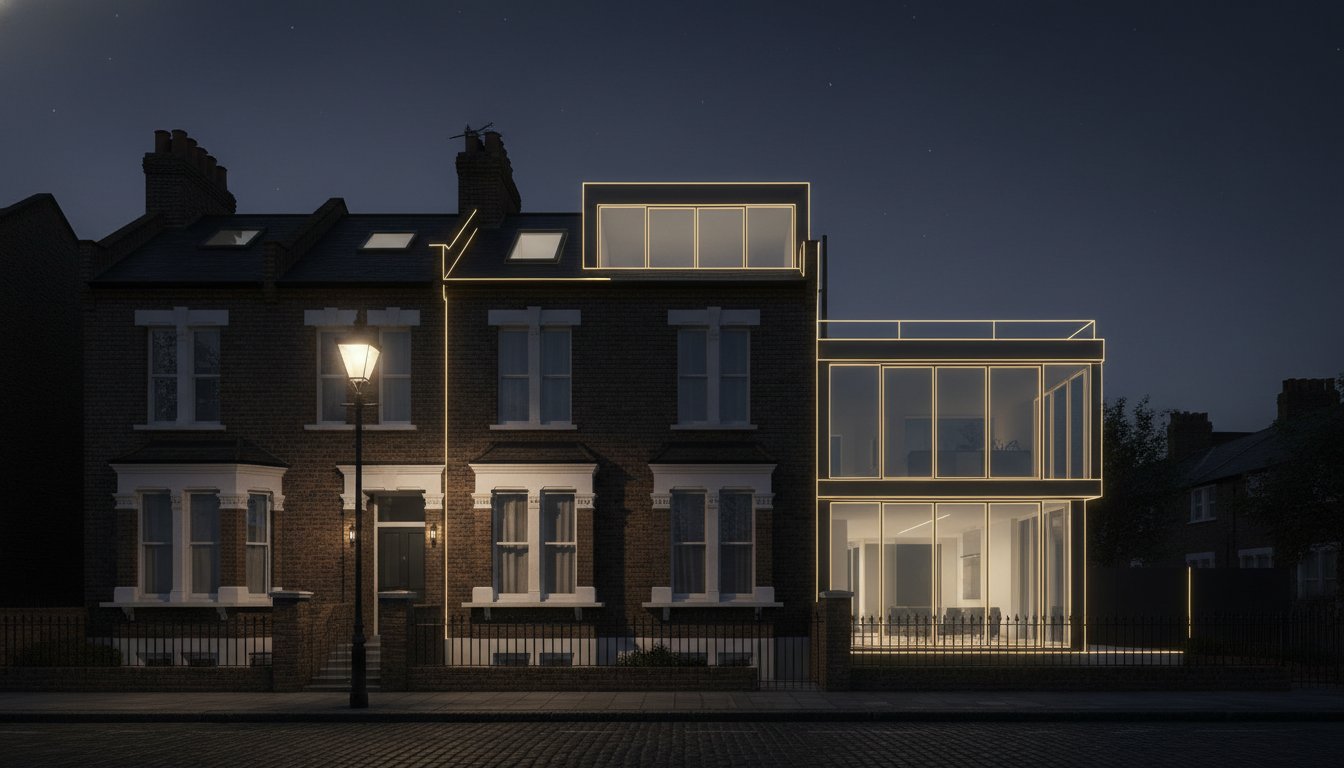
Architect for Pre-Purchase Feasibility Study London: The 2026 Buyer’s Guide
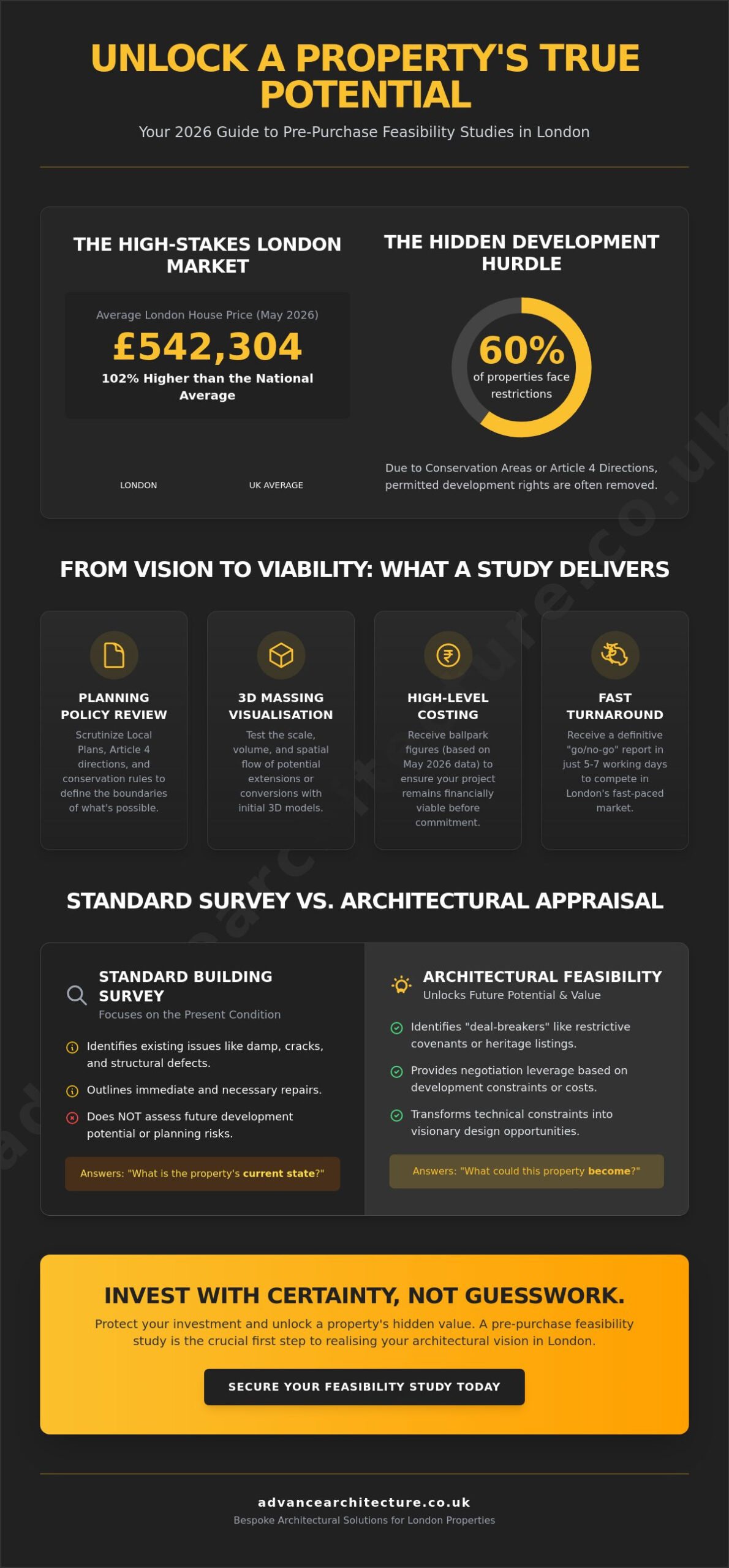
Did you know that 60% of London properties currently face hidden restrictions on permitted development rights due to conservation areas or Article 4 directions? When the average London house price is £542,304, which is 102% higher than the national average in May 2026, you can’t afford to guess about a building’s potential. Engaging an expert architect for pre-purchase feasibility study London projects ensures you don’t accidentally purchase a “money pit” with no room for growth.
You’ve likely felt the pressure of a tight timeline between a viewing and making an offer, wondering if your vision for a bespoke extension or loft conversion is actually legal. We understand that this stage of the journey feels daunting, yet it’s also where the most creative possibilities begin. This 2026 guide will show you how a professional study unlocks hidden value by navigating the latest 3.8% increase in planning fees and the upcoming NPPF revisions. You’ll learn how to secure a clear “go/no-go” signal through technical analysis and 3D visualization, giving you the total confidence to transform your property investment into a visionary home.
Key Takeaways
- Identify hidden “deal-breakers” such as heritage listings or restrictive covenants before you make a formal offer to protect your investment capital.
- Partnering with an architect for pre-purchase feasibility study London projects provides a comprehensive review of site orientation, light levels, and complex Article 4 directions.
- Navigate borough-specific nuances across Barnet, Camden, and Islington to understand how local conservation rules impact your specific design aspirations.
- Ensure your chosen expert can deliver a detailed report within 5 to 7 working days to meet the fast-paced demands of the London property market.
- Discover how a bespoke feasibility assessment transforms technical constraints into visionary design opportunities for extensions, loft conversions, or new builds.
The Strategic Value of a Pre-Purchase Feasibility Study in London
In the high-stakes environment of the London property market, a pre-purchase feasibility study is a rapid architectural assessment of a building’s development potential conducted before a formal offer is finalized. It serves as a strategic roadmap that bridges the gap between a viewing and a legal commitment. To understand the technical framework, it’s helpful to consider what is a feasibility study in a professional context: an objective evaluation that uncovers strengths, weaknesses, and the likelihood of project success. By engaging an expert architect for pre-purchase feasibility study London projects, you move beyond guesswork and enter negotiations with a clear, data-backed vision.
Risk mitigation is the primary driver of this assessment. Identifying “deal-breakers” early, such as restrictive covenants, heritage listings, or complex drainage issues, prevents you from acquiring a property that can’t fulfill your needs. Beyond avoiding pitfalls, this study provides significant negotiation leverage. If our analysis reveals that a planned basement is unviable or that a specific borough policy requires costly mitigation, you can use these concrete findings to justify a lower offer price. Conversely, we often find hidden opportunities for house extensions london homeowners might have missed, such as utilizing specific permitted development nuances to unlock additional square footage without a full planning application.
Why ‘Due Diligence’ Must Include Architecture
Standard building surveys are designed to tell you the current state of a structure; they focus on damp, cracks, and immediate repairs. An architectural feasibility appraisal tells you the future potential. It’s the difference between knowing a wall is solid and knowing if that wall can be removed to create a seamless, open-plan living space. We analyze the “ceiling price” of your specific street against the projected cost of development. This ensures your investment remains financially sound and that the value added by the transformation outweighs the construction expenditure.
The 2026 London Market Context
As of May 2026, the London planning landscape has become increasingly intricate. With the national 3.8% increase in planning application fees that took effect on April 1, 2026, and the revised NPPF expected by summer 2026, expert advice isn’t just a luxury; it’s a necessity. Modern feasibility now prioritizes “Retrofit First” policies, focusing on how existing structures can be optimized for sustainability. In the fast-moving North London circuit, speed is your greatest competitive advantage. By working with an architect for pre-purchase feasibility study London assignments, you can receive a definitive “go/no-go” signal in days, allowing you to act decisively while others are still hesitating.
- Planning Policy Review: We scrutinize Local Plan nuances and check for Article 4 directions that might have removed permitted development rights.
- Initial Massing Sketches: We use 3D models to test the scale of potential extensions against local height restrictions and sightlines.
- High-Level Costing: We provide ballpark figures based on May 2026 construction data to ensure the project remains financially viable before you commit.
Visualising Potential: Massing and 3D Studies
Many buyers struggle to translate a 2D floor plan into a lived experience. We solve this by using 3D visualisation as a strategic tool during the feasibility stage. We don’t wait for the final design to show you the space; we use massing studies to test different configurations early. Whether you’re weighing a loft conversion against a rear extension, these visualisations help you understand the spatial flow and volume. They also serve as powerful assets when communicating your vision to lenders or joint-venture partners who need to see the tangible potential of their investment.
The Planning Appraisal: Navigating the ‘No’s’
Planning is often where the most significant risks hide. Navigating North London’s Planning Constraints involves identifying if a property sits within a Conservation Area or is curtilage-listed. We don’t just look at the rules; we look at the results. By reviewing planning precedents on your specific street from the last 24 months, we can see what councils like Camden or Barnet are actually approving. When you hire an architect for pre-purchase feasibility study London services, we provide a clear risk grading, High, Medium, or Low probability of success, for projects like loft conversions. If you’re looking for a steady hand to guide you through this journey, our team at Advance Architecture is ready to help you realize your vision.
Navigating North London’s Planning Constraints and Nuances
North London’s architectural charm is its greatest asset and its biggest planning hurdle. While a property in Barnet might allow for expansive rear extensions, a similar terrace in Islington often faces much tighter scrutiny regarding the “street scene.” Camden councils are famously protective of their historic skylines and density. When you hire an architect for pre-purchase feasibility study London projects, we don’t just look at the building; we analyze the specific temperament of the local planning office. Each borough has its own unique Local Plan, and understanding these “quirks” is the difference between a successful transformation and a rejected application.
Conservation areas add a significant layer of complexity to even the most basic external changes. Something as seemingly simple as window replacements or a new roof tile can require full planning permission if the property falls within one of the many protected zones in boroughs like Haringey or Westminster. Beyond the bricks and mortar, natural constraints play a massive role. In London’s leafy suburbs, a single oak tree protected by a Tree Preservation Order (TPO) can stall a development if the proposed footprint encroaches on its root protection zone. Our feasibility process includes informal checks and an analysis of local precedents to gauge the authority’s appetite for specific changes before you commit your capital.
Listed Buildings and Heritage Assets
Grade II listings are common in North London’s historic pockets like Hampstead or Highgate. These designations protect the “special interest” of the building, which often includes internal partitions, original fireplaces, and even lath-and-plaster ceilings. A feasibility study at this stage is vital to determine how to balance contemporary living with heritage preservation. We help you understand what’s negotiable and what’s sacrosanct, ensuring your vision for a bespoke home respects the building’s history while maximizing its modern functionality.
Permitted Development vs. Full Planning
Understanding the nuances of permitted development is vital for homeowners looking for a faster route to construction. Class A and Class B rules often allow for significant extensions or loft conversions without a full planning application. However, approximately 60% of London properties are subject to Article 4 directions which remove these rights. We navigate the “Prior Approval” trap, where even “permitted” works require council notification and can be rejected on technicalities, ensuring you have a clear roadmap for your investment.
How to Choose the Right Architect for Your Property Assessment
Selecting the right architect for pre-purchase feasibility study London projects requires a shift in perspective. You aren’t just looking for a designer; you’re looking for a strategist who understands the high-velocity London market. Speed is non-negotiable. In a city where property sales often move from viewing to offer in days, your architect must be able to deliver a comprehensive report within 5 to 7 working days. Any longer, and you risk losing the property to a more decisive buyer who has already done their homework.
Local council experience is the cornerstone of a successful assessment. An architect who has successfully navigated the specific nuances of Barnet, Camden, or Islington will already know the “unwritten rules” of those planning departments. They should demonstrate “Commercial Awareness,” which means they understand how their design proposals affect the property’s end value and your overall investment yield. When reviewing their previous architectural plans, look for technical depth that goes beyond simple sketches. Clear, detailed drawings suggest a level of rigor that will satisfy both your curiosity and a lender’s requirements. If you’re ready to secure your next investment with technical certainty, book a consultation with our feasibility experts today.
Questions to Ask During Your Initial Consultation
Your first meeting is an opportunity to test the architect’s local knowledge. Ask exactly how many projects they’ve successfully navigated through your specific borough’s planning office in the last 12 months. Enquire if they provide 3D massing studies as standard, as these are vital for visualizing the volume of a potential extension. Finally, ask if they can provide an indicative construction budget based on May 2026 London rates. A visionary expert should be able to ground their design ideas in current economic reality.
Fixed-Fee vs. Hourly Rate for Feasibility
Transparency is essential during the due diligence phase. We believe fixed-fee feasibility offers the best protection for buyers, allowing you to account for professional advice within your acquisition costs without the fear of escalating hourly rates. Ensure you know what’s excluded, such as specialist arboriculture or heritage reports. A well-structured study should be “scalable.” This means the data gathered during the pre-purchase phase should flow seamlessly into full RIBA stages once you’ve secured the keys, saving you time and money during the design development phase.
Advance Architecture: Unlocking Potential with Bespoke Feasibility
Since our founding in 2009, Advance Architecture has spent 17 years navigating the intricate layers of North London’s architectural landscape. We’ve built our reputation on a “Visionary Expert” approach that prioritizes creative problem solving over simple technical reporting. While many firms focus on identifying why a project might fail, we focus on how it can succeed. By choosing us as your architect for pre-purchase feasibility study London projects, you’re securing a partner who understands the emotional and financial weight of a high-stakes property acquisition.
Our bespoke reports are tailored to your specific lifestyle aspirations or investment targets. We don’t believe in “one size fits all” templates. Instead, we provide a steady hand to guide you through the daunting journey of property transformation with ease and expertise. We use advanced 3D visualisation as a diagnostic tool at the very start of the process. This allows us to test massing, light, and privacy during the pre-purchase window, ensuring that the “what if” scenarios are grounded in physical and regulatory reality before you sign a contract.
Our Process: From Viewing to Vision
The London property market moves at a relentless pace, and our process is designed to match it. We offer rapid response times to ensure you have the data you need within the critical window between a second viewing and a formal offer. Our collaborative design sessions allow you to explore different configurations in real-time, moving seamlessly from abstract ideas to concrete possibilities. Once the purchase is complete, our deep knowledge of the initial feasibility study ensures a stress-free transition into the full planning and project management stages.
Realising Your Vision in North London
Our track record across boroughs like Barnet and Islington demonstrates our ability to unlock value where others see only constraints. Whether it’s a complex flat conversion or a sensitive extension to a period home, our residential architects london team focuses on maximizing space and light in every square meter. We’ve successfully navigated hundreds of applications, transforming “money pits” into visionary homes through meticulous technical analysis and inspired design. If you’re ready to move forward with total confidence, book your free initial consultation with Advance Architecture today and let’s realize your vision together.
Realise Your Property Vision with Technical Certainty
The London property market in 2026 leaves no room for hesitation or guesswork. You’ve learned how a professional assessment mitigates the risks associated with the 60% of London homes facing development restrictions. By identifying site constraints and planning precedents early, you transform a high-stakes purchase into a calculated strategic move. A rapid feasibility report ensures you act with the speed required in North London while maintaining total clarity on your investment’s future value.
Selecting an expert architect for pre-purchase feasibility study London assignments is the final step toward securing your dream home. Since 2009, Advance Architecture has guided clients through the complexities of listed buildings and conservation areas with a steady, professional hand. We include bespoke 3D visualisations in our studies to help you see exactly how a space can be optimized before you commit your capital.
Don’t leave your property’s potential to chance. Book Your Pre-Purchase Feasibility Consultation today and take the first step toward a seamless, visionary transformation. We’re ready to help you unlock the hidden opportunities within your next investment.
Frequently Asked Questions
What is the difference between a building survey and an architectural feasibility study?
A building survey focuses on the current physical condition of a property, identifying defects like damp or structural cracks. In contrast, an architectural feasibility study evaluates the future development potential of the site. It analyzes planning policy, site constraints, and spatial opportunities to determine what you can actually build, rather than just what is currently there.
How much does an architect for pre-purchase feasibility study London cost in 2026?
In May 2026, a detailed feasibility study in London typically costs between £500 and £1,500. For more complex residential or commercial projects, architects often provide fixed-fee pre-design reports ranging from £1,870 to £3,200. These professional fees reflect the specialized expertise required to navigate London’s intricate planning landscape and the recent 3.8% increase in national planning application fees.
How long does a typical property feasibility study take to complete?
A standard property feasibility study usually takes between 5 and 7 working days to complete. This rapid turnaround is designed to match the high velocity of the London property market, where buyers often have a narrow window between a viewing and the offer deadline. Our process ensures you receive a definitive “go/no-go” signal based on technical analysis within this critical due diligence period.
Can an architect guarantee planning permission during the feasibility stage?
No architect can provide an absolute guarantee of planning permission because the final decision always rests with the local council. However, an architect for pre-purchase feasibility study London provides a clear risk grading, High, Medium, or Low, based on 2026 planning precedents. This assessment significantly reduces your investment risk by identifying “deal-breakers” before you are legally committed to the purchase.
Do I need a feasibility study for a property that already has planning permission?
Yes, conducting a study is often beneficial even if permission exists. We evaluate whether the approved designs truly maximize the property’s potential or if they align with your bespoke lifestyle requirements. Often, we identify opportunities to improve light levels or spatial flow that the previous owner missed, ensuring the project delivers the highest possible return on your investment.
What happens if the feasibility study identifies major planning risks?
If our analysis uncovers significant planning hurdles, you can use this information as powerful negotiation leverage to justify a lower offer price. Alternatively, it provides the clarity needed to walk away from a “money pit” before exchanging contracts. We focus on finding creative solutions; if one route is blocked by policy, we explore alternative design strategies that might still achieve your vision.
Does a feasibility study include structural engineering calculations?
No, a feasibility study does not include formal structural engineering calculations. Our role is to assess the architectural and planning viability of the project. While we consider the structural integrity of the building at a high level during our assessment, detailed calculations are a separate technical requirement. These are typically produced by a specialist engineer once the project moves into the building regulations stage.
Can the feasibility study be used to get a mortgage or development loan?
Yes, professional feasibility reports are excellent tools for securing financing from lenders or private investors. By providing visual proof of the property’s potential through 3D massing and high-level costing, you demonstrate the project’s financial viability. Lenders value the technical certainty provided by an architect, as it proves the development is grounded in current 2026 planning reality and construction rates.