
How to Choose an Architect in London for a Period Property: The 2026 Homeowner’s Guide
The most successful period property renovations in London aren’t the ones with the largest budgets; they’re the ones that treat rigid planning restrictions as a creative framework rather than a barrier to progress. With the Planning and Infrastructure Act 2025 now in full effect and a new London Plan arriving in 2026, the stakes for your Victorian or Georgian home have never been higher. You likely feel the weight of these regulations, especially if you’re aiming for a seamless extension in boroughs like Barnet or Camden. Understanding how to choose an architect in London for a period property is the difference between a project that stalls at the planning committee and one that successfully unlocks your home’s hidden potential.
We recognize that you want a space that feels contemporary and light, yet respects the soul of its heritage. This guide will show you how to find a specialist who can navigate the £548 householder application process and the complexities of Listed Building Consent without the usual stress. We’ll explore the essential criteria for selecting a “Heritage Navigator” who can integrate modern luxury with 2026’s new environmental standards, such as the Nature Restoration Levy. By the end of this article, you’ll have a clear roadmap to transform your residence into a visionary masterpiece that honors its past.
Key Takeaways
- Identify the unique structural and material requirements of Georgian, Victorian, and Edwardian homes to ensure a seamless integration of modern luxury.
- Learn how to choose an architect in London for a period property by prioritizing portfolios that demonstrate successful negotiations with local Conservation Officers.
- Navigate the nuanced differences between standard Planning Permission and Listed Building Consent to avoid project delays and ensure a stress-free approval process.
- Follow a professional vetting guide to shortlist specialists who possess the technical authority and creative vision needed to unlock your home’s hidden potential.
- Discover how bespoke architectural solutions, such as loft conversions and kitchen extensions, can modernize a heritage property while meticulously preserving its historical soul.
Navigating the Complexities of London’s Heritage Architecture
London’s residential landscape is a living museum of architectural evolution. From the grand proportions of Islington to the rhythmic terraces of Barnet, every street tells a story. However, owning one of these homes comes with a unique set of challenges that modern builds simply don’t face. High-density terrace living often creates friction between your desire for light and the strict privacy requirements of your neighbors. Many London boroughs use Article 4 Directions to restrict permitted development rights; this means even minor external changes often require full planning permission. This is where the concept of unlocking potential becomes vital. It isn’t just about adding square footage. It’s about optimizing what exists while respecting the historical fabric. When you begin your journey of how to choose an architect in London for a period property, you’re looking for a partner who understands that every brick has a history.
Victorian, Georgian, and Edwardian: Knowing Your Home’s DNA
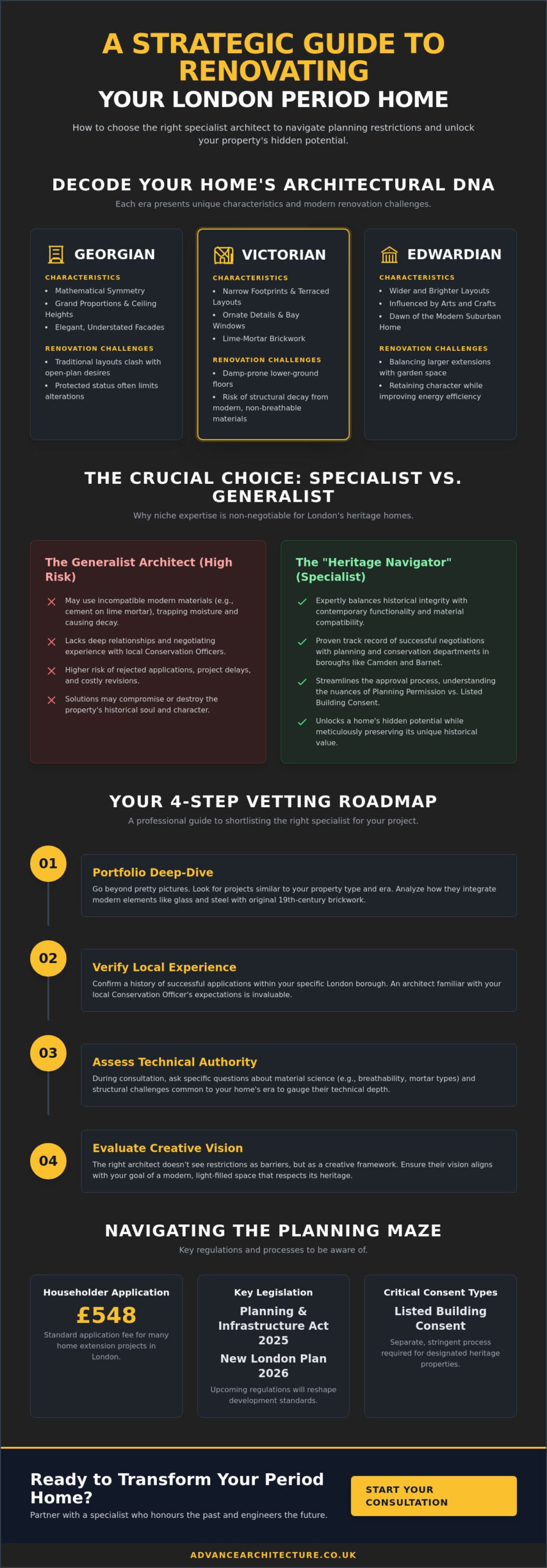
Georgian properties are celebrated for their mathematical symmetry and grand ceiling heights. Yet, their traditional layouts often clash with the modern desire for seamless, open-plan living. Victorian terraces, which make up a vast portion of London’s housing, present different hurdles. Their narrow footprints and tendency for damp in lower-ground floors require a specialist’s eye to resolve without compromising the structure. By the time the Edwardian era arrived, homes became wider and brighter, marking the dawn of the modern suburban layout we recognize today. Each era has its own DNA, and your design team must be able to decode it to ensure a successful transformation. Determining how to choose an architect in London for a period property requires an understanding of these specific technical nuances.
Why a Generalist Architect Isn’t Enough for a London Heritage Home
A generalist architect might suggest modern solutions that inadvertently damage an old building. For instance, using non-breathable cement on Victorian lime-mortar brickwork can trap moisture, leading to long-term structural decay. Understanding What is a Listed Building? is the first step in realizing that your home’s character is often protected by law. Conservation officers in boroughs like Camden are tasked with protecting the “spirit of the building,” and they expect your plans to show deep material compatibility and historical sensitivity. A Period Specialist Architect is a professional who expertly balances the preservation of historical integrity with the demands of contemporary functionality. Without this niche expertise, you risk rejected applications or a home that loses its soul during the renovation process. We believe in a partnership that guides you through these complexities with a steady, experienced hand.
Essential Criteria for Selecting a Specialist Period Property Architect
Selecting the right partner for your home transformation involves more than a cursory glance at an Instagram feed. You need a professional who understands the granular details of the local planning landscape and the physical realities of heritage buildings. When researching how to choose an architect in London for a period property, prioritize those who demonstrate a deep respect for original craftsmanship. A specialist views your property as a unique puzzle where heritage constraints are the pieces that form a visionary final design. They shouldn’t just offer drawings; they should offer a strategy to navigate the £548 householder application fee and the specific demands of your local borough.
The Portfolio Deep-Dive: Beyond the Pretty Pictures
A portfolio is a window into an architect’s problem-solving capabilities. Look for projects that mirror your own property type. A firm experienced in renovating semi-detached homes in Barnet will face different structural and aesthetic challenges than one working on Islington mansion blocks. Pay close attention to how they handle the integration of glass and steel against 19th-century brickwork. Successful house extensions london projects should feel like a natural evolution of the building, not an awkward addition. Similarly, check for experience with loft conversions in period rooflines, as these require delicate handling of original timber trusses and slate tiles to meet 2026 building regulations without losing character.
Accreditations and Professional Standing
Technical authority is non-negotiable. Every architect you consider must be registered with the Architects Registration Board (ARB), but for a period property, you should look for RIBA Chartered status. You can verify these credentials using RIBA’s Find an Architect service, which ensures the firm adheres to strict professional and ethical standards. Beyond basic registration, specialist conservation accreditations like the AABC or the RIBA Conservation Register indicate a higher level of expertise in heritage materials. Local London experience is equally vital. An architect who has spent years working with Camden or Westminster planning committees will understand the unwritten preferences of local conservation officers, making your journey significantly more stress-free. If you want to see how this expertise translates into real-world results, exploring our latest bespoke residential projects can provide the clarity you need to move forward with confidence.
Finally, prioritize creative chemistry. Your architect should be a steady hand that guides you, but they must also be a listener. The most successful transformations occur when an architect balances your modern lifestyle needs with the house’s historical soul. They should be able to explain how they will manage damp in your Victorian basement or optimize the symmetry of your Georgian facade while creating the open-plan kitchen you’ve envisioned. This collaborative spirit is what truly unlocks a property’s potential.
Mastering the Planning Process: Conservation Areas and Listed Status
Success in a London renovation often hinges on a single conversation with a local planning officer. While standard planning permission focuses on the size and use of a structure, Listed Building Consent (LBC) scrutinizes every material choice and construction method. As of April 1, 2026, the householder application fee stands at £548, but LBC remains free to apply for, reflecting the government’s desire to encourage the correct preservation of heritage assets. When you are deciding how to choose an architect in London for a period property, you must look for a team that treats these regulations as a design brief rather than a list of restrictions. A visionary expert uses the planning process to refine a project, ensuring the final result is both legally compliant and aesthetically superior.
Article 4 Directions are a common hurdle in the capital’s heritage hotspots. These local orders frequently strip away your permitted development rights, meaning even a small change to a garden wall or window frame requires formal approval. Navigating this landscape requires an architect who understands that the Conservation Officer is a guardian of the streetscape. By proposing designs that actually enhance the heritage asset, a skilled architect can turn a potential rejection into a celebrated approval.
London Borough Nuances: From Barnet to Islington
Every borough has its own architectural personality and planning culture. Barnet Council, for example, often shows a pragmatic openness toward high-quality modern rear extensions on Victorian homes, provided they don’t dominate the original structure. In contrast, Islington maintains a famously strict stance on traditional materials. They may require specific lime mortars or exact replicas of historic timber sash windows. Choosing an architect with a proven rapport in your specific borough is essential; they will know exactly what the local committee values, saving you months of potential delays.
Securing Listed Building Consent: A Delicate Balance
A Grade II listing protects the interior and exterior of a property, making any alteration a matter of national heritage. Consequently, the architectural plans required for these buildings must be exceptionally detailed. We often produce 1:20 scale joinery details or material samples to satisfy the rigorous demands of the 2025 Planning and Infrastructure Act. The challenge lies in integrating modern comforts like underfloor heating or high-performance insulation without disturbing the original floorboards or breathable masonry. It’s a surgical process that demands technical authority and a deep respect for the building’s historical soul.
Your Step-by-Step Vetting Guide: From Portfolio to Consultation
Finding the right professional to steward your home’s transformation requires a methodical approach that goes beyond aesthetic preference. You aren’t just commissioning a design; you’re entering a partnership that will likely span 12 to 18 months. When researching how to choose an architect in London for a period property, your first step should be to shortlist three to five residential architects london who possess a documented history of heritage work. A specialist will understand that a Victorian terrace in Barnet requires a different structural strategy than an Edwardian villa in Dulwich. This initial filtering ensures you only invest time in firms that treat heritage constraints as creative opportunities.
During your review, look past the glossy 3D visualisations. While renders are excellent for envisioning the lifestyle benefits of a new space, technical drawings reveal an architect’s true competence. Ask to see a set of building regulations drawings for a previous period project. This allows you to verify their knowledge of traditional construction methods and material compatibility. You should also request references from clients who have completed similar renovations. Speaking with a former client provides invaluable insight into how the architect manages the inevitable complexities of a London site, from party wall agreements to unexpected structural discoveries.
The 5 Questions Every Period Homeowner Must Ask
The consultation is your opportunity to test an architect’s technical authority. Use these specific questions to separate generalists from specialists:
- How do you handle thermal upgrades in a solid-wall Victorian house? Look for answers involving breathable insulation and moisture management.
- Can you show me a project where you successfully negotiated with a Conservation Officer? This proves their ability to secure approvals in sensitive areas.
- What is your approach to blending contemporary extensions with original brickwork? They should discuss material transitions and architectural dialogue.
- Do you manage the entire process from the initial architects london search to final completion? A full-service firm provides a much more stress-free experience.
- Is your fee structure fixed or percentage-based? Ensure you understand if planning liaison and site visits are included in the quote.
Assessing Chemistry and Communication
Technical skill is vital, but communication is what ensures a successful project. Your architect must be a steady hand that translates complex building regulations into plain English. They should feel like a partner who listens to your lifestyle needs while maintaining the integrity of the house. If a firm relies too heavily on industry jargon or feels dismissive of your concerns, they’re likely not the right fit for a bespoke renovation. A visionary expert will provide a clear roadmap and maintain a reassuring presence throughout the journey. If you are ready to discuss your project with a team that values heritage and innovation equally, book a consultation with Advance Architecture to begin your home’s transformation.
Realising Your Vision: How Advance Architecture Transforms Period Homes
Since 2009, Advance Architecture has dedicated itself to the art of heritage transformation across the capital. We believe that every historical home possesses a hidden narrative waiting to be revealed. When you consider how to choose an architect in London for a period property, you’re looking for a firm that views conservation as a catalyst for innovation rather than a constraint. Our philosophy centers on unlocking potential through bespoke design, ensuring that your home’s character remains intact while its functionality is completely reimagined for 2026 standards. We position ourselves as a steady hand, guiding you through the complexities of the modern planning landscape with technical authority and creative spark.
Our portfolio features successful Victorian loft conversions in Highgate and sympathetic Georgian kitchen extensions across North London. These projects highlight our ability to navigate the 2025 Planning and Infrastructure Act while delivering modern luxury that feels entirely at home. We don’t just provide drawings; we provide a clear, hassle-free roadmap that moves seamlessly from initial feasibility studies to detailed technical documentation. This structured approach mirrors the architectural process itself, providing a linguistic and practical framework that feels as sturdy as the buildings we design. Our local London expertise is your secret weapon, ensuring that your vision is translated into a reality that satisfies both your lifestyle needs and the rigorous demands of local planning committees.
Bespoke Solutions for Modern London Living
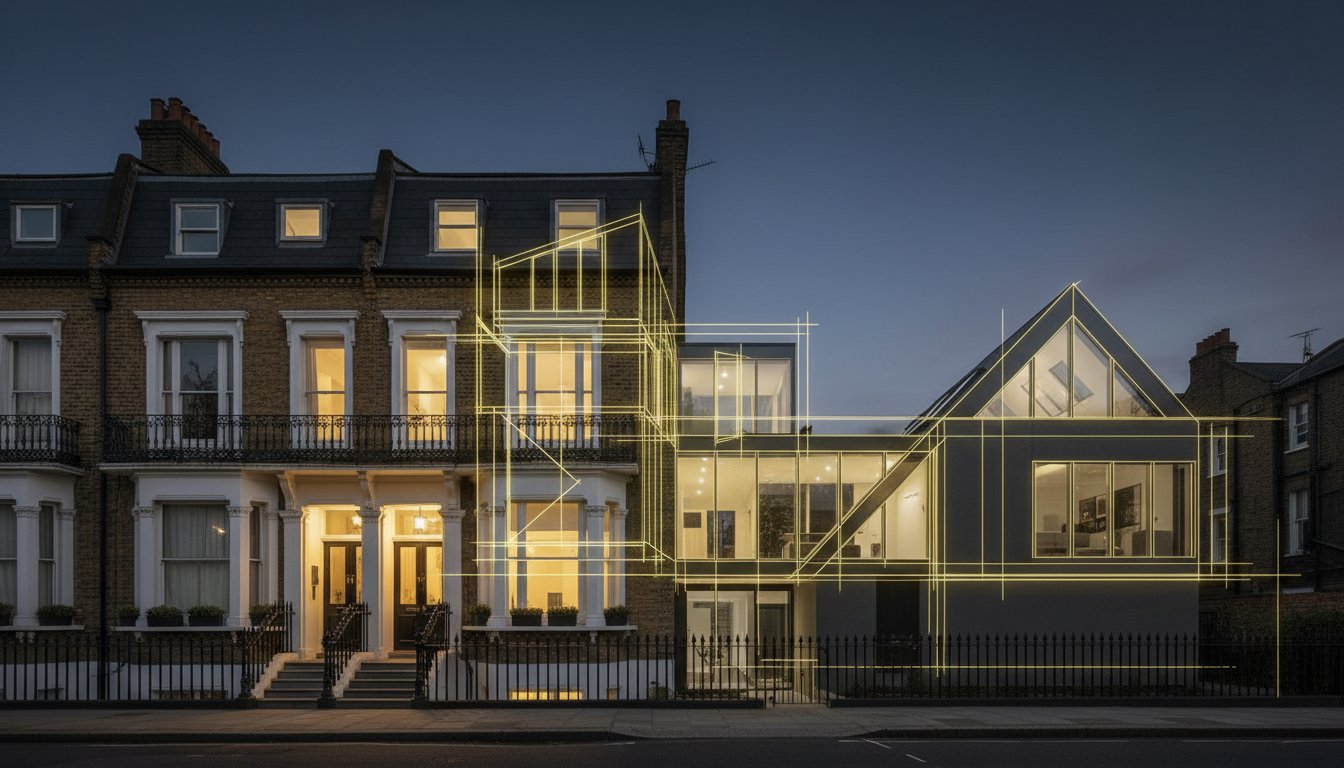
We utilize advanced 3D visualisation to bridge the gap between historical preservation and contemporary aspiration. This technology allows you to walk through your proposed home, seeing exactly how a glass-link extension interacts with original 19th-century masonry before a single brick is laid. Our commitment to quality, structural integrity, and functional elegance ensures that every intervention is as durable as it is beautiful. We specialize in creating tailored solutions for period house extensions that respect the unique architectural rhythm of your specific London street. By focusing on material compatibility and visionary design, we ensure your home retains its soul while gaining the space and light you desire.
Take the First Step Toward Your Dream Home
The journey to a transformed home should be an inspiring experience, not a source of anxiety. We manage the entire loop of Design, Planning, and Management to ensure a stress-free delivery that saves you time and protects your investment. Our local expertise across boroughs like Barnet and Camden helps you navigate the £548 application fees and complex heritage requirements with ease. We invite you to experience our steady hand and visionary approach firsthand through our free initial consultation. It’s an opportunity to discuss your project’s potential and understand how to choose an architect in London for a period property who truly understands your goals. Book your free consultation with Advance Architecture today and discover how we can help you realise your vision.
Realise Your Vision for Your Heritage Home
Transforming a period property in London requires more than just a creative eye; it demands a deep understanding of the 2025 Planning and Infrastructure Act and a meticulous approach to conservation. You’ve learned that the secret to success lies in finding a specialist who treats heritage restrictions as a design opportunity. By focusing on technical authority and borough-specific expertise, you can ensure a stress-free renovation that respects the past while embracing modern luxury. Mastering how to choose an architect in London for a period property is the first step toward a home that feels both timeless and perfectly suited to your contemporary lifestyle.
Since 2009, Advance Architecture has acted as a steady hand for homeowners across North London. We specialize in navigating the complexities of Listed Building Consent and high-end residential design. Our comprehensive service manages everything from initial feasibility to final technical documentation, ensuring your project remains on track. Unlock your period property’s potential with a free expert consultation today. Let’s work together to create a visionary space that honors your home’s history while providing the bespoke functionality your family deserves. Your dream home is waiting to be realized.
Frequently Asked Questions
Do I really need a specialist architect for a Victorian house extension in London?
Yes, specialist expertise is essential because Victorian homes possess unique structural quirks such as narrow floorplates and solid brick walls that require breathable materials. A specialist understands how to manage damp issues and navigate borough-specific committees in areas like Barnet or Camden. They ensure your extension unlocks the property’s potential without compromising the historical integrity of the original terrace.
How much does an architect charge for a period property renovation in London?
Architect’s fees typically range from 8% to 15% of the total construction cost for a full service. For complex sites in conservation areas, you should expect to pay between 15% and 18% due to the increased design scrutiny. If your home is a listed building, fees often rise by an additional 10% to 20% to cover the highly detailed documentation required for heritage approvals.
Can I get planning permission for a modern extension on a Grade II listed building?
You can certainly secure permission if the design creates a clear, sympathetic dialogue between the old and the new. Success depends on obtaining Listed Building Consent, a process that is free of application fees but demands 10x more detail than a standard submission. We focus on using high-quality glass-links or lightweight structures that protect the protected fabric while adding visionary modern living space.
What is an Article 4 Direction and how does it affect my London home?
An Article 4 Direction is a legal tool used by London boroughs to remove your permitted development rights for specific alterations. It means you’ll need full planning permission for minor changes, such as replacing timber sash windows or painting original brickwork, that would otherwise be exempt. This is common in heritage hotspots where councils want to preserve the uniform character of the streetscape.
How long does the planning process take for a period property in North London?
Most local authorities aim to decide on householder applications within 8 weeks of registration. However, for period properties involving heritage impact assessments or pre-application advice under the Planning and Infrastructure Act 2025, you should plan for a 12 to 16 week timeline. This ensures all regulatory hurdles are cleared before you begin the construction phase.
Will an architect help me find a builder who understands period properties?
A professional architect acts as a steady hand by recommending contractors with a proven track record in heritage craftsmanship. While we don’t provide physical construction services ourselves, we help you vet builders who understand the importance of lime mortar and traditional joinery. This partnership ensures that the technical authority of the design is matched by the quality of the build.
Can I add a loft conversion to a house in a London Conservation Area?
Loft conversions are possible in conservation areas, but they usually require full planning permission rather than falling under permitted development. Planners generally insist on conservation-grade rooflights and materials that match the existing roofline to maintain the area’s aesthetic. Knowing how to choose an architect in London for a period property is vital here to ensure your design meets these strict visual standards.
What are the common structural issues architects find in Georgian London homes?
Georgian properties often present challenges such as shallow foundations, decayed timber floor joists, and historic settlement in the masonry. We also frequently find that the traditional “butterfly” roof structures require significant reinforcement to support modern insulation and waterproofing standards. Our role is to identify these issues early through detailed surveys, ensuring the structural integrity of your home is protected during its transformation.