
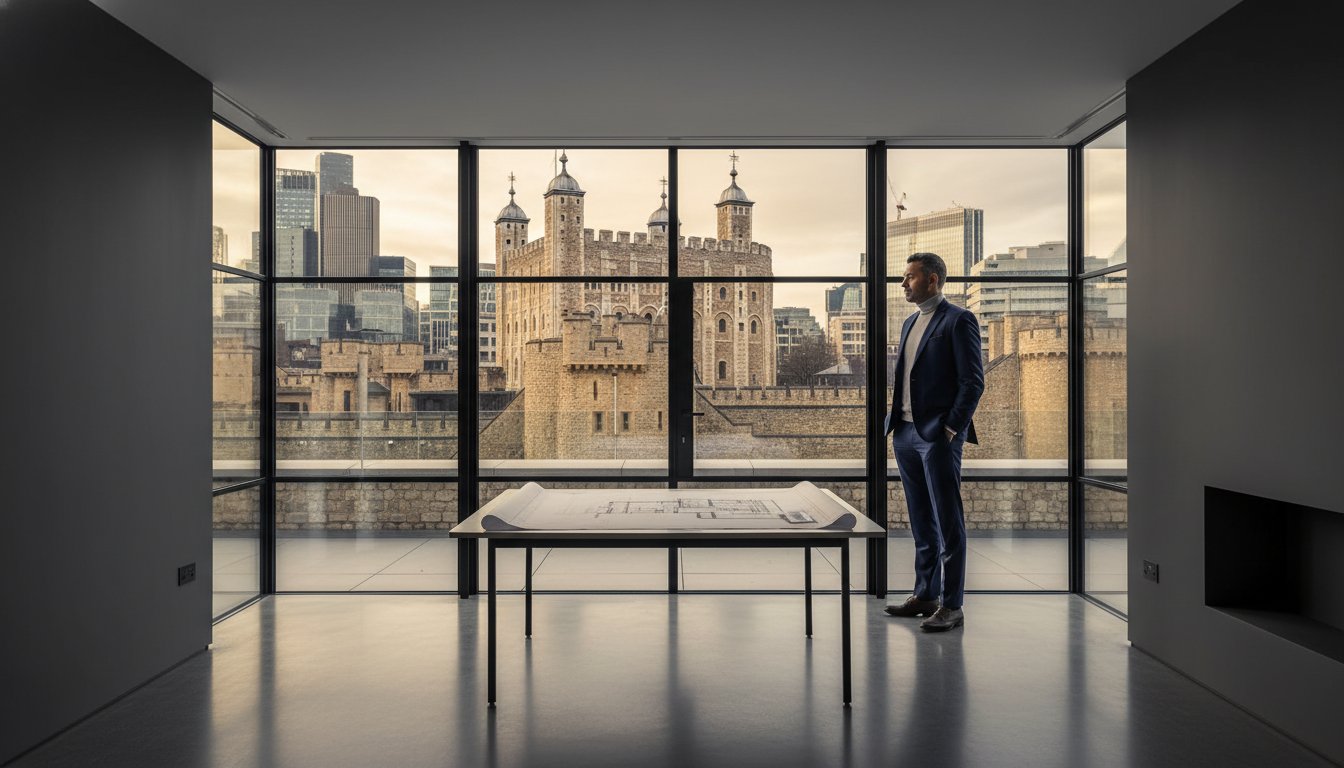
The Tower of London: An Architectural Legacy Shaping Modern London Design
The most innovative modern homes in London aren’t built in spite of the city’s ancient history; they’re built because of it. For many homeowners, living within the sightlines of the Tower of London feels like a complex puzzle of restrictive codes and listed building consents. You likely believe that these heritage protections limit your creative vision, making a seamless modern extension feel nearly impossible. We understand that the weight of history, dating back to the construction of the White Tower in 1078, can make the planning process feel like an insurmountable hurdle.
This article demonstrates how to transform those rigid constraints into a visionary design advantage. You’ll discover how the Tower’s structural legacy continues to shape contemporary aesthetics and learn the professional strategies needed to secure planning permission near historic landmarks. We’ll explore how to unlock the potential of your property by blending traditional masonry with bespoke modern innovation. This guide provides the technical authority and creative inspiration you need to realize a project that respects the capital’s heritage while maximizing your home’s functional elegance.
Key Takeaways
- Understand why the tower of london remains the capital’s ultimate architectural anchor and how its 1,000-year history informs the structural integrity of modern developments.
- Discover the Norman design secrets of the White Tower and how these historic principles of multi-functional space can be successfully adapted for contemporary residential living.
- Gain expert insights into navigating the complexities of Conservation Areas and World Heritage Site Buffer Zones to ensure a seamless planning process for your project.
- Learn how to bridge the gap between historic fortress design and luxury living by integrating “defensible space” concepts into bespoke modern house extensions.
- Uncover professional strategies to unlock the hidden potential of properties in London’s historic boroughs while maintaining a stress-free experience from concept to completion.
The Tower of London: An Architectural Anchor for the City
The Tower of London serves as a 1,000-year-old architectural palimpsest, where every stone tells a story of power, protection, and prestige. It’s the primary defensive and symbolic anchor of the City, a constant presence that has watched the London skyline transform from Roman ruins to a global financial hub. This fortress began as a modest timber fortification following the Norman Conquest in 1066. It quickly evolved into a massive stone fortress, setting the precedent for how London would balance security with monumental design. Today, its status as a UNESCO World Heritage site, granted in 1988, means that every modern development within its vicinity must undergo rigorous planning scrutiny. For Londoners, it’s a reminder that architectural innovation must always exist in dialogue with our shared history. The site represents a commitment to Design, Planning, and Management that transcends centuries.
The Symbolic Power of the White Tower
The White Tower remains the undisputed heart of the entire complex. Its design was a masterclass in psychological architecture, built to tower over the city and remind the populace of their new rulers. Its massive walls and four-turreted roofline created a silhouette that remained the tallest point in London for centuries. This wasn’t just a building; it was a bespoke statement of permanence and structural integrity. The White Tower was completed in 1078, and it’s recognized as the most complete 11th-century palace in Europe. By establishing such a dominant physical presence, the Normans ensured that the tower of london would forever be the benchmark for architectural authority in the UK.
A Fortress in Constant Flux
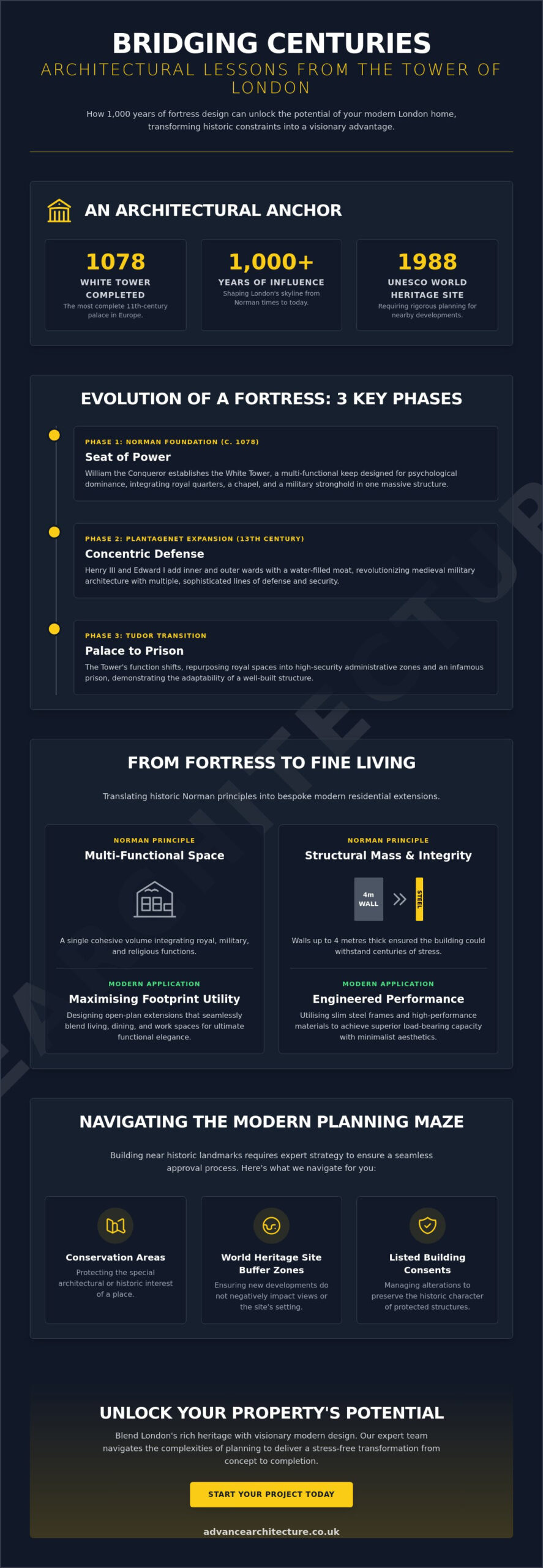
Architectural evolution is rarely a linear process, and the Tower reflects this through its successive defensive layers. During the 13th century, Henry III and Edward I added the inner and outer wards, creating a concentric design that revolutionized medieval military architecture. This layout provided multiple lines of defense, a sophisticated approach to security that would be mirrored in castles across the country. The site eventually transitioned from a glittering royal residence to the infamous prison of Tudor lore. This shift from palace to prison shows how the same structural framework can be adapted to meet new societal needs. At Advance Architecture, we see this as an early example of unlocking potential within an existing footprint, a principle we apply to every modern transformation project. The Tower’s history is defined by three key phases:
- The Norman Foundation: Establishing the central keep as a seat of power.
- The Plantagenet Expansion: Developing the concentric walls and water-filled moat.
- The Tudor Transition: Repurposing royal spaces into high-security administrative and carceral zones.
By understanding these layers, we can better appreciate how the Tower continues to influence the way we view heritage and contemporary design in the modern capital. It remains a steady hand in London’s ever-changing landscape, proving that well-planned structures can endure for a millennium.
Norman Innovation: The Structural Legacy of the White Tower
The construction of the White Tower in 1078 marked a definitive shift in the English built environment. It wasn’t merely a fortress; it was a psychological and physical declaration of power that established the tower of london as the primary benchmark for monumental architecture. William the Conqueror’s architects designed a multi-functional “keep” that integrated royal residential quarters, a place of worship, and a military stronghold within a single, cohesive volume. This spatial efficiency remains a core principle for modern developers looking to maximize the utility of a footprint.
Norman structural logic relied on sheer mass. The walls of the White Tower reach thicknesses of up to 4 metres at the base, tapering slightly as they rise to 27 metres. While modern load-bearing requirements are satisfied by slim steel frames and high-performance concrete, the Norman approach to structural integrity ensured the building could withstand centuries of environmental stress. The UNESCO World Heritage Centre recognizes this site as a landmark of European military architecture, highlighting how these early innovations set the stage for the defensive and civic structures that followed.
Masonry and Materiality
The choice of material was a logistical masterclass. The Normans imported Caen stone from Normandy, shipping it across the English Channel to demonstrate their reach and resources. This cream-coloured limestone provided a prestige finish that distinguished the tower of london from the timber-framed structures of the era. To balance security with the need for internal light, architects used narrow, splayed apertures. These windows were designed to be defensible from the outside while reflecting natural light deep into the interior chambers. Inside St John’s Chapel, the use of heavy Romanesque arches and barrel vaults created a sense of permanence and rhythm, a design language that continues to inspire bespoke residential galleries and grand entrance halls today.
Foundations that Endure
Building on the edge of the Thames presented significant engineering hurdles in the 11th century. The Norman engineers had to account for soft riverbank soils, utilizing deep-set foundations to prevent subsidence. This meticulous approach to site analysis mirrors the precision required in contemporary London projects. Before breaking ground on a modern extension or new build, homeowners must secure professional architectural plans to navigate the same geological and regulatory complexities.
The concept of “built to last” has found new life in 2026 as sustainable architecture prioritizes longevity over disposable materials. By selecting high-quality stone and prioritizing structural resilience, the Normans practiced an early form of sustainability through durability. If you’re looking to create a legacy of your own, our team can help you unlock the potential of your property with designs that honour traditional craftsmanship while embracing modern efficiency.
Navigating the Heritage Landscape: Planning Near London’s Landmarks
Developing property within sight of the tower of london involves more than simple construction. It requires an intricate dance with the City of London’s heritage policies and the UNESCO World Heritage Site buffer zones. These zones exist to protect the “Setting and Views” of the monument, ensuring that modern additions don’t detract from the site’s historical dominance. When you build in these sensitive areas, you aren’t just managing a project; you’re becoming a temporary steward of London’s skyline. The challenge lies in proving that your design respects the past while serving the future.
The Complexity of Listed Building Consent
Homeowners often find themselves managing structures with Grade I, Grade II*, or Grade II status. In England, Grade II listings account for 91.7% of all protected buildings, yet many owners mistakenly believe only the exterior is protected. In reality, every internal timber, fireplace, and floorboard falls under the council’s jurisdiction. Success depends on a robust Heritage Statement. This document justifies why your proposed changes won’t harm the building’s significance. Understanding The Story of the Tower of London and its architectural evolution provides the necessary context to frame these applications effectively. We’ve seen that clear, evidence-based narratives can turn a potential rejection into a successful approval.
Securing Permission in Sensitive Zones
Councils like Barnet and Islington take a rigorous approach to heritage impact. They prioritize the “preservation and enhancement” of local character, often looking for designs that feel like a natural evolution of the streetscape. When seeking planning permission for a North London renovation, the goal is to balance 21st-century functionality with historical integrity. It’s a delicate equilibrium that requires a steady hand and technical expertise.
Our role involves acting as the bridge between your vision and the conservation officer’s requirements. We utilize three primary strategies to ensure a smooth process:
- Pre-application engagement: We identify potential friction points with the council before the formal submission.
- Material sensitivity: We select high-quality materials that complement existing textures rather than clashing with them.
- Holistic design: We demonstrate how the development contributes to the long-term longevity of the heritage asset.
By approaching the tower of london and its surrounding landscape as a living history rather than a static museum, we unlock the potential of your home while respecting the past. It’s about creating a bespoke space that feels both modern and timeless, ensuring your home remains a valuable part of the London story for another century.
From Fortress to Fine Living: Translating Historic Principles into Modern Extensions
The tower of london wasn’t just built for war. It was designed for presence. Today, we apply similar principles of permanence and proportion when planning house extensions in London. Modern homeowners often seek “defensible space,” a design concept that prioritises privacy and clear boundaries without sacrificing aesthetic appeal. By using strategic placement and structural weight, we create extensions that feel grounded and secure. This approach provides a sense of sanctuary in an ever-changing urban environment. It’s about creating a home that feels like a stronghold of personal comfort.
Heavy masonry doesn’t have to mean dark, oppressive interiors. We use light to transform these historic-style structures, often introducing floor-to-ceiling glazing or structural skylights to contrast with solid brickwork. Bespoke solutions for period properties require a visionary touch. This ensures that a Victorian or Georgian terrace can handle a contemporary addition without losing its soul. We focus on unlocking the potential of the existing site, using the Tower’s legacy of durability as our guide for every structural decision.
Designing with Heritage Materials
Modern masonry techniques now allow us to echo the iconic Caen stone of the tower of london using sustainable, high-performance alternatives. Integrating flint, limestone, and high-end timber is particularly effective in loft conversions. These materials provide a tactile connection to the past. Our goal is always a seamless transition between the original fabric and the new structure. We select textures that weather beautifully, ensuring the extension gains character over time, much like the historic landmarks that define our city.
The Evolution of the London Home
The Tower’s shift from a fortress to a palace mirrors the modern desire for a residential “sanctuary.” We optimise internal layouts to improve 21st-century flow, moving away from the compartmentalised rooms of the past. Using 3D visualisation, we allow you to see the heritage impact of your project before a single brick is laid. This process ensures that every design choice respects the building’s history while maximising its functional elegance. We help you navigate the complexities of planning with confidence, turning a daunting journey into a creative transformation.
Unlocking Potential in London’s Historic Boroughs with Advance Architecture
The architectural narrative of the capital began with landmarks like the tower of london, setting a standard for permanence and structural ingenuity that still resonates today. Translating that historic weight into contemporary living requires more than just a basic blueprint. It demands a partner who understands the intricate layers of London’s boroughs. Advance Architecture serves as that steady hand, guiding homeowners through the transition from an initial concept to a completed, high-end residence. We believe that modern design shouldn’t just sit alongside history; it should enhance it through technical excellence and a deep respect for the city’s unique architectural DNA.
Our commitment to a stress-free experience is at the heart of every project. We recognize that the UK planning and construction process can feel daunting, filled with regulatory hurdles and technical jargon. We strip away that complexity, providing a clear path forward that prioritizes your vision while maintaining the highest standards of structural integrity. By choosing a bespoke approach, you ensure that your property transformation isn’t just a renovation, but a visionary optimization of space that adds tangible value to your home.
The Visionary Expert Approach
Our methodology bridges the gap between aspirational design and the rigorous demands of the UK planning system. We’ve established ourselves as leading residential architects London homeowners trust to deliver results. By utilizing our signature “Design, Planning, and Management” framework, we ensure every project remains cohesive from the first sketch to the final handover. This structured approach removes the uncertainty often associated with property transformation, allowing us to manage building regulations and structural integrity with precision. We don’t settle for off-the-shelf solutions. Every proposal is a bespoke response to the specific constraints and opportunities of your site. This ensures your home reflects both your lifestyle and the character of its surroundings, much like the enduring influence of the tower of london defines its own historic district.
Your Journey Starts Here
Unlocking potential is more than a tagline; it’s our primary brand promise. Whether you’re looking to modernize a heritage property or create a contemporary masterpiece, the process starts with a clear understanding of feasibility. We offer a comprehensive site survey and initial consultation to map out the possibilities for your space. Our team navigates the complexities of planning permission and permitted development so you don’t have to. This commitment to a hassle-free experience means you can focus on the creative possibility of your new home while we handle the technical heavy lifting. We’re ready to help you realize your vision through a partnership built on reliability, innovation, and modern British professionalism. Contact us today to schedule your free initial consultation and take the first step toward a seamless property transformation.
Honouring History Through Modern Innovation
The tower of london has stood as a definitive masterclass in Norman engineering since 1078, proving that structural integrity and aesthetic power can endure for centuries. This historic anchor provides the blueprint for how we approach modern London design, where the goal is to balance heritage sensitivity with 21st-century functionality. Successfully navigating the strict planning requirements near Grade I listed landmarks requires more than just a drawing; it demands a technical understanding of the City’s unique architectural fabric.
Advance Architecture excels at transforming these constraints into creative opportunities. We offer specialized expertise in Listed Building Consent and provide a stress-free planning management service that removes the burden from the homeowner. By crafting bespoke designs for London period properties, we ensure your extension or renovation respects the past while delivering a high-end, contemporary lifestyle. Our methodical process focuses on unlocking the hidden potential within your home through precise design and expert execution.
Realise your vision with a bespoke architectural consultation from Advance Architecture
It’s time to transform your historic space into a modern masterpiece that’s built to last.
Frequently Asked Questions
Is the Tower of London the oldest building in London?
No, the Tower of London isn’t the oldest structure in the capital. While the White Tower’s construction began in 1078, the London Wall was built by the Romans around 200 AD. Even St Pancras Old Church has foundations believed to date back to 314 AD. This UNESCO World Heritage site remains the most iconic example of Norman military architecture, serving as a cornerstone for the city’s structural evolution.
How does the Tower of London influence modern building regulations in the City?
The Tower of London directly impacts modern design through the London View Management Framework. This policy protects 27 specific views across the city to ensure new skyscrapers don’t obscure the landmark’s silhouette. Architects must conduct rigorous visual impact assessments before submitting any planning applications. These regulations preserve the historical context of the tower of london while allowing contemporary development to thrive alongside it.
Can I build an extension if I live near a historic landmark like the Tower of London?
You can build an extension near a landmark, but the process requires a meticulous approach to planning. Local authorities like Tower Hamlets or the City of London mandate a Heritage Impact Assessment for properties within the immediate setting of a Grade I listed site. We focus on unlocking potential through bespoke design that respects historical sightlines. Success depends on demonstrating that your project enhances or preserves the local character.
What is the “Tower of London Buffer Zone” in planning terms?
The Tower of London Buffer Zone is a designated area defined in the 2012 World Heritage Site Management Plan. It covers approximately 115 hectares surrounding the fortress. Within this zone, any proposed development undergoes strict scrutiny to prevent visual or physical harm to the site’s historical value. It’s a strategic tool used by planners to balance 21st-century growth with the preservation of medieval heritage.
Why is Norman architecture significant for modern London house extensions?
Norman architecture provides a blueprint for durability and structural honesty in modern extensions. Elements like thick masonry walls and arched openings offer a timeless aesthetic that bridges the gap between old and new. Many homeowners choose to incorporate flint or stone finishes to echo the 11th-century craftsmanship of the tower of london. This approach creates a seamless transition between a historic main dwelling and a visionary new space.
Do I need a specialist architect for a listed building near the Tower?
While you aren’t legally required to hire a specialist, working with an architect experienced in heritage projects is essential for navigating the UK’s complex planning system. Listed building consent is required for any alterations to buildings of special architectural interest. A knowledgeable partner helps you avoid costly delays and ensures your design meets the strict criteria set by Historic England. We provide the technical authority needed to manage these intricate requirements.
What materials from the Tower of London are still used in modern architecture?
Kentish Ragstone and Portland stone remain staple materials in high-end London architecture today. The original White Tower was built using Caen stone imported from Normandy in 1078, alongside local Kentish Ragstone. Modern architects often specify these same materials to ensure a project feels grounded in its environment. Using authentic stone provides a level of quality and permanence that synthetic alternatives can’t match.
How much does it cost to get planning permission for a heritage-sensitive project?
A standard householder planning application in England currently costs £258 according to the Planning Portal’s 2024 fee schedule. However, heritage-sensitive projects often require additional specialist reports, such as archaeological surveys or heritage statements. These professional documents can add between £1,500 and £5,000 to your initial project budget. Investing in these details early ensures a smoother journey through the local authority’s approval process.