
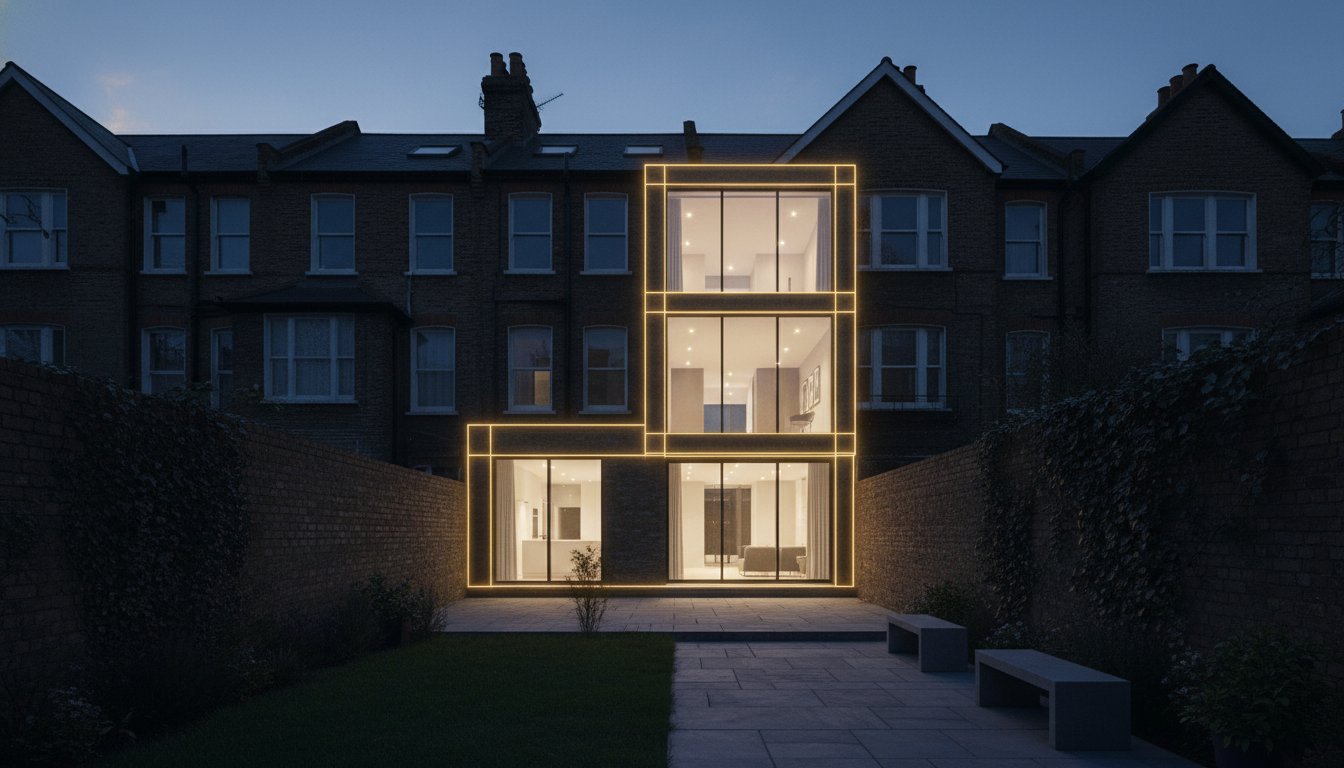
Architect or Builder First for Extension? The Homeowner’s 2026 Guide
What if the most expensive mistake in your home transformation happens before you even break ground? In the high-stakes London market of 2026, deciding whether to hire an architect or builder first for extension projects has become a critical strategic choice rather than a mere administrative one. You likely feel the pressure of navigating complex building regulations while facing average construction costs that have reached £3,500 per square meter. It’s understandable to want to start immediately; yet, the fear of planning refusal or hidden costs often stalls the most visionary dreams.
We promise to show you how hiring an architect first serves as a vital de-risking phase that protects your capital and unlocks your property’s hidden potential. By securing a bespoke design before engaging a contractor, you ensure every detail complies with the Future Homes Standard 2026 and avoids the new Building Safety Levy complications arriving on October 1, 2026. This guide provides a clear roadmap to a stress-free planning process, comparing the two pathways so you can move forward with the confidence of a seasoned developer and the creative spark of a homeowner.
Key Takeaways
- Learn why the sequence of your hiring decisions is the single most important factor in preventing budget overruns and design compromises.
- Understand the strategic advantages of the architect-led pathway to navigate the 2026 Future Homes Standard and complex London planning policies.
- Discover the specific, low-complexity scenarios where opting for an architect or builder first for extension projects might lean toward a contractor-led approach.
- Explore how detailed technical drawings and feasibility studies act as your primary tools for de-risking your investment before construction begins.
- Identify the role of a contract administrator in maintaining builder accountability and ensuring your bespoke design is executed to the highest standards.
Architect or Builder First? Navigating the Extension Dilemma in 2026
Choosing the right sequence for your home transformation isn’t just a matter of timing; it’s a strategic decision that protects your equity. In the 2026 London market, deciding whether to hire an architect or builder first for extension work determines if you’re building on a foundation of certainty or a pile of assumptions. While some suggest starting with a builder to save on upfront professional fees, this path often leads to “scope creep” and regulatory hurdles that far outweigh any initial savings. A design-led start ensures your project is rooted in feasibility before a single brick is laid.
Think of the role of an architect as the navigator of your project’s journey. They translate your lifestyle aspirations into a viable, compliant framework that respects both your budget and local planning constraints. Conversely, builders are the engineers who execute that framework. Without a navigator, the engineer is building without a map. This is why London homeowners are increasingly opting for architect-led starts; it provides the clarity needed to survive the scrutiny of local councils and the complexity of modern building standards.
A common misconception is that “knowing what you want” is the same as having a buildable design. You might envision a seamless glass-roofed kitchen, but that vision must account for structural integrity, thermal performance under the Future Homes Standard 2026, and fire safety. Without professional plans, a builder is forced to estimate based on guesswork, which leads to the budget “surprises” that haunt many renovation projects. Starting with an architect ensures these technical requirements are baked into the design from day one.
The Architect’s Role: Vision and Regulatory Compliance
An architect’s value lies in unlocking potential that a standard contractor might overlook. They produce professional architectural plans in London that do more than just show walls; they navigate the complex minefield between Planning Permission and Permitted Development rights. With the UK construction industry projected to grow by 2.2% in 2026, securing a technical specification early allows for competitive, fixed-price tendering, ensuring you aren’t overpaying for materials or labor during the build.
The Builder’s Role: Physical Execution and Craftsmanship
Once the blueprint is finalized and approved, the builder takes center stage. Their expertise is in site logistics, material procurement, and managing the specialized trades required for high-end extensions. They bring the physical labor and craftsmanship that transforms a 3D visualization into a tangible lifestyle improvement. However, a builder’s quote is only as reliable as the drawings they’re pricing from. In a market where average construction costs have reached £3,500 per square meter, having detailed technical drawings ensures your contractor can provide a realistic, professional commitment to your budget.
The ‘Architect First’ Pathway: Unlocking Potential and De-risking Your Build
Adopting an architect-led approach is the industry gold standard for house extensions in London because it prioritizes long-term value over short-term speed. When you decide on an architect or builder first for extension projects, you’re choosing between a project defined by design or one defined by convenience. An architect doesn’t just draw walls; they conduct a rigorous feasibility study to test your vision against the granular planning policies of your specific borough. This phase ensures you don’t commit significant capital to a concept that a local council will ultimately reject.
The historical role of the architect as the project’s lead visionary remains essential in 2026, particularly for finding “hidden” square footage. While a builder might suggest a standard box extension, an architect looks for opportunities to optimize light, flow, and volume that a contractor might overlook. This optimization often adds more property value than the cost of the professional fees themselves. By the time you approach a builder, you’ll have a set of detailed plans that allow for competitive tendering. Instead of receiving vague estimates, you’ll get comparable, fixed-price quotes based on the exact same technical specifications.
Securing Planning Permission with Confidence
Navigating the requirements of councils like Barnet or Islington requires more than just basic sketches. We manage the pre-application process to gauge officer sentiment early, which is a vital step in London’s increasingly crowded residential landscape. By addressing neighbor concerns and heritage constraints during the design phase, we create a path of least resistance. In 2026, a meticulously prepared architectural design acts as the primary shield against the high costs of planning refusal and the delays of resubmission. If you’re ready to see what’s possible, exploring a bespoke design consultation is the most reliable way to start.
Building Regulations: The Hidden Safety Net
Technical drawings are the backbone of a safe, compliant home. With the Future Homes Standard 2026 mandating a 75-80% reduction in carbon emissions for new builds, and similar pressures on extensions, “winging it” on-site is no longer an option. A comprehensive technical drawing pack ensures that thermal, structural, and fire safety standards are solved on paper before construction begins. This prevents the dangerous and expensive practice of making structural decisions mid-build, ensuring your extension is as sturdy and efficient as it is beautiful.

When Does a Builder-First Approach Make Sense?
While we champion a design-led approach, there are specific instances where homeowners might ponder the architect or builder first for extension question and lean toward the contractor. This usually applies to “standard” projects where the creative scope is minimal. A basic garage conversion or a simple lean-to often follows a predictable template, potentially allowing you to skip the conceptual design phase. However, even these seemingly simple builds must navigate the regulatory complexity of modern building codes, which have grown significantly more stringent as of 2026.
The “Design and Build” model is frequently marketed as a stress-free, one-stop-shop. It’s an attractive proposition: one contract, one point of contact, and a supposedly fixed price. The reality is often more nuanced. Without an independent set of plans, a builder’s initial “guide price” is frequently a placeholder. In a year where construction costs average between £2,500 and £3,500 per square meter, these estimates can balloon rapidly once the physical reality of the site is revealed. Advance Architecture recommends independent design oversight for any project involving structural changes to ensure your investment is protected from such “scope creep.”
The Problem with “Design and Build” Contractors
The primary issue with contractor-led design is the absence of an independent advocate for the homeowner. When the designer and the builder are the same entity, there’s an inherent conflict of interest. This often leads to “value engineering,” a practice where materials or design details are simplified to protect the builder’s profit margins rather than to enhance your living space. A bespoke architect ensures the design serves your lifestyle needs, not the contractor’s ease of execution. By maintaining separation between design and construction, you ensure that quality is never sacrificed for the sake of a contractor’s convenience.
When to Consult a Builder Early
Consulting a builder during the design phase is a wise move, but it shouldn’t replace the architect. Early engagement allows for “sanity checks” on high-risk structural elements or complex groundworks. With the UK construction industry projected to grow by 2.2% in 2026, labor and material availability can fluctuate. A builder can provide real-time data on lead times for specific glazing or timber supplies, helping your architect refine the technical specifications. This collaborative approach uses the builder’s logistical knowledge to inform the visionary design, creating a seamless path to completion without sacrificing the integrity of your vision.
The London Factor: Why Regulatory Complexity Demands Professional Plans
London’s architectural landscape is a tapestry of heritage and strict regulation. For homeowners in boroughs like Barnet or Islington, the question of whether to hire an architect or builder first for extension projects is usually answered by the local planning office. In these high-density areas, the margin for error is non-existent. Professional plans aren’t just a design tool; they’re a legal necessity. For instance, the Party Wall Act 1996 mandates that you provide neighbours with clear, technical documentation of your intentions before work begins. Approaching a neighbour with a builder’s verbal estimate rather than a plan from residential architects in London is a fast track to a legal dispute.
London construction costs are currently peaking at £3,500 per square meter in central areas. At this price point, every millimetre of space must be optimized to ensure a genuine return on investment. Professional design justifies these high costs by transforming “dead space” into high-value living areas. In North London’s conservation areas, where heritage constraints are paramount, a builder-led approach risks a total work-stop order if character-defining features are compromised. A visionary architect navigates these hurdles, ensuring your project respects history while embracing contemporary luxury.
London Planning Nuances
Planning success in the capital depends on understanding borough-specific nuances. While Permitted Development rights offer some flexibility, they differ significantly between terraced Victorian houses and detached 1930s properties. For example, Barnet has specific guidelines regarding the height and depth of rear additions that can catch unadvised homeowners off guard. We often recommend that loft conversions are designed alongside ground-floor extensions to ensure a cohesive whole-house strategy. This prevents a “piecemeal” aesthetic that can devalue a premium property.
Structural Integrity and Technical Documentation
London’s Victorian and Edwardian housing stock presents unique structural challenges. These heritage buildings often lack the robust foundations required for modern, heavy-set extensions or large spans of bifold doors. An architect’s technical pack acts as the vital bridge between your vision and the structural engineer’s requirements. This documentation ensures that your new extension doesn’t compromise the stability of the existing structure or the safety of adjacent buildings. It provides the builder with the exact specifications needed to manage site logistics in tight London streets. If you’re planning a transformation in the capital, book your London feasibility study to ensure your project stands on firm regulatory ground.
Seamless Execution: How Advance Architecture Bridges the Gap
The journey of property transformation is often portrayed as a choice between two paths, but the reality is that success lies in how those paths are bridged. When you resolve the question of hiring an architect or builder first for extension work by choosing a design-led start, you aren’t just buying drawings. You’re investing in a comprehensive framework of Design, Planning, and Management. At Advance Architecture, we position ourselves as your steady hand, ensuring the creative spark of your initial vision survives the rigorous demands of the construction site.
Our role extends far beyond the initial drafting of plans. We believe that choosing the best architects in London means finding a partner who stays by your side until the final tile is laid. By providing a structured, RIBA-aligned process, we remove the ambiguity that often leads to homeowner stress. This methodical progression from abstract concepts to concrete reality ensures that your investment is protected and your lifestyle is truly enhanced through bespoke architectural solutions.
Contract Administration: Your Secret Weapon
One of the most significant gaps in standard home extensions is the lack of independent oversight during the build phase. Contract Administration is the mechanism we use to keep builders accountable. Rather than you having to negotiate technical disputes or manage payment schedules alone, we act as the professional mediator. We certify payments only when the work on-site reaches the exact architectural standard specified in our technical packs. This creates a balanced relationship where the builder is motivated to maintain quality and the homeowner is protected from paying for substandard or incomplete work. Using our technical drawings as the source of truth, we resolve site disputes before they escalate into costly delays.
Realising Your Vision in 2026
In 2026, the complexity of UK building regulations means that technical drawings must serve as the absolute source of truth on site. Our bespoke 3D visualisations bridge the communication gap, ensuring that you and your builder are literally seeing the same goal before construction begins. This clarity prevents expensive mid-project changes and ensures a seamless, hassle-free experience. We invite you to move beyond the uncertainty of guide prices and standard builds. Book your free consultation with Advance Architecture today to begin unlocking your property’s full potential through visionary design and expert management.
Realise Your Vision with Strategic Planning
Deciding on an architect or builder first for extension projects is the foundation of your investment’s security. We’ve explored how a design-led start unlocks hidden square footage and ensures your home meets the rigorous Future Homes Standard 2026. By prioritizing professional plans, you navigate the unique regulatory landscape of London boroughs with the authority of a seasoned developer. This strategic sequence doesn’t just create a beautiful space; it protects your capital from the hidden costs of planning refusal and construction scope creep.
Since 2009, Advance Architecture has provided deep London expertise to help homeowners transform their properties through a seamless, RIBA-aligned process. We specialize in navigating complex planning permissions and offer a comprehensive service that bridges the gap between visionary design and physical execution. From initial 3D visualisation to rigorous contract administration, we act as your steady hand throughout the journey. Don’t leave your property’s potential to chance. Realise your vision with a free consultation from Advance Architecture and begin your journey toward a bespoke, stress-free home transformation today.
Frequently Asked Questions
Do I legally need an architect for a house extension in the UK?
You aren’t legally required to hire an architect to submit a planning application; however, your project must strictly comply with Building Regulations 2026. Professional drawings are essential to ensure the structure meets the Future Homes Standard, which mandates a 75% reduction in carbon emissions for new residential works. Relying on professional expertise prevents the legal and financial risks associated with non-compliant construction.
Can a builder draw plans for planning permission?
Builders can produce basic sketches, but these often lack the aesthetic depth and technical precision required by local councils in London. Architects act as navigators who understand borough-specific nuances, such as the heritage constraints in Barnet or Islington. A builder’s plan may focus on ease of construction, whereas an architect’s plan focuses on unlocking the full potential and value of your property.
What happens if I hire a builder before I have architectural plans?
Hiring a builder before securing plans often leads to “scope creep” and significant budget inflation. Without a fixed design, any quote you receive is merely a guide price that can balloon once the technical realities of the site are revealed. Deciding whether to hire an architect or builder first for extension projects is a choice between professional certainty and financial guesswork; starting with design ensures your contractor is held to a fixed, transparent specification.
How much does an architect cost compared to the total build price?
Architectural fees in the UK typically range from 5% to 12% of the total construction cost. For high-end residential projects in London and Surrey, where regulatory demands are higher, these fees can range from 8% to 15%. While the standard planning application fee is £258, the value an architect adds through space optimization and planning success often exceeds the initial professional investment.
How do I know if my extension falls under Permitted Development?
Permitted Development rights are governed by specific criteria, such as the 3-meter depth limit for terraced house extensions. However, these rights are often restricted in conservation areas or for listed buildings. A professional feasibility study is the most reliable way to confirm your project’s status, providing a clear roadmap before you commit to a £2,500 per square meter construction budget.
What is the difference between an architect and an architectural technologist?
Architects are trained to manage the holistic vision, creative design, and contract administration of a project. Architectural technologists focus more on the technical science of building and how components fit together. For homeowners seeking a bespoke transformation that maximizes natural light and lifestyle flow, an architect provides the visionary expertise necessary for a high-end result.
Can an architect help me find a reliable builder in London?
Yes, architects frequently manage the competitive tendering process to vet contractors on your behalf. We use detailed technical drawings to ensure that every builder is quoting on exactly the same specifications. This creates a transparent environment where you can compare labor and material costs fairly, ensuring you partner with a firm that respects both your vision and your budget.
How long does the architectural design and planning phase typically take?
The design and planning phase generally spans between 3 and 6 months. This timeline accounts for the initial creative consultations, the production of 3D visualisations, and the statutory 8-week period for local council decisions. Starting this process early is vital to ensure your project is ready for site commencement before the new Building Safety Levy takes effect on October 1, 2026.