
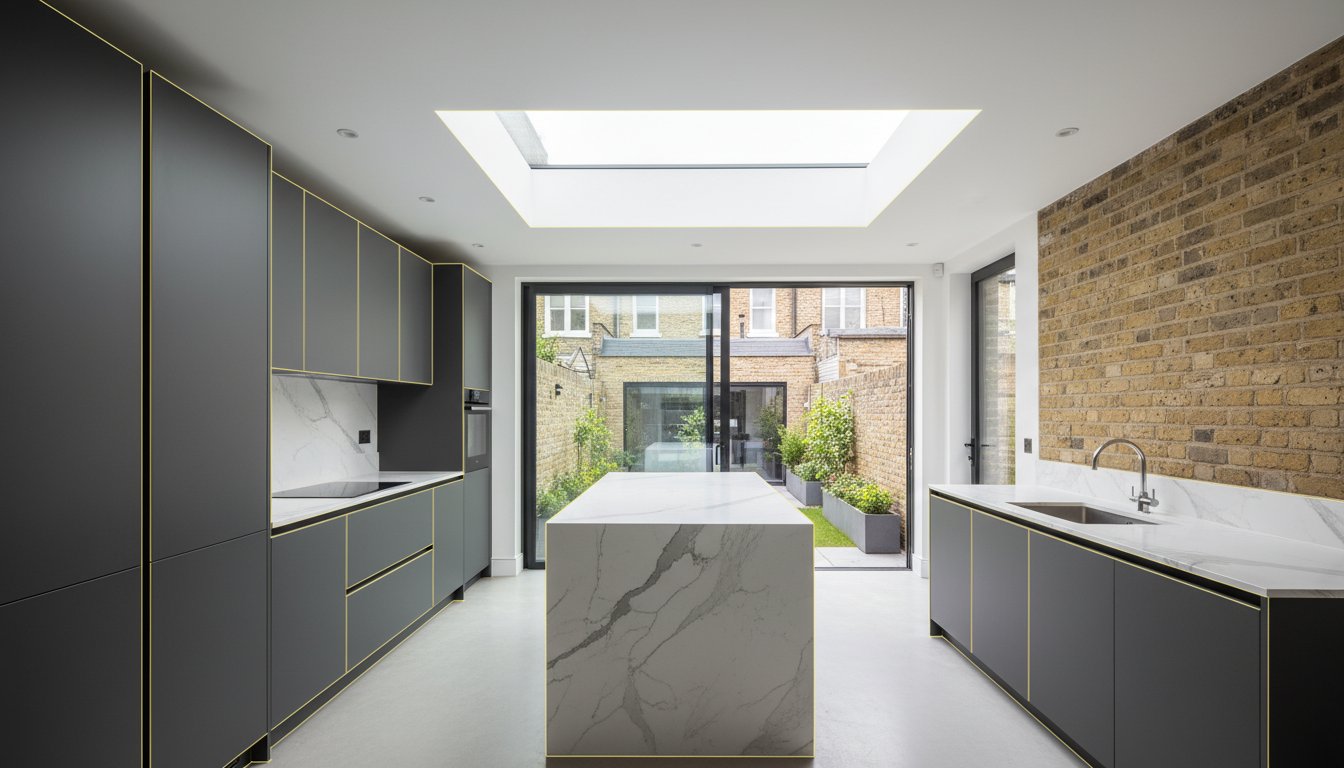
Wraparound Extension Cost London: The Definitive 2026 Homeowner’s Budgeting Guide
Last October, a family in Barnet discovered that their dream of a bespoke kitchen-diner was nearly derailed by a 20% budget discrepancy when calculating their wraparound extension cost London. It’s a sobering reality in the capital, where the distance between a visionary design and a completed project is paved with regulatory hurdles and fluctuating material prices. You understand that a home transformation is a significant investment, yet the fear of hidden fees or a complex planning rejection from Islington Council often keeps the most inspired projects on the drawing board.
This guide helps you master the financial complexities of your renovation, moving you from uncertainty to a position of informed confidence. We provide a meticulous, itemised budget framework that accounts for architectural fees, structural integrity, and the often-overlooked nuances of party wall agreements. By the end of this article, you’ll possess a clear roadmap to unlock your property’s maximum value through a seamless, stress-free construction journey.
Key Takeaways
- Discover how combining side-return and rear extensions unlocks the maximum potential of Victorian and Edwardian terraces to create seamless, open-plan living.
- Gain clarity on current wraparound extension cost London benchmarks for 2026, ranging from basic shell-only projects to high-end, bespoke turnkey finishes.
- Learn to navigate the complexities of London planning permission, party wall agreements, and site logistics to ensure a compliant and stress-free build.
- Understand how technical architectural drawings and 3D visualisations mitigate on-site risks, preventing expensive design errors before construction begins.
- Explore our proven methodology for transforming your vision into a reality through a structured approach of expert design, planning, and project management.
Defining the Wraparound Extension in the London Market
A wraparound extension represents the pinnacle of residential reconfiguration for the capital’s period properties. By merging a side-return extension with a rear addition, homeowners create an expansive, L-shaped footprint that fundamentally alters the property’s character. For owners of Victorian and Edwardian terraces, this layout addresses the historical limitations of narrow, dark outrigger kitchens. We view this as a strategic opportunity to unlock hidden square footage, turning a cramped service wing into a luminous, open-plan heart of the home. While understanding What is a building extension? provides a foundational baseline, a wraparound is a distinct architectural feat that requires precise structural engineering and a visionary approach to space.
The primary driver for investigating the wraparound extension cost London is the desire for a seamless indoor-outdoor connection. These projects often replace entire brick walls with slim-frame sliding doors or high-performance bi-fold systems. This transformation creates a massive kitchen-diner that serves as a multifunctional hub for family life and entertaining. It’s not just about adding floor area; it’s about optimizing the flow of movement and light throughout the entire ground floor.
Wraparound vs. Side Return: Which is Right for You?
Choosing between these two options depends on your spatial goals and your long-term investment strategy. A side-return extension simply fills the alley beside the kitchen, whereas a wraparound removes the original rear corner of the building entirely. This structural complexity requires significant steelwork and a more robust London planning strategy, often moving beyond Permitted Development into full planning applications. Because the floor plate becomes much deeper, we integrate bespoke glazing solutions like roof lanterns or structural glass strips to ensure natural light penetrates the core of the home. While a side return is faster to execute, a wraparound offers a more cohesive and impactful architectural statement.
The Aesthetic and Functional Value of a Bespoke Design
Standard extensions often feel like bolted-on afterthoughts that don’t respect the original building’s integrity. A bespoke wraparound maximizes every millimeter of expensive London land, ensuring no space is wasted in the transition between old and new. We utilize advanced 3D visualization to refine these layouts before any construction wraparound extension cost London is committed. This allows you to experience the volume of the space and assess light levels virtually. This meticulous planning stage is where we provide the most value, identifying potential structural hurdles early to ensure a stress-free delivery of your vision. It’s about creating a unique architectural signature that balances heritage context with contemporary functional elegance.
Breaking Down the Wraparound Extension Cost in London for 2026
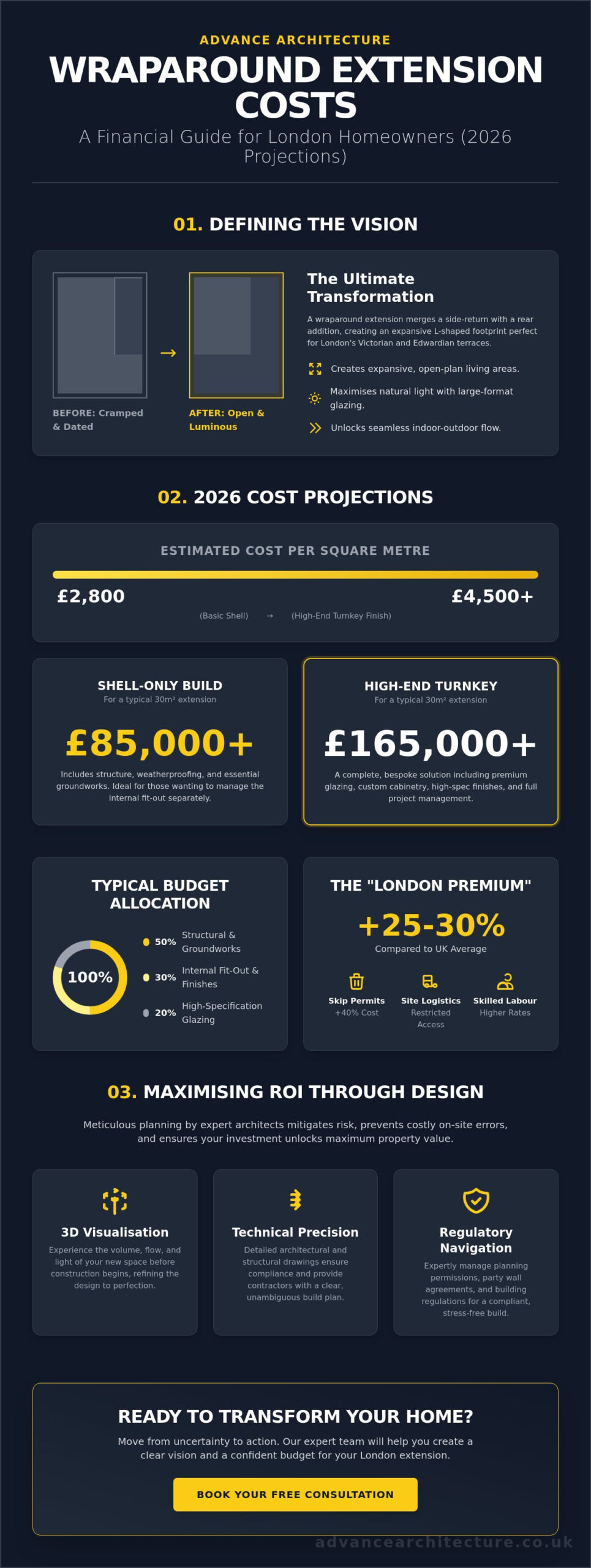
In 2026, homeowners should budget between £2,800 and £4,500 per square metre for a high-quality wraparound extension in London, reflecting both the complexity of the build and the premium nature of capital-based projects. This investment represents more than just additional floor space; it’s a strategic move to optimize your property’s footprint and enhance its market value. A shell-only build for a standard 30-square-metre wraparound typically starts at £85,000, while high-end turnkey finishes that include bespoke cabinetry and premium glazing often reach £165,000 or more.
The “London Premium” is a tangible financial reality, with capital costs consistently exceeding the UK average by 25% to 30%. This discrepancy isn’t merely a matter of geography. It’s driven by the logistical challenges of urban construction, including skip permits that cost 40% more than regional averages, restricted site access that necessitates smaller, more frequent deliveries, and the higher cost of skilled labour. When planning your wraparound extension cost London, it’s vital to allocate your budget with precision: typically 50% for structural work and groundworks, 20% for high-specification glazing, and 30% for the internal fit-out and final finishes.
Construction and Labour Costs in the Capital
Groundworks and structural steel form the backbone of your project. By 2026, structural steel prices have stabilized following the volatility of the early 2020s, yet they remain a significant line item because a wraparound requires complex “goalpost” frames to support the original house. Choosing between traditional brick-and-block and contemporary timber frames will also shift your financial outlook. While timber frames offer a faster onsite assembly, bespoke glass-heavy designs remain the gold standard for unlocking the potential of your home, despite their higher initial price point.
Labour rates for specialist London contractors reflect the city’s demand for excellence. You aren’t just paying for a builder; you’re paying for a team that understands the nuances of London’s terraced and semi-detached architecture. Investing in professional project management can often save 10% on the total build cost by preventing mid-project delays and ensuring material procurement is handled with expert timing.
Architectural, Planning, and Technical Fees
The journey from concept to completion requires a methodical approach to RIBA work stages. Budgeting for architectural fees is essential, covering everything from initial visionary sketches to the granular technical drawings required for construction. Many homeowners find that fixed-fee architectural services provide better financial security than percentage-based models, as they protect you from “bracket creep” if material costs rise during the build.
You must also account for the costs of navigating local authority requirements. Whether your project falls under permitted development rights for extensions or requires a full planning application, the associated fees for building regulation approvals and structural engineering reports are non-negotiable. These technical stages ensure your wraparound extension cost London translates into a safe, legal, and structurally sound transformation that stands the test of time. A clear, well-planned budget at this stage creates a seamless transition from your creative vision to the reality of a transformed home.
Navigating London-Specific Cost Drivers: Planning, Party Walls, and Logistics
Many homeowners hesitate to begin a project because they believe planning permission in the capital is an insurmountable, expensive hurdle. While London’s regulatory landscape is rigorous, it’s rarely a barrier to those with the right architectural partner. Successfully managing your wraparound extension cost London depends on how early you address the specific constraints of your borough. Whether you’re in the conservation areas of Camden or the suburban streets of Barnet, the goal is to transform your home while respecting the local architectural fabric.
Planning Permission vs. Permitted Development in London
Local councils like Islington and Barnet have distinct interpretations of design guidelines. You don’t always need full planning permission; leveraging permitted development rights in London can often simplify the approval for side-return elements. However, a wraparound usually requires a full application because it combines side and rear extensions. Investing in a high-quality initial design saves money by avoiding the £2,000 to £5,000 cost of planning appeals. A bespoke approach ensures your vision aligns with council expectations on the first submission.
The Party Wall Process: Budgeting for Adjoining Owners
The Party Wall Act 1996 is a critical factor in any London terrace or semi-detached renovation. You’ll likely need to serve notices on multiple neighbours. If they dissent, you’ll need to appoint surveyors. Professional construction cost analysis and benchmarking suggests that you should budget between £1,000 and £1,800 per adjoining owner for surveyor fees and schedules of condition. Proactive, transparent communication with your neighbours can often prevent legal friction and keep your timeline on track. Ignoring these notices is a significant risk that leads to costly injunctions and project delays.
Site Logistics and Hidden Constraints
Budgeting for a wraparound extension cost London requires a realistic look at the “hidden” logistics of urban building. Narrow Victorian alleyways and restricted site access often mean specialist equipment or smaller, more frequent deliveries are necessary. These factors quickly add up:
- Parking Permits: Suspending a parking bay for deliveries in boroughs like Camden can cost over £50 per day.
- Waste Management: Skip hire in high-density areas often requires local authority permits, averaging £250 to £450 for a two-week period.
- Infrastructure: Thames Water build-over agreements for shared sewers typically cost around £343 for standard applications, plus any required CCTV surveys.
By identifying these site-specific constraints during the design phase, you ensure a seamless transition from concept to construction. We focus on unlocking the potential of your property while managing every granular detail of the London landscape, providing a stress-free experience that prioritizes both elegance and efficiency.
Maximising ROI: How Architectural Design Offsets Construction Costs
Investing in high-level design early in the process is the most effective way to mitigate a ballooning wraparound extension cost London. While some homeowners view architectural fees as an upfront expense, they function as a vital financial safeguard. High-fidelity 3D visualisations allow you to walk through your virtual extension before a single brick is laid. This immersive process identifies structural clashes or aesthetic misalignments that would cost thousands of pounds to rectify mid-build. Smart material specification also plays a critical role in budget management. By choosing bespoke solutions tailored to your site’s specific light levels and structural needs, we often reduce the requirement for over-engineered steelwork or unnecessary structural reinforcements.
Technical Drawings: The Blueprint for Budget Control
Detailed professional architectural plans are the only way to secure “fixed-price” quotes from reputable London builders. Without these granular details, contractors are forced to include “contingency buffers” to cover technical unknowns. In 2026, strict updates to Part L of the Building Regulations require precise thermal calculations and ventilation strategies. Accurate drawings ensure your project complies with these mandates from day one, preventing the need for costly retrofitting or failed building control inspections. This level of documentation transforms the construction phase into a controlled, predictable process, providing a sturdy framework for contract administration.
Future-Proofing and Property Value Uplift
A well-executed wraparound extension typically adds between 10% and 22% to the total value of a London property, according to 2025 market data. In high-demand postcodes, this uplift often significantly exceeds the initial construction investment. We focus on energy efficiency as a core cost-saving measure. High-performance glazing and integrated insulation layers don’t just meet 2026 standards; they create a home that’s significantly cheaper to heat and cool. Designing for longevity means your extension won’t just look visionary today. It’ll remain a functional, high-value asset for decades. Quality architecture ensures the new space feels like a seamless evolution of the original Victorian or Edwardian terrace, preserving its heritage appeal while unlocking its modern potential.
Case Study: Technical Precision in North London
In a 2025 project in Highgate, our technical precision saved the client 15% on their total build costs. By identifying a complex drainage conflict during the 3D modelling stage, we avoided a £12,000 on-site redirection fee that would’ve halted construction for two weeks. The project was delivered on time, with the final wraparound extension cost London staying within 2% of the original tender.
Consult with our visionary experts to unlock your property’s financial potential and ensure a stress-free transformation.
Realising Your Vision: The Advance Architecture Planning Process
Planning a project of this scale requires more than just a set of drawings. It demands a sophisticated understanding of how to balance your lifestyle aspirations with the practical constraints of the capital’s built environment. Our stress-free approach removes the friction from the London planning maze. We handle everything from the initial site survey to the final technical specifications, ensuring your investment is protected by rigorous professional oversight and creative ingenuity.
Homeowners frequently appoint residential architects in London for complex wraparounds because these projects involve intricate structural changes to the core of the property. A wraparound isn’t just an addition; it’s a total reimagining of your ground floor’s flow, light, and utility. When you consider the wraparound extension cost London homeowners face in 2026, the value of expert design becomes clear. It’s the difference between a standard box and a seamless architectural statement that adds genuine market value and daily joy.
Our Bespoke Design and Planning Methodology
Success in London depends on local nuance. We tailor every design to the specific policies of borough councils, whether you’re building in Barnet, North London, or a protected conservation area. Our team manages the delicate relationship between you, the builders, and the council officers. We ensure every project meets our high standards of functional elegance while adhering to the latest 2026 Building Regulations. This methodical approach ensures that the wraparound extension cost London projects require is spent on high-quality materials and craftsmanship, not on correcting planning mistakes or regulatory oversights.
- Initial Survey: Precise measurement of your existing footprint to identify structural opportunities.
- Technical Drawings: Detailed blueprints that bridge the gap between creative vision and construction reality.
- Project Oversight: Maintaining a steady hand to ensure the build stays true to the approved design.
Your Roadmap to a Successful London Extension
The journey from first sketch to final sign-off typically follows a structured 6 to 10-month timeline for the design and planning phase. It starts with a comprehensive survey, followed by conceptual designs that challenge the limits of your space. We provide a steady hand during the daunting stages of party wall agreements and structural engineering. You’ll receive a full pack of technical drawings that leave nothing to chance for your contractor. It’s time to stop wondering about the possibilities and start building them. Your first step is booking a free initial consultation to unlock your property’s hidden potential. Realise your vision with Advance Architecture and transform your home for the future.
Transform Your London Property with Confidence
Navigating the wraparound extension cost London homeowners face in 2026 requires a precise balance of strategic budgeting and architectural foresight. You now understand how logistical drivers like party wall agreements and site access impact the bottom line, alongside the ways bespoke design can significantly offset construction outlays. Successful projects rely on this synergy between creative vision and technical rigour to ensure every square metre adds tangible value to your lifestyle and your asset. Precision planning makes the difference.
Since 2009, Advance Architecture has acted as a steady hand for homeowners, specializing in the intricate transformation of North London Victorian properties. Our comprehensive service manages the entire journey, from initial design concepts through to complex building regulations and planning approvals. We focus on unlocking the hidden potential of your home while removing the stress often associated with major renovations. Your dream space is achievable when backed by over 15 years of local expertise and a commitment to functional elegance.
Book your free London architectural consultation today to begin your journey. We’re ready to help you realise your vision and create a home that truly inspires.
Frequently Asked Questions
How much does a wraparound extension cost in London in 2026?
By 2026, a high-end wraparound extension in London typically ranges from £3,500 to £5,500 per square metre. For a standard 45-square-metre project, you should budget between £157,500 and £247,500 for construction and materials. These figures reflect the projected rise in sustainable material costs and the premium for specialist London labour. We recommend a 10% contingency fund to ensure your project remains on track regardless of market shifts.
Do I need planning permission for a wraparound extension in London?
You’ll almost certainly require full planning permission for a wraparound extension because they rarely fall under Permitted Development rights. The unique L-shape design usually exceeds the volume and boundary constraints set by the 2015 General Permitted Development Order. Our team manages this entire process, preparing technical drawings that respect local conservation guidelines while unlocking the potential of your site. This structured approach ensures your design meets council requirements with confidence.
How long does a wraparound extension take to build?
A typical wraparound extension takes between 20 and 26 weeks to build once the groundworks begin. This timeline includes 4 weeks for foundations, 10 weeks for the structural shell, and up to 12 weeks for the internal fit-out. You should also allow an additional 12 to 16 weeks for the pre-construction phase. This period is vital for securing planning approval, structural engineering calculations, and Party Wall Agreements to ensure a seamless transition to the build stage.
Is a wraparound extension more expensive than a rear extension?
A wraparound extension is generally 25% to 40% more expensive than a standard rear extension due to its structural complexity. The wraparound extension cost London homeowners encounter is higher because the design requires significant structural steelwork to support the corner where the side and rear walls meet. This investment creates a bespoke, open-plan living space that a simple rear extension can’t achieve. It represents a visionary transformation of your home’s ground floor footprint.
Will a wraparound extension add value to my London home?
A well-executed wraparound extension can increase the market value of a London property by 20% to 25%, according to data from the Nationwide Building Society. In high-demand areas like Islington or Wandsworth, this value uplift often exceeds the initial construction investment. Beyond the financial return, you’re creating a functional, elegant space that meets modern lifestyle demands. It’s a strategic move that makes your property significantly more attractive to future buyers in a competitive market.
How much should I budget for architectural fees in London?
You should budget between 7% and 12% of your total construction cost for professional architectural services in London. For a project with a £200,000 build budget, this equates to a fee of £14,000 to £24,000. This fee covers the entire journey from initial concept and 3D visualisations to technical construction drawings and planning management. Investing in expert design ensures your project is both beautiful and compliant with all building regulations, providing a stress-free experience.
What are the most common hidden costs of London extensions?
The most frequent hidden costs include Party Wall Agreements, which can cost £1,000 to £2,500 per neighbour, and professional surveys like CCTV drainage reports. You’ll also need to account for London-specific expenses such as parking permits for contractors and skip hire fees, which can add £2,000 to your budget. We always identify these requirements early in the planning stage. This transparency prevents surprises and ensures your financial planning is as sturdy as the building itself.
Can I stay in my house during a wraparound extension build?
It’s possible to stay in your home, but 85% of our clients choose to move out during the most intensive 12 weeks of construction. The process involves removing large sections of external walls, which creates significant dust and noise. If you decide to remain on-site, we implement strict dust screening and temporary kitchen setups to keep your daily life as hassle-free as possible. We’ll guide you through the pros and cons of each option during our initial consultation.