
2026 Kitchen Extension Cost in Camden: The Architect’s Definitive Guide
What if the most expensive mistake in your 2026 renovation isn’t the bespoke cabinetry, but a single overlooked detail in the Camden Local Plan? You likely recognize that extending a home in this borough involves navigating a unique labyrinth of heritage constraints and dense urban architecture. It’s a journey where the desire for modern, light-filled spaces often meets the reality of complex party wall agreements and stringent planning committees. Understanding the kitchen extension cost Camden homeowners should expect in the 2026 market is the first step toward a successful, stress-free transformation.
We agree that your home deserves a design that balances contemporary elegance with structural integrity. This guide provides a comprehensive breakdown of the investment requirements, professional fees, and regulatory nuances essential for a high-end project. You’ll gain a clear budget roadmap and the expert insights needed to secure approval while significantly increasing your property’s market value. We’ll examine the progression from initial design concepts to the final stages of project management, ensuring your vision becomes a functional, visionary reality.
Key Takeaways
- Navigate the 2026 residential landscape with a clear understanding of why Camden remains a premier high-value investment area for homeowners.
- Obtain a precise breakdown of the kitchen extension cost Camden for high-specification projects, from side-returns to bespoke rear transformations.
- Uncover the essential “hidden” costs, including professional fees and Camden’s Community Infrastructure Levy (CIL), to ensure your budget is both accurate and resilient.
- Learn how to optimize your investment through architectural value engineering and by identifying the most efficient planning route for your property.
- Discover how a bespoke design strategy unlocks the true potential of your home, delivering a seamless blend of functional elegance and significant capital growth.
Understanding the 2026 Market for Kitchen Extensions in Camden
2026 marks a pivotal era for residential construction in North London. Homeowners are increasingly moving away from temporary fixes, choosing instead to invest in architectural longevity and environmental efficiency. While the broader home improvement market remains sensitive to global supply chain shifts, Camden’s unique property landscape ensures that high-quality extensions continue to command a premium. Our firm sees a consistent trend where residents prioritise Design, Planning, and Management to navigate the complexities of urban builds.
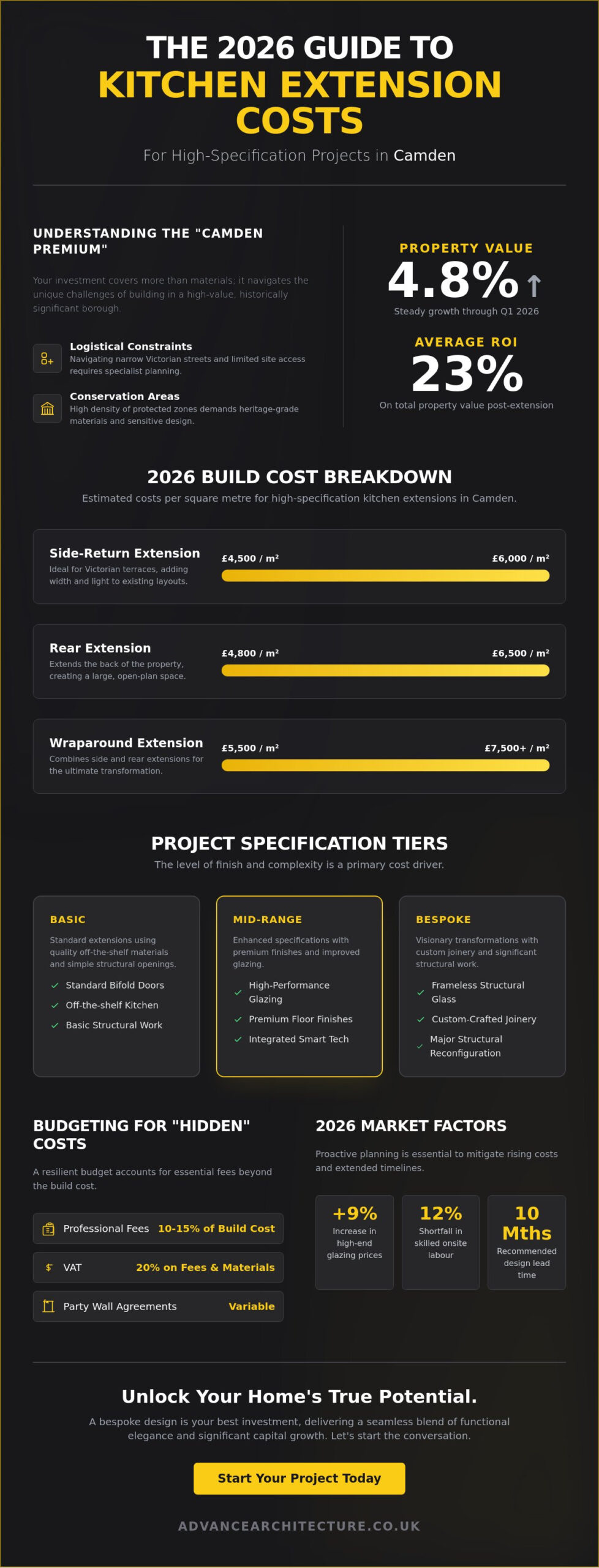
The “Camden Premium” is a distinct economic reality. It’s driven by three specific factors: logistical constraints of narrow Victorian streets, the high density of conservation areas, and the demand for heritage-grade materials. When calculating the kitchen extension cost Camden, you aren’t just paying for bricks and mortar. You’re investing in the specialist expertise required to manage party wall agreements and complex structural excavations that are common in postcodes like NW1 and NW3.
To help you plan, we define the market into three clear tiers:
- Basic: Standard side-return extensions using high-quality but off-the-shelf materials and simple structural openings.
- Mid-range: Enhanced specifications featuring integrated smart technology, high-performance aluminium glazing, and premium floor finishes.
- Bespoke: Visionary transformations involving significant structural reconfiguration, frameless architectural glass, and custom-crafted joinery.
Why Extend in Camden Now?
Property values in Camden have maintained a steady 4.8% growth rate through the first quarter of 2026. In high-value enclaves like Hampstead and Belsize Park, the cost of moving—including stamp duty and legal fees—often exceeds the price of a substantial renovation. This “don’t move, improve” mentality has turned kitchens into the primary engine for property appreciation. A professionally executed kitchen extension in Camden currently delivers an average return on investment of 23% on the total property value.
The Impact of the 2026 Economy on Build Costs
The 2026 economic climate presents specific challenges for the London construction sector. High-end glazing prices have increased by 9% over the last twelve months, largely due to stricter Part L building regulations regarding thermal performance. Simultaneously, a 12% shortfall in skilled onsite labour across London has extended typical project timelines. Unlocking potential in this market requires a proactive approach. We recommend starting your design and planning phase at least 10 months before your target completion date. This strategic lead time allows you to lock in material prices and secure the most reputable contractors before their calendars fill up for the 2027 season.
Breaking Down the Cost per Square Metre for Camden Projects
Calculating the kitchen extension cost Camden homeowners face in 2026 requires a nuanced understanding of both architectural ambition and site constraints. Camden’s unique property landscape, characterized by Victorian terraces and Georgian villas, demands a bespoke approach to budgeting. We see a clear distinction between standard builds and high-specification architectural transformations. While a basic extension focuses on adding volume, a premium Camden project prioritizes light, flow, and material integrity. These factors drive the price per square metre significantly beyond national averages.
Structural complexity remains a primary cost driver in the borough. Removing load-bearing walls to create a seamless open-plan environment involves significant steelwork and precise engineering. Every structural modification requires Building Regulations approval to ensure the safety and longevity of the dwelling. Beyond the hidden structural elements, the choice of glazing often defines the 2026 budget. Standard bifold doors offer a functional solution, yet many of our clients now opt for bespoke structural glass or slim-frame sliding systems to maximize the connection with the outdoors. These architectural glass solutions can increase the glazing budget by 40% compared to off-the-shelf alternatives.
Extension Type Price Ranges
- Side-return extensions: These are the most popular choice for Victorian terraced homes in Camden. In 2026, they offer a cost-effective way to reclaim underutilized “alleyway” space, though party wall awards and complex drainage often add to the initial investment.
- Wraparound extensions: By combining a side-return and a rear extension, homeowners in Kentish Town can maximize their square footage. This approach involves more intensive structural support but delivers the most dramatic transformation of the ground floor footprint.
- Basement-plus-kitchen extensions: These represent the highest-cost tier in Camden. The requirement for extensive excavation, waterproofing, and specialized light wells makes this a significant undertaking for those looking to unlock potential in constrained urban plots.
Specification Levels and Material Choices
The internal finish is where a project truly evolves from a simple room into a visionary living space. Standard finishes typically utilize high-quality engineered timber and painted plaster. In contrast, premium specifications favor natural stone, integrated smart lighting, and bespoke joinery. A high-specification, luxury kitchen extension in Camden typically ranges from £4,500 to £6,500 per square metre in 2026, depending on the complexity of the structural glass and internal finishes.
Sustainability has moved from an optional extra to a core requirement in 2026. Modern builds now integrate air-source heat pumps and solar-ready roof structures as standard. These “green” upgrades involve higher upfront costs but provide long-term energy security and align with London’s evolving environmental standards. If you are ready to explore how these variables apply to your specific property, you can start your project journey with a detailed feasibility study. Our team focuses on balancing these technical requirements with your aesthetic goals to create a space that is both functional and inspiring.
The “Hidden” Costs: Planning, Conservation, and Professional Fees
A successful kitchen extension starts long before the first spade hits the ground. While construction materials are a major factor, the professional and regulatory framework dictates the final kitchen extension cost Camden homeowners actually pay. These “hidden” expenses aren’t just administrative hurdles; they’re the safeguards that protect your investment and ensure structural integrity. Budgeting for these early prevents the project from stalling during the critical planning phase.
Architectural and Technical Fees
Investing in design is the most effective way to control your total spend. For a 2026 project, architectural fees in London generally range from 8% to 12% of the construction budget. This covers everything from the initial feasibility study to the submission of planning applications. High-quality professional architectural plans in London provide the granular detail your builder needs. Without these, you risk “provisional sums” in your quotes. These almost always lead to overspends once work begins on-site because the builder is guessing rather than following a precise map.
Local Authority and Regulatory Costs
Camden Council operates with specific financial requirements that vary by ward. The Community Infrastructure Levy (CIL) is a mandatory charge used to fund local services. While many small residential extensions are exempt, larger bespoke projects may trigger payments based on the additional floorspace created. It’s essential to calculate this liability before you commit to a specific footprint.
You must also account for several other technical layers:
- Conservation Area Consents: Camden manages 40 distinct Conservation Areas. If you live in Hampstead, Highgate, or Bloomsbury, your design might require specialist heritage statements. This often necessitates premium materials, such as bespoke timber joinery, which adds roughly 15% to your material budget.
- Structural Engineering: A specialist engineer is essential for calculating steel beam sizes and foundation depths. Their fees usually sit between £1,500 and £3,500 for a standard extension.
- Thames Water Build-Over Agreements: If your extension sits within 3 metres of a public sewer, you’ll need formal permission. This process currently costs between £300 and £1,000 depending on the pipe’s size.
In the dense Victorian and Georgian terraces of Camden, Party Wall Agreements are almost inevitable. If your neighbours don’t immediately consent to the works, you’ll need to appoint surveyors. You should include a contingency of at least £2,000 per boundary for these fees. This proactive approach to the kitchen extension cost Camden projects demand ensures a stress-free transformation, allowing you to focus on the creative potential of your new space.
How to Optimise Your Kitchen Extension Budget Without Sacrificing Quality
Managing the kitchen extension cost Camden homeowners face in 2026 requires a shift from cost-cutting to value engineering. This architectural discipline focuses on maintaining the design’s integrity while identifying more efficient ways to achieve the same aesthetic. By involving an architect early, you can identify savings during the design phase that far outweigh the professional fees. We look at the structural requirements and material specifications to ensure every pound spent adds tangible value to your property’s market price and your daily life.
Avoiding the “Camden Trap” is essential for financial stability. This occurs when a homeowner selects the lowest contractor quote, only to find the price escalates by 20% or more during construction due to unforeseen “extras” or poor initial documentation. A cheap quote often lacks the granular detail required for complex London sites. Instead, we recommend a fixed-price contract based on a comprehensive technical package. You can also choose to phase your project, separating the design and planning costs from the construction budget. This allows you to secure your vision and planning approvals before committing to the full capital expenditure of the build.
Smart Design Choices for Budget Control
Designers can unlock significant savings by standardising specific elements without losing the bespoke feel. Opting for high-quality, standard-sized glazing units rather than oversized custom glass can reduce procurement costs by 15% while still flooding the space with light. We also focus on optimising structural steel layouts. By aligning new openings with existing load-bearing walls, we reduce the complexity of the steel frame, which slashes both material costs and on-site labour time. For a broader look at how these principles apply across the capital, see our house extensions London guide.
Navigating Camden Planning Successfully
The Camden planning department is known for its rigorous standards, especially within its many conservation areas. Investing in pre-planning advice is a strategic move that prevents expensive redesigns later. A “Visionary Expert” understands how to frame your proposal to meet local policy on the first attempt, saving months of potential delays. Utilising permitted development rights is often the most cost-effective route, as it bypasses the subjectivity of full planning permission for many rear extensions. This path provides a faster, more predictable timeline, which is vital for managing your 2026 project budget effectively.
Ready to maximise the potential of your home? You can start your bespoke transformation with Advance Architecture today.
Unlocking Potential: Why a Bespoke Design is Your Best Investment
A kitchen extension is more than a construction project; it’s a strategic enhancement of your most valuable asset. While many homeowners focus solely on the immediate kitchen extension cost Camden, the real value lies in the distinction between a generic ‘box’ and a bespoke architectural transformation. A standard addition might provide extra square metres, but a tailored design solves the fundamental challenges of light, circulation, and lifestyle integration. In the competitive North London property market, a well-executed, unique design consistently outperforms off-the-shelf solutions in terms of both daily enjoyment and resale value.
The Advance Architecture Approach
Our methodology prioritises a seamless journey through three distinct phases: Design, Planning, and Technical Documentation. As experienced residential architects London, we understand that Camden’s unique architectural landscape requires a nuanced touch. We take the weight of Camden Council negotiations off your shoulders, managing the complexities of Conservation Area consents and planning constraints with precision. Our process ensures that every technical detail aligns with your visionary goals, preventing costly delays during the build phase.
Consider a recent project where we transformed a cramped, dark Victorian kitchen into a 45-square-metre social hub. By introducing a sunken floor level and a frameless glass roof, we bypassed traditional height restrictions while flooding the space with natural light. The result wasn’t just a larger room; it was a home that worked for a modern family of five, significantly increasing the property’s market appeal. This level of detail ensures your kitchen extension cost Camden translates into tangible, long-term equity.
Realise Your Vision in 2026
Investing in a high-end kitchen extension in 2026 requires more than just a budget; it requires confidence. We utilise advanced 3D visualisation to let you walk through your new space before a single brick is laid. This tool is essential for both design refinement and managing your budget, as it allows you to see exactly how materials and layouts impact the final feel of the room. A well-designed family kitchen offers a daily return on investment through improved functionality and shared moments.
The journey from an initial estimate to a physical structure begins with a professional feasibility study. This stage clarifies what’s possible within your specific plot and provides the data needed to move forward with certainty. Don’t leave your home’s potential to chance. Book a consultation with Advance Architecture today to unlock the hidden value in your Camden property and start your transformation journey.
Unlocking the Potential of Your Camden Home
Planning a project for 2026 demands a clear understanding of the kitchen extension cost Camden market and the specific regulatory landscape of North London. You’ve explored how square-metre rates, professional fees, and conservation requirements dictate your final budget. A successful transformation isn’t just about square footage; it’s about intelligent design that respects local heritage while maximizing modern functionality. With over 15 years of experience in North London planning, our team specializes in navigating Camden’s intricate conservation area projects with precision and creative flair.
We offer fixed-fee architectural design and planning packages to provide you with financial certainty from the very beginning. This structured approach ensures your vision remains the priority while we handle the technical complexities of building regulations and structural integrity. You don’t need to settle for a standard solution when a bespoke design can significantly increase your property’s value and your quality of life. It’s time to move from inspiration to execution with a partner who understands the nuances of the Camden borough.
Realise your vision with a free initial consultation from Advance Architecture
Your dream kitchen is within reach, and we’re ready to help you build it with confidence and ease.
Frequently Asked Questions
How much does a 30sqm kitchen extension cost in Camden in 2026?
Based on BCIS forecasts for 2026, a high-spec 30sqm kitchen extension cost in Camden typically ranges from £3,500 to £4,800 per square metre. This brings the total investment to between £105,000 and £144,000. These figures account for premium London labour rates and the rising costs of sustainable materials. This investment covers the shell, core, and professional finishes required for a bespoke architectural transformation that adds long-term value to your home.
Do I need planning permission for a kitchen extension in a Camden conservation area?
Yes, you’ll almost certainly need full planning permission because Camden’s 40 conservation areas frequently carry Article 4 Directions that restrict permitted development rights. These regulations ensure that any external changes preserve or enhance the character of the neighbourhood. Our team navigates these complexities by preparing detailed heritage statements and design justifications. This structured approach minimizes friction with the local planning authority and protects your property’s historical integrity through design, planning, and management.
How long does the architectural design and planning process take in Camden?
The architectural design and planning process in Camden typically takes 6 to 9 months from the initial consultation to the start of construction. This timeline includes 8 weeks for the initial design and 8 to 12 weeks for the Camden Council to process your planning application. We also allocate time for structural engineering and building regulations approval. This methodical pace ensures every detail is refined, preventing costly delays once the build begins on site.
What is the Camden Community Infrastructure Levy (CIL) and will I have to pay it?
The Camden Community Infrastructure Levy (CIL) is a charge on new floor space exceeding 100 square metres, though it can apply to smaller extensions that create a new dwelling. As of the 2024 charging schedule, residential rates in Camden can reach £500 per square metre, adjusted annually for inflation. Most standard kitchen extensions are exempt if they’re under the 100sqm threshold and for your own use. We verify your specific liability early to ensure your budget remains transparent.
Is a side-return extension cheaper than a full-width rear extension?
A side-return extension is generally less expensive than a full-width rear extension, but the kitchen extension cost in Camden per square metre is often higher due to structural complexities. While a side-return might save you £20,000 in total spend, a full-width extension offers a more seamless internal layout and greater floor area. We help you weigh these options by analyzing the potential for unlocking space against your specific budgetary constraints, design aspirations, and lifestyle goals.
Should I hire an architect or a design-and-build company for my Camden project?
Hiring an architect provides a bespoke design, independent oversight, and a competitive tender process that often results in higher quality than a design-and-build firm. While design-and-build companies offer a single point of contact, an architect acts as your advocate, ensuring the contractor adheres to the exact specifications. This partnership focuses on design excellence and long-term value. It’s the difference between a standardized product and a visionary home tailored to your specific needs.
How much value does a kitchen extension add to a house in Hampstead?
A high-quality kitchen extension in Hampstead can add between 10% and 15% to your property’s total market value. Given that average house prices in the NW3 postcode exceeded £1.5 million in 2024, this transformation could represent a value increase of £150,000 or more. Beyond the financial gain, it optimizes your living environment for modern life. We focus on creating functional elegance that appeals to the discerning buyers typical of the Hampstead and Highgate markets.
What are the hidden costs of extending a Victorian terrace in Camden?
The primary hidden costs in Victorian terrace projects involve structural reinforcements, damp proofing, and upgrading 100-year-old drainage systems. You should set aside a 10% to 15% contingency fund to cover these unforeseen site conditions. Discovering shallow foundations or shared party wall issues can add £5,000 to £10,000 to your initial budget. Our detailed site surveys and technical expertise help identify these challenges early, ensuring a stress-free journey from concept to completion.